In This Article

How to Choose the Perfect Sideboard That Suits Your Style [Buying Guide]

Last Updated on November 19, 2025 by SierraLivingConcepts
What Is A Sideboard?—Know All About Sideboards
A sideboard is a storage cabinet that is usually placed in the dining room to display dinnerware and cookware, in the kitchen to store food and cookware, or in the bar area to store wine bottles and bar accouterments. It can also be placed in the living room or foyer instead of a console table.
A sideboard can come with a hutch, drawers, cabinets, and cupboards and also be used to serve food; however, it is different from a buffet, though the words are often interchangeable.
We have credenzas, servers, and china cabinets, which are all sideboard synonyms but have unique traits. Let’s have a look!

The Sideboard And Its Siblings
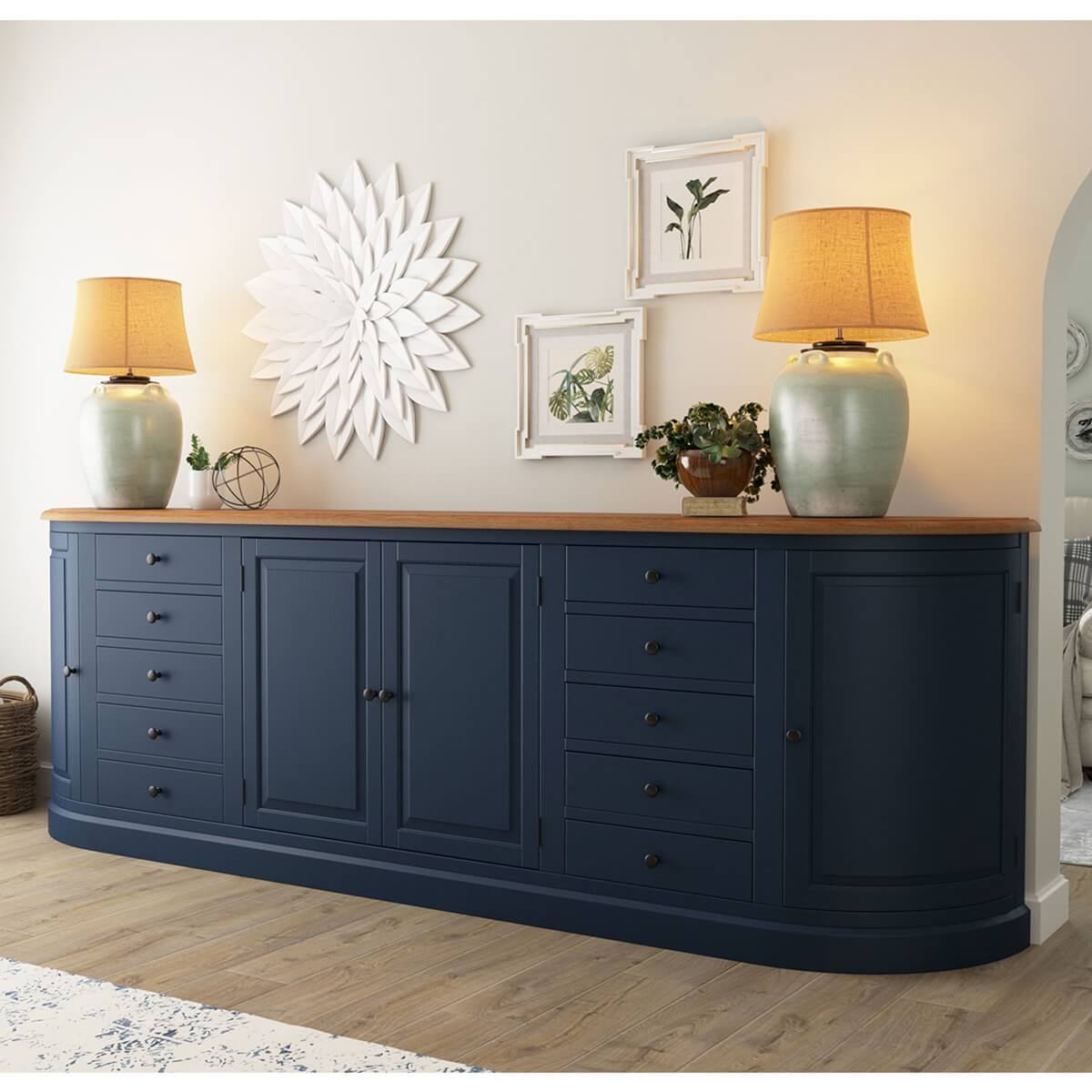
A sideboard is a storage cabinet that is long and has a low stance. It is characterized by short legs, larger cabinets, and drawers above the cabinets. When a sideboard is placed in the living room, it can act as an entertainment unit and host TVs, entertainment accessories, books, and showpieces.
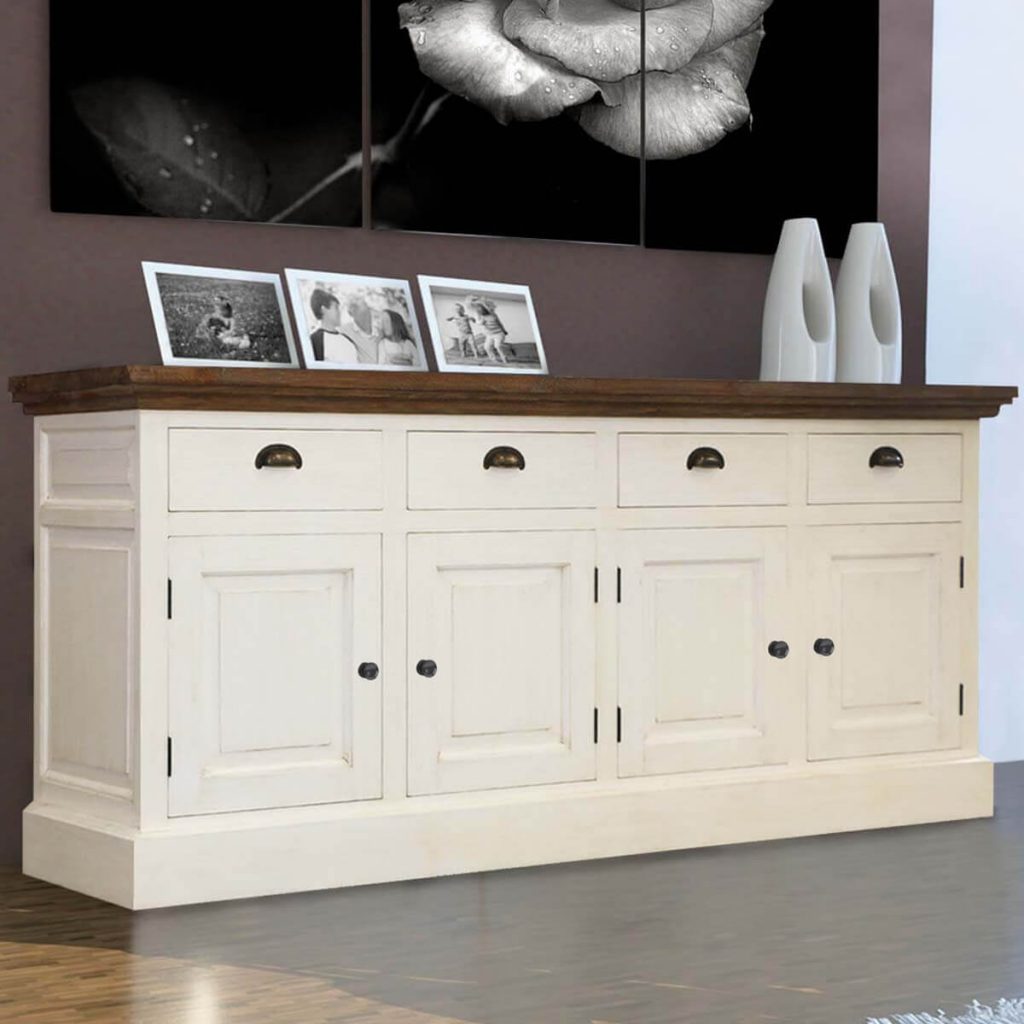
Though a buffet is similar to a sideboard, it can be distinguished by longer legs, moderate storage space, and a flat top that is ideal for laying out food buffet style. It is always placed in the dining room along with the dining table or kitchen.
A buffet is often larger than a sideboard, and its height can come up to the countertop level to make serving convenient. A buffet cabinet is used specifically to house silverware, napkins, and dinnerware. The countertop of a buffet is used to serve tea, coffee, and food to guests.
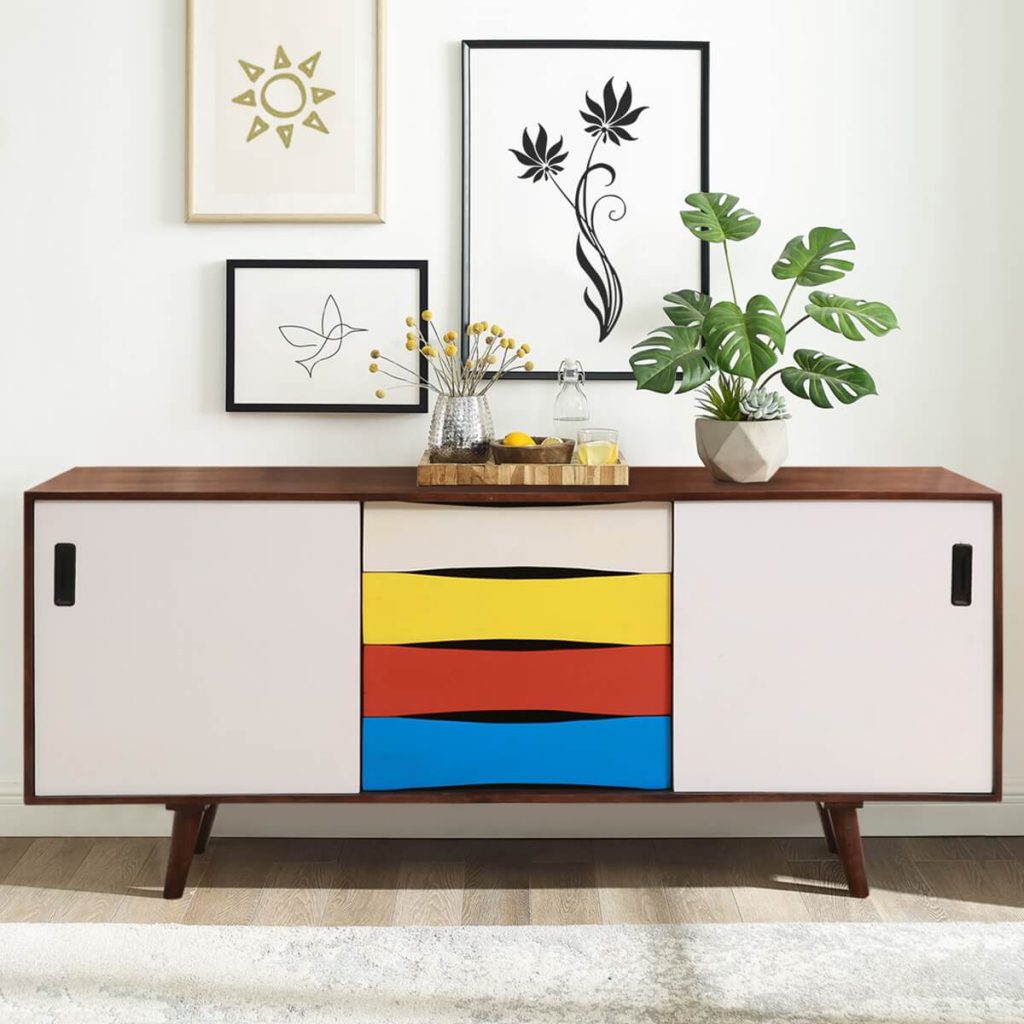
On the other hand, a credenza typically has sliding doors and often comes with a plinth base or low legs. It can also be a TV stand in the living room. It can be placed in the office or study to store books, files, and documents.
The size of a server cabinet is between a sideboard and a buffet. It can feature drawers and an open bottom on taller legs.
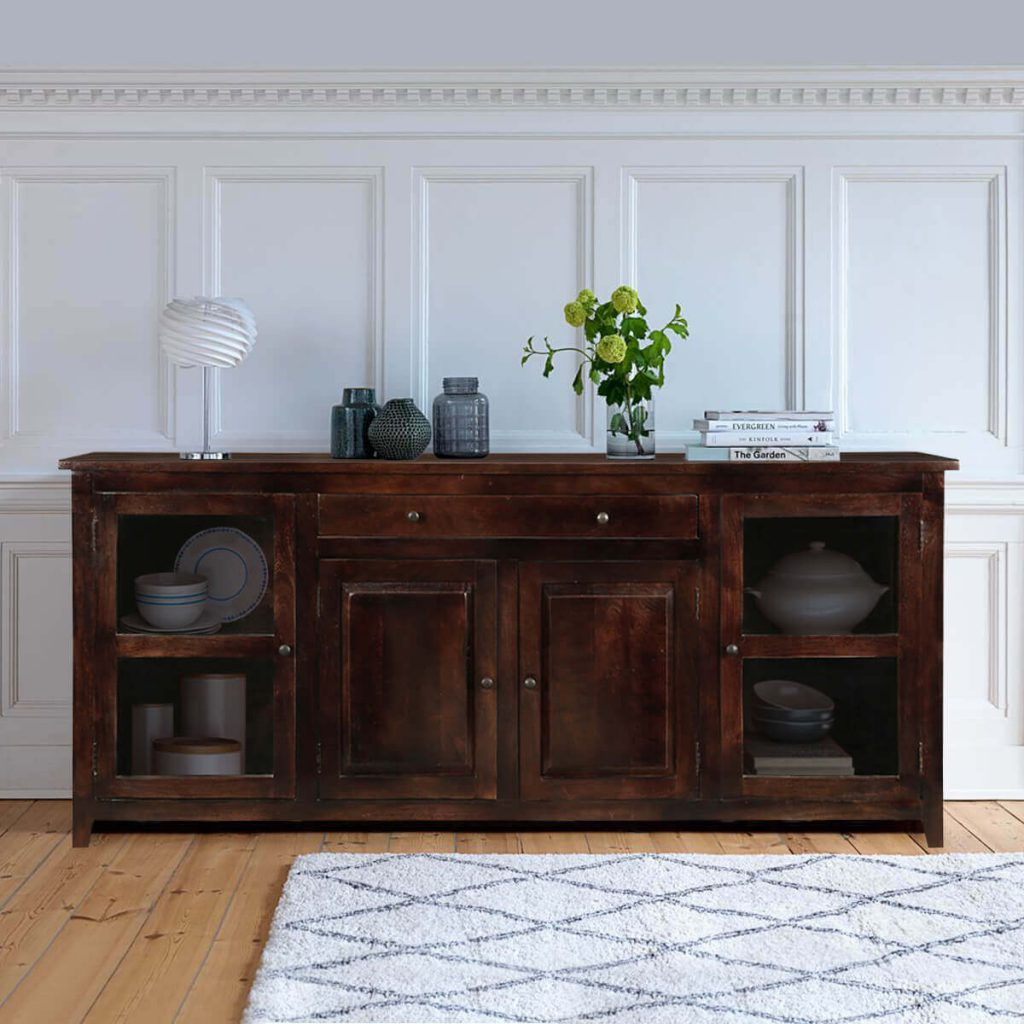
Curio and china cabinets showcase your prized china, collection of crystal figurines, and souvenirs. This type of sideboard features glass cabinet doors and a wooden frame.
How The Sideboard Came Into Being
The sideboard made its first appearance in the dining room in the 16th century, and it was just a sideboard, meaning it began as a board near the table, attached to a wall or on some support.
The ancestor of today’s made its debut in the 1770s in Britain, gained popularity during the 19th century, and became a common household furniture piece. Craftsmen discovered some of the earliest sideboards in France, England, Poland, Belgium, and Scotland before bringing them to America.
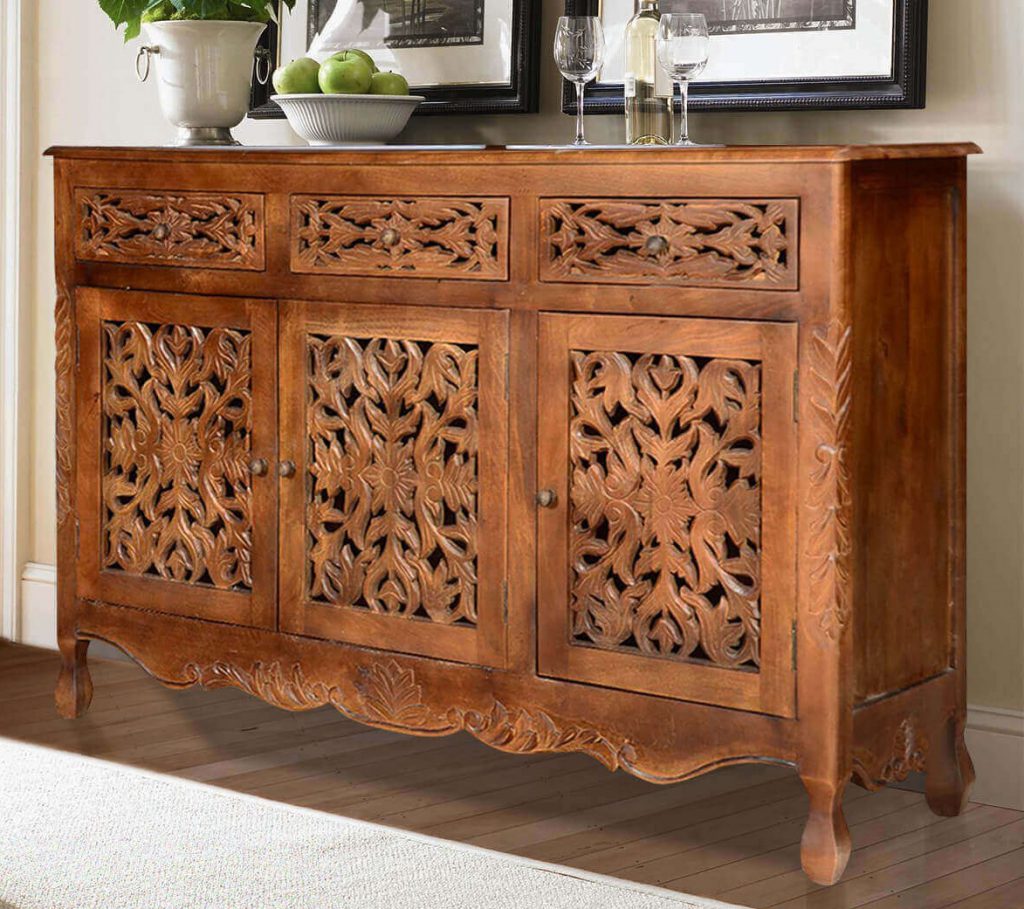
Moreover, craftsmen created the Georgian sideboards using solid woods like oak, mahogany, pinewood, and walnut, while also applying ornamentation such as veneers and inlays. They were elegant and slender and often used to store dining accouterments.
Victorian sideboards featured a heavy design and served as displays for silver trays, silver candlesticks, brass lamps, or decorative soup tureens. Moreover, they had organic patterns and decorations with classical details.
Its versatility in storing and displaying various items made the sideboard fashionable, leading to its presence in living rooms, bedrooms, studies, foyers, and offices.

How to Choose the Perfect Sideboard
Selecting the sideboard for your home can help you organize and manage your space better; hence, it is always a wonderful idea to do some basic measurements
Rule 1: Get the size right
Select a spot to place the sideboard you are contemplating buying. Now measure the height, width, and depth of the space. Ensure the space is clear of other items and the sideboard will not cover any heating or cooling vents.
In a crowded place, a narrow sideboard or buffet will help you avoid bumping into things. Make sure that there is at least a 24-inch gap between the sideboard cabinet and other items.
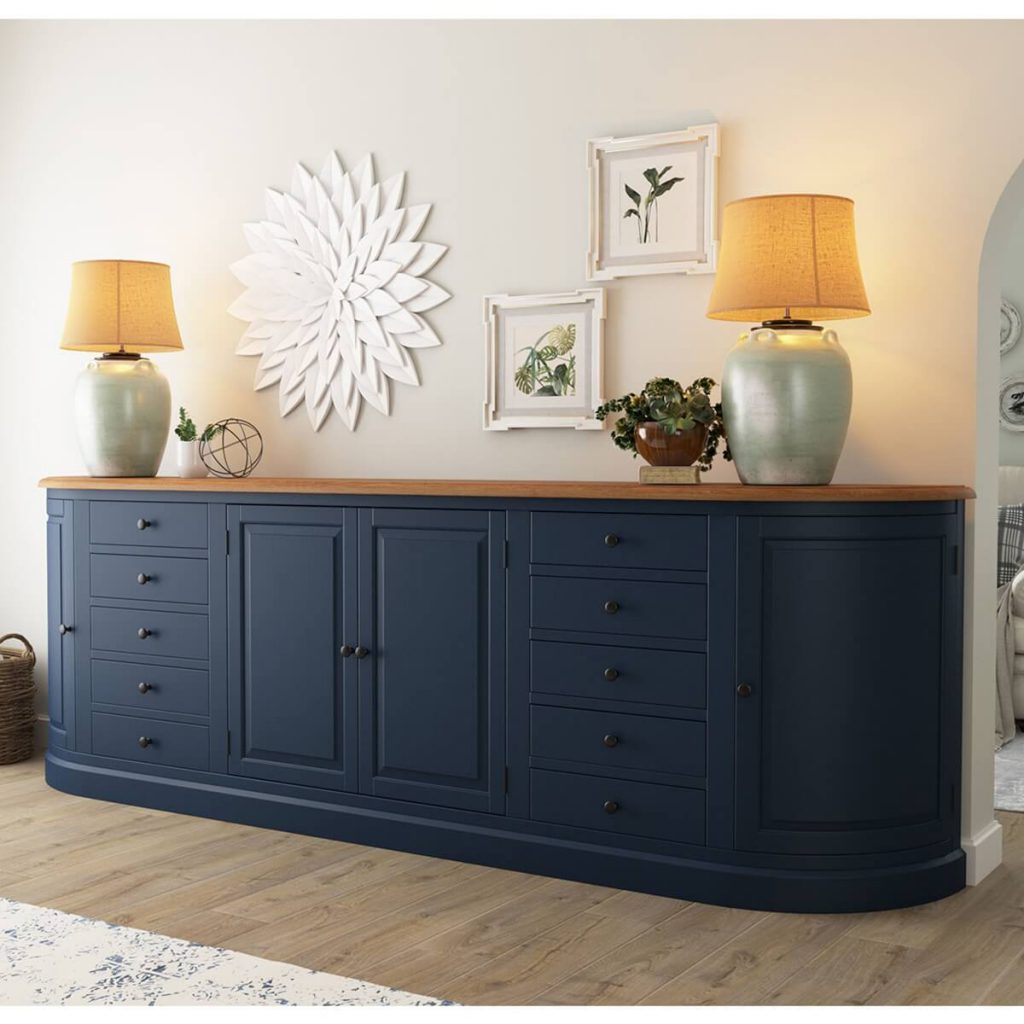
If the spot is near a window, check the space between the window’s bottom and the sideboard’s tabletop.
Based on your need for storage and the availability of space, select a tall, long, or extra-long sideboard (above 80″), and make sure to have enough room to walk around when the drawers are open. A sideboard should be of the same height as the dining table, which is between 34 and 36 inches.
Rule 2: Get the right stain to match the interior
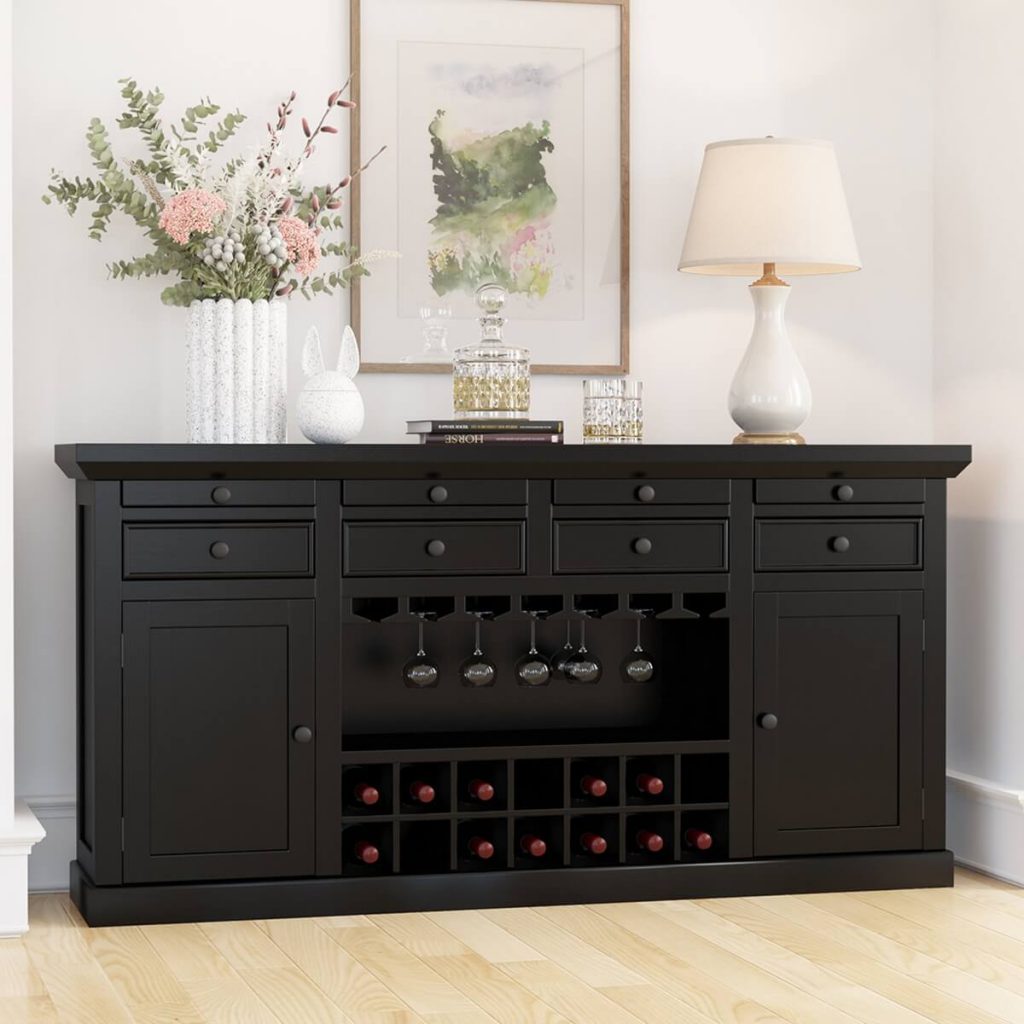
Depending on the interior décor of your dining room, select the stain of a buffet or a sideboard. If you want to go for a look that stands out, then a black or navy blue sideboard will look great in a well-lit room with light-colored walls, and a white one will match any wall color and will look wonderful on wooden flooring.
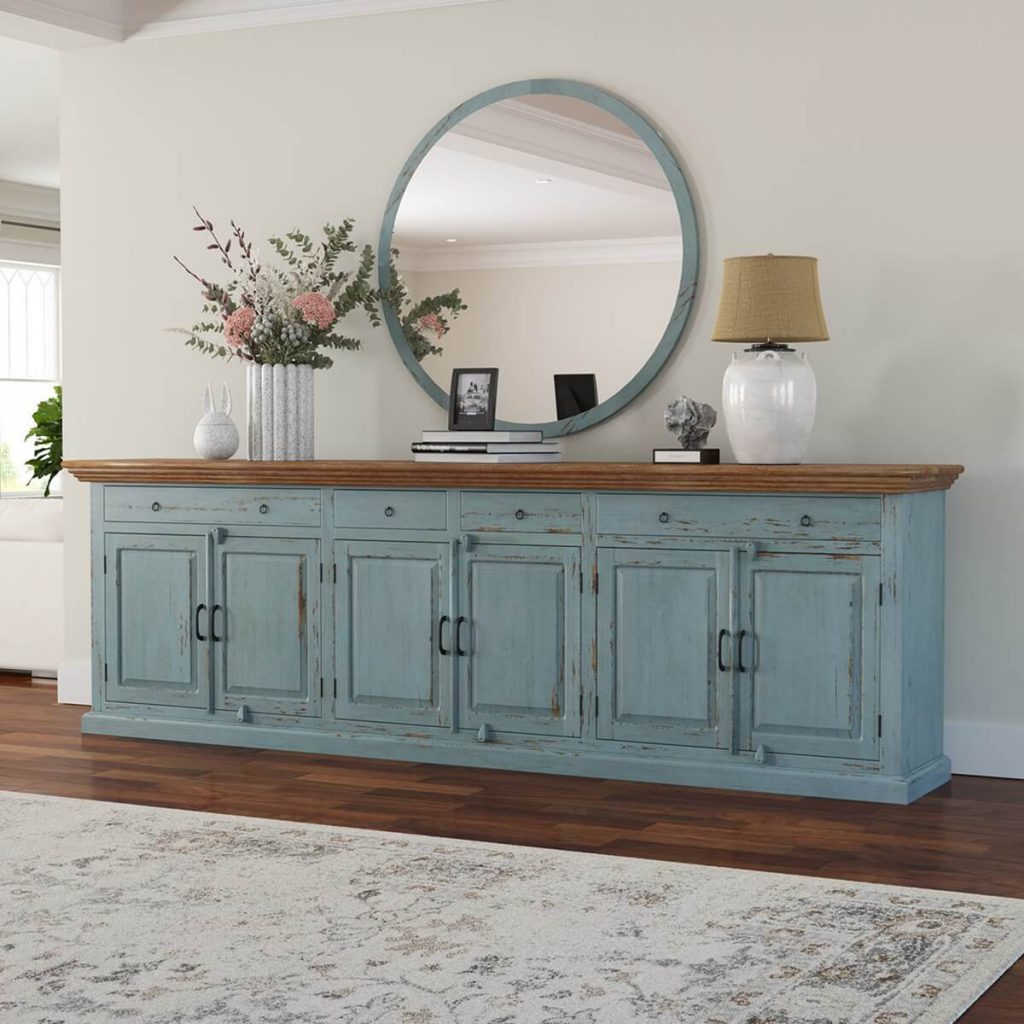
Rule 3: Get the style right
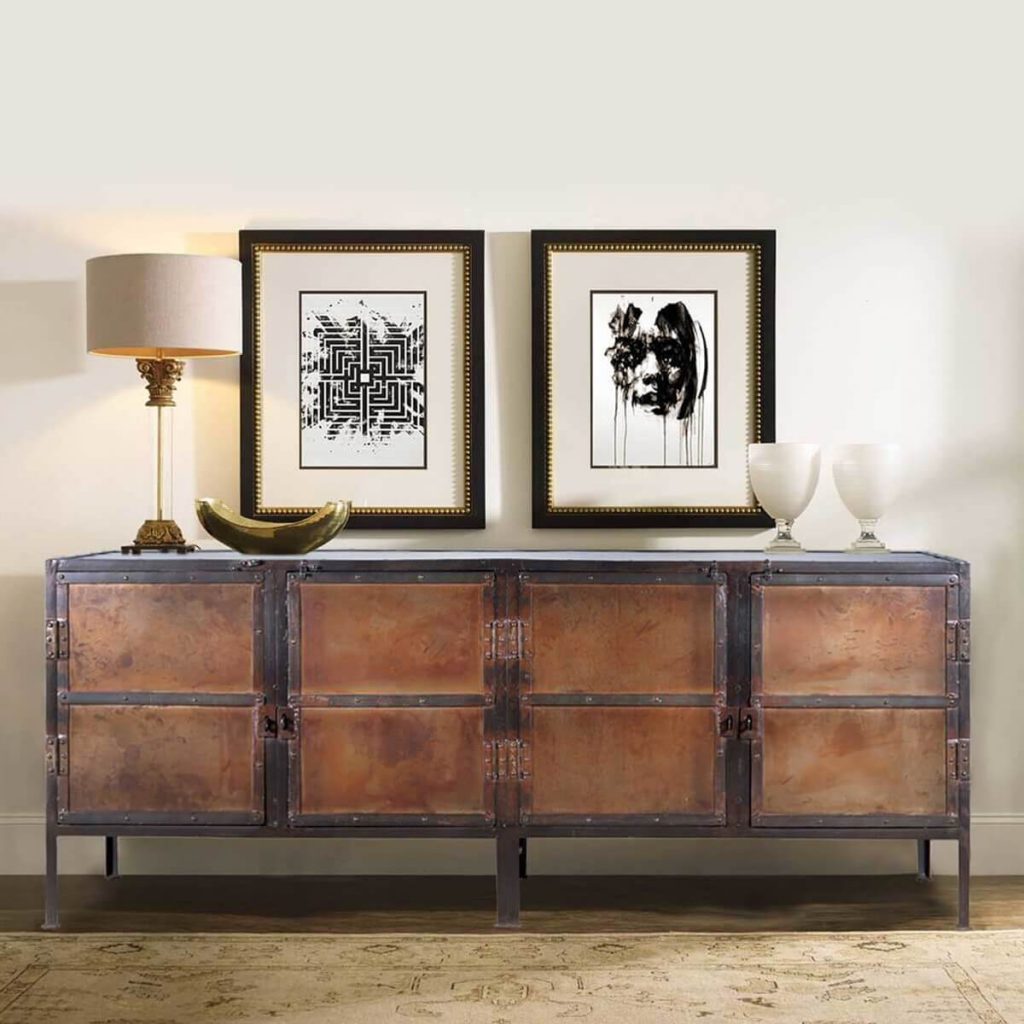
Choose a style that will seamlessly blend with the existing interiors and reflect your persona. In case you want a minimal design, go for a modern sideboard or buffet with a sleek build and neutral tone that will heighten any space. If you want a rugged look, go for an industrial-style sideboard with metal accents or an iron frame and solid wood panels with an organic finish.
If you have farmhouse-style decor, go for a neutral rustic look. A rattan or cane sideboard look will enhance a coastal-style home. If you are a fan of the traditional style, then you should check out a buffet or sideboard with a vintage or antique look that flaunts a Victorian style. A sideboard made of reclaimed wood will heighten a rustic-style home.
Rule 4: Get the features right
Once you have identified the requirements of your space, analyze your storage needs and pick a buffet or a sideboard with a hutch for extra storage. A two-tone hutch will look excellent in any setting. If you want to display your china and wine collection, choose a sideboard with bar storage or a bar hutch for the best fit. Selecting a sideboard in live-edge design will showcase your premium taste in design.
Go For Customization
If you are unable to find a sideboard buffet or credenza that matches your requirements or style, you can go for customization at Sierra Living Concepts. Based on your preferences, the expert team at Sierra Living Concepts will design a sideboard, keeping your preference for style, stain, and size exclusively for you.