
In This Article

Rug Size for Dining Table: How to Choose the Right Fit

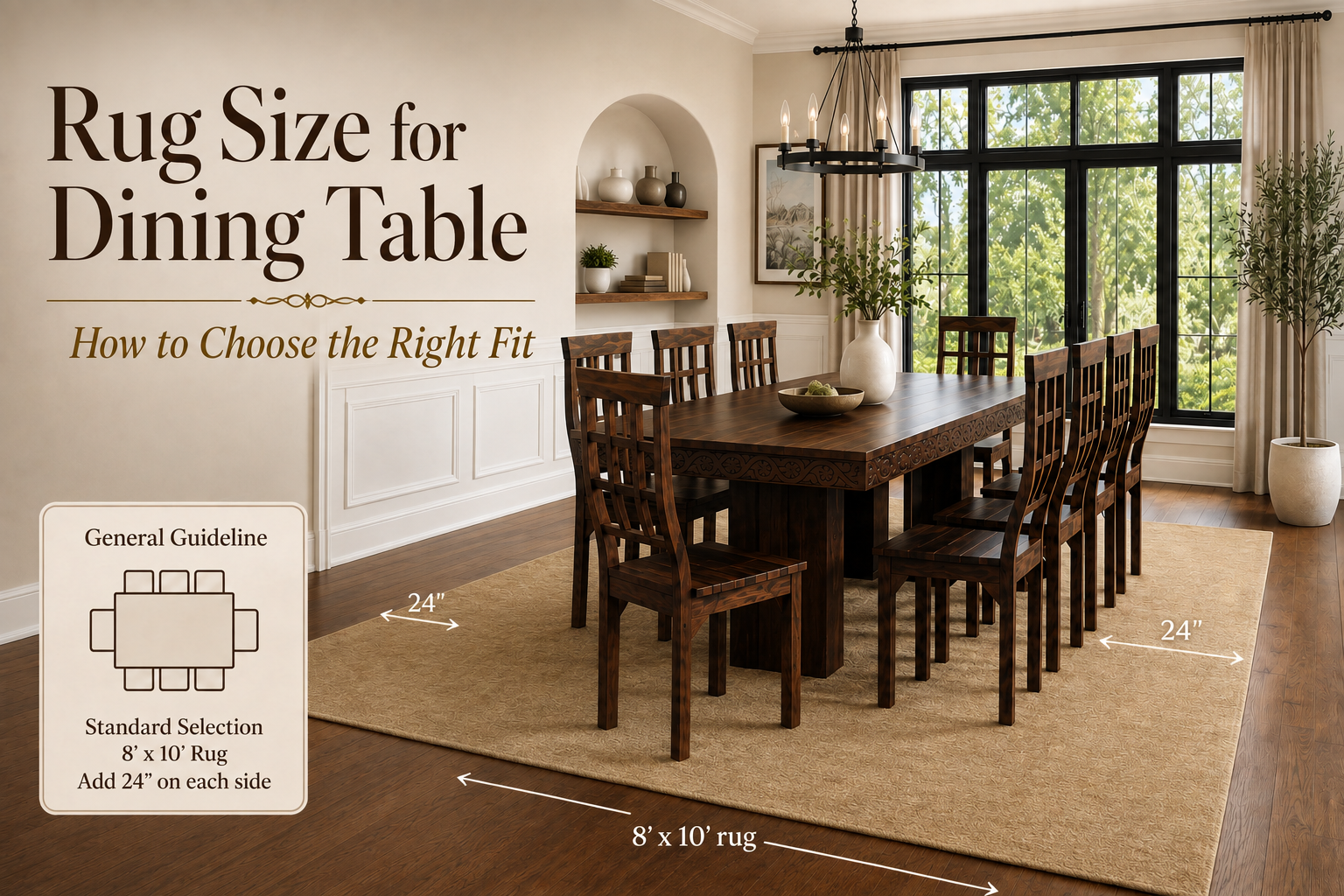
The standard rule for choosing a rug size for a dining table is to add at least 24 inches to each side of your table’s dimensions. This ensures dining chairs remain on the rug when pulled out. For most dining tables, that means choosing a rug that is at least 8×10 feet—though larger tables require proportionally larger rugs.
Getting the rug size wrong is one of the most common—and most expensive—decorating mistakes homeowners make. You order what looks like a generous rug online, it arrives, and you lay it under your solid wood dining table, and the moment someone pulls out a chair, the back legs drag across the bare floor. Frustrating.
The good news? There’s a simple formula that eliminates the guesswork. Once you understand the core rule—and know how to apply it to different table shapes and seating capacities—choosing the right dining room rug becomes straightforward.
This guide covers everything: the sizing formula, specific recommendations by table size, how to choose the right rug shape, and what to do if your dining room is oddly sized. By the end, you’ll know exactly which rug dimensions to look for before you buy.
The Golden Rule: Why 24 Inches Per Side Matters
Every interior designer worth their portfolio follows the same foundational principle: your rug should extend at least 24 inches beyond each side of the dining table.
Why 24 inches specifically? Because a standard dining chair, when pulled out to a comfortable seated position, extends roughly 16–20 inches from the table’s edge. Add a small buffer for movement, and 24 inches keeps all four chair legs on the rug—whether guests are seated or standing up.
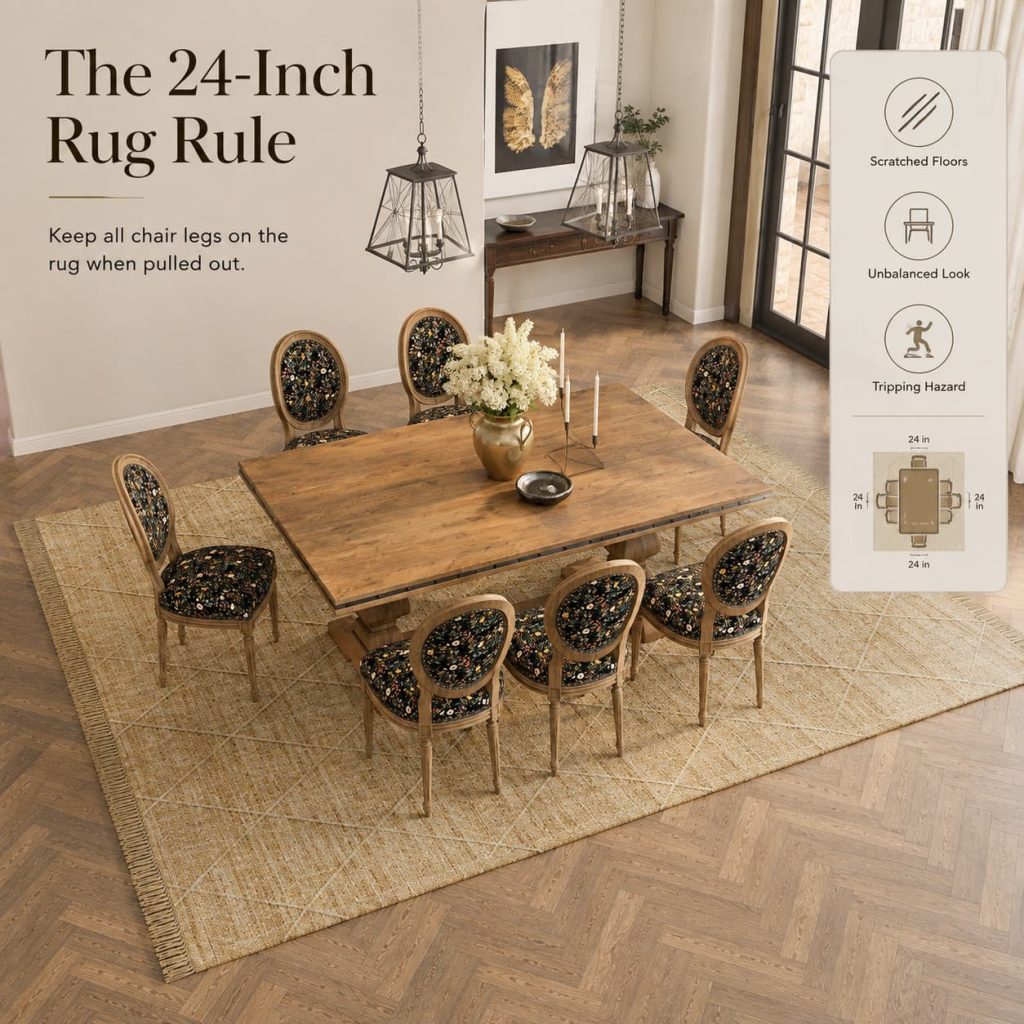
When chair legs slip off the edge of a rug, a few problems follow:
- Scratched floors. Chair legs dragging across hardwood or tile cause visible surface damage over time. A rug acts as a protective barrier between your dining chairs and your flooring.
- An unbalanced look. A rug that’s too small makes the whole dining setup look cramped and poorly proportioned—even if the furniture itself is beautiful.
- A tripping hazard. Edges that curl up under chair movement are a genuine safety concern.
The 24-inch rule solves all three. It’s not arbitrary—it’s based on real ergonomics and furniture design standards.
How to Calculate Your Ideal Dining Room Rug Size
Here’s the simple formula:
Table length + 48 inches = minimum rug length
Table width + 48 inches = minimum rug width
So if your dining table measures 72 inches (6 feet) long by 36 inches wide, you need a rug that is at least 120 inches (10 feet) long by 84 inches (7 feet) wide. The closest standard size would be an 8×10 or 9×12 rug, depending on your room layout.
Round up to the next standard rug size when in doubt. Going slightly larger rarely looks wrong. Going smaller almost always does.
Rug Size Recommendations by Table Size
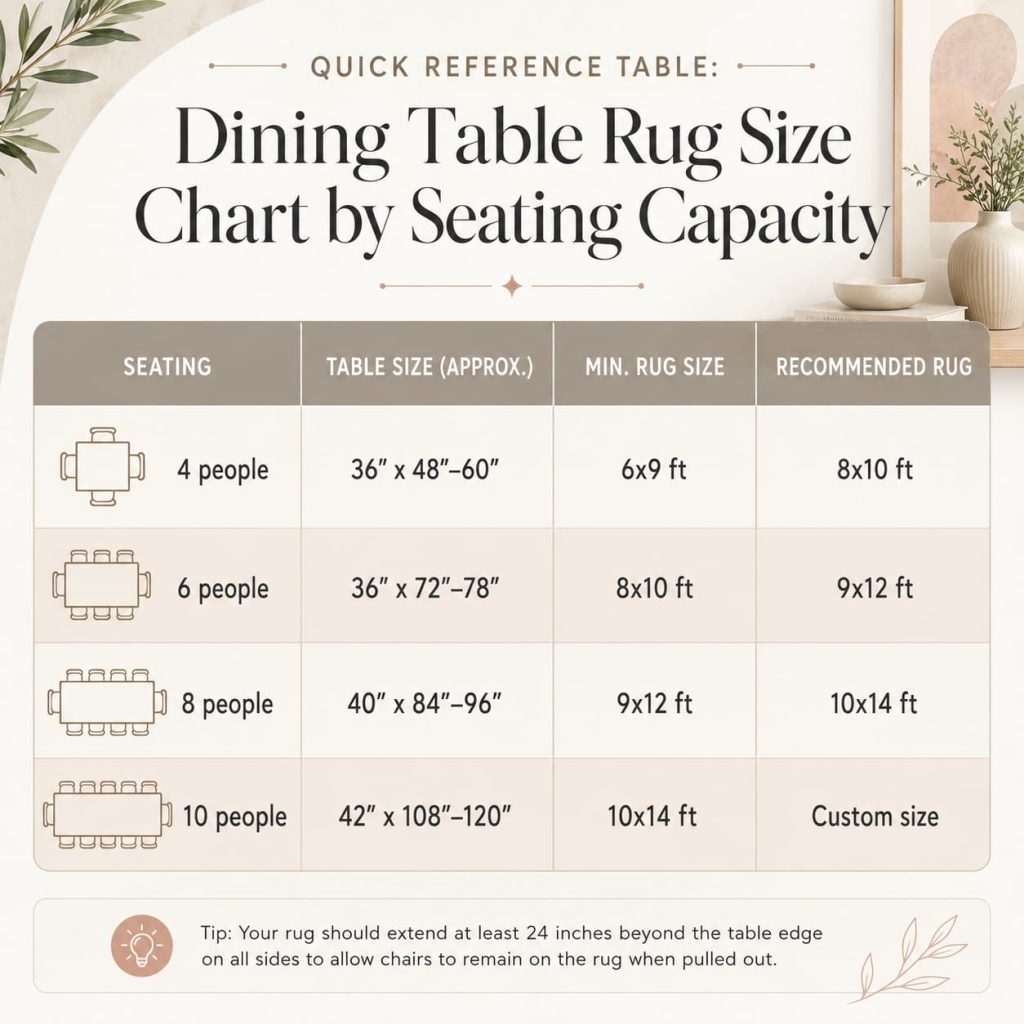
What size rug do I need for a 4-seater dining table?
A 4-person dining table typically measures around 36×48 inches to 36×60 inches. For this size:
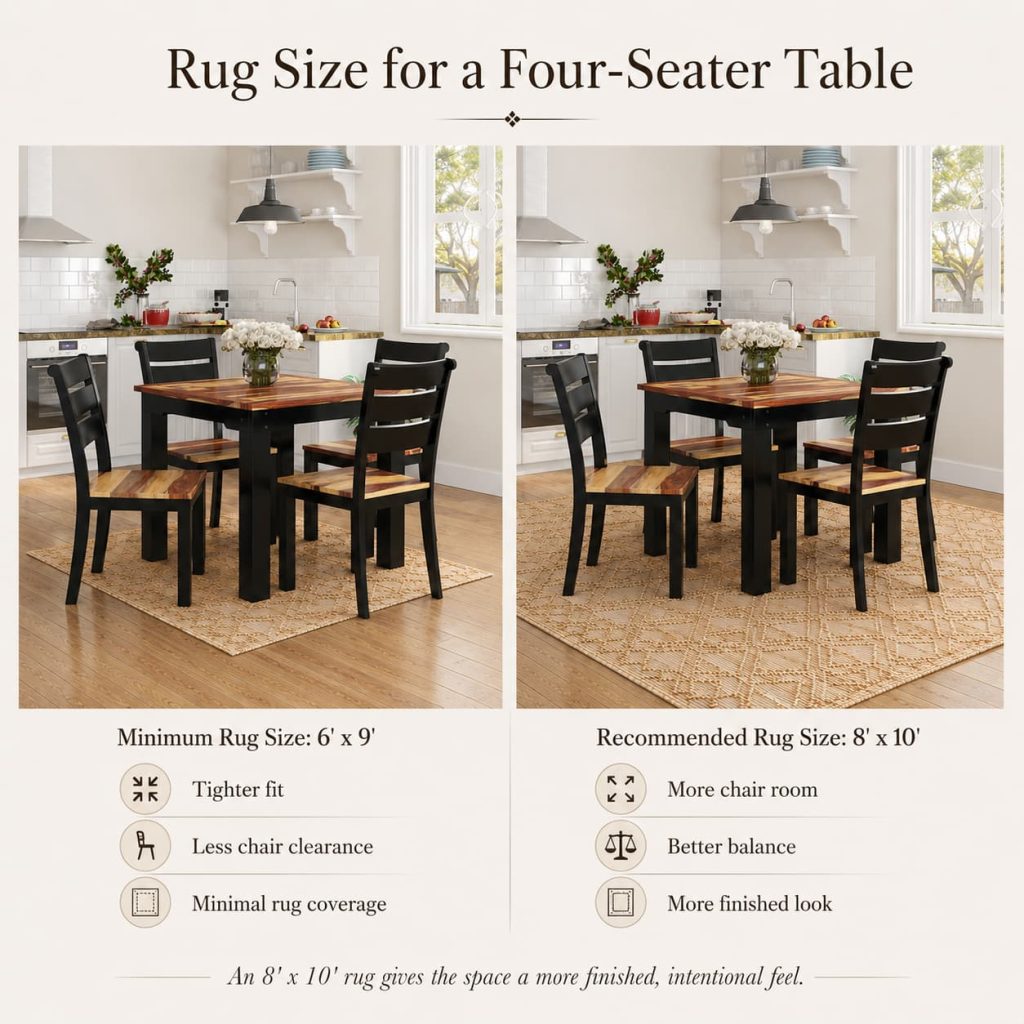
- Minimum rug size: 6×9 feet
- Recommended rug size: 8×10 feet
A 6×9 is the smallest you should go for a 4-seater. If your room allows it, an 8×10 gives the space a more finished, intentional feel.
What size rug do I need for a 6-seater dining table?
A 6-seat dining table generally runs 36×72 inches to 40×78 inches. Pair it with:
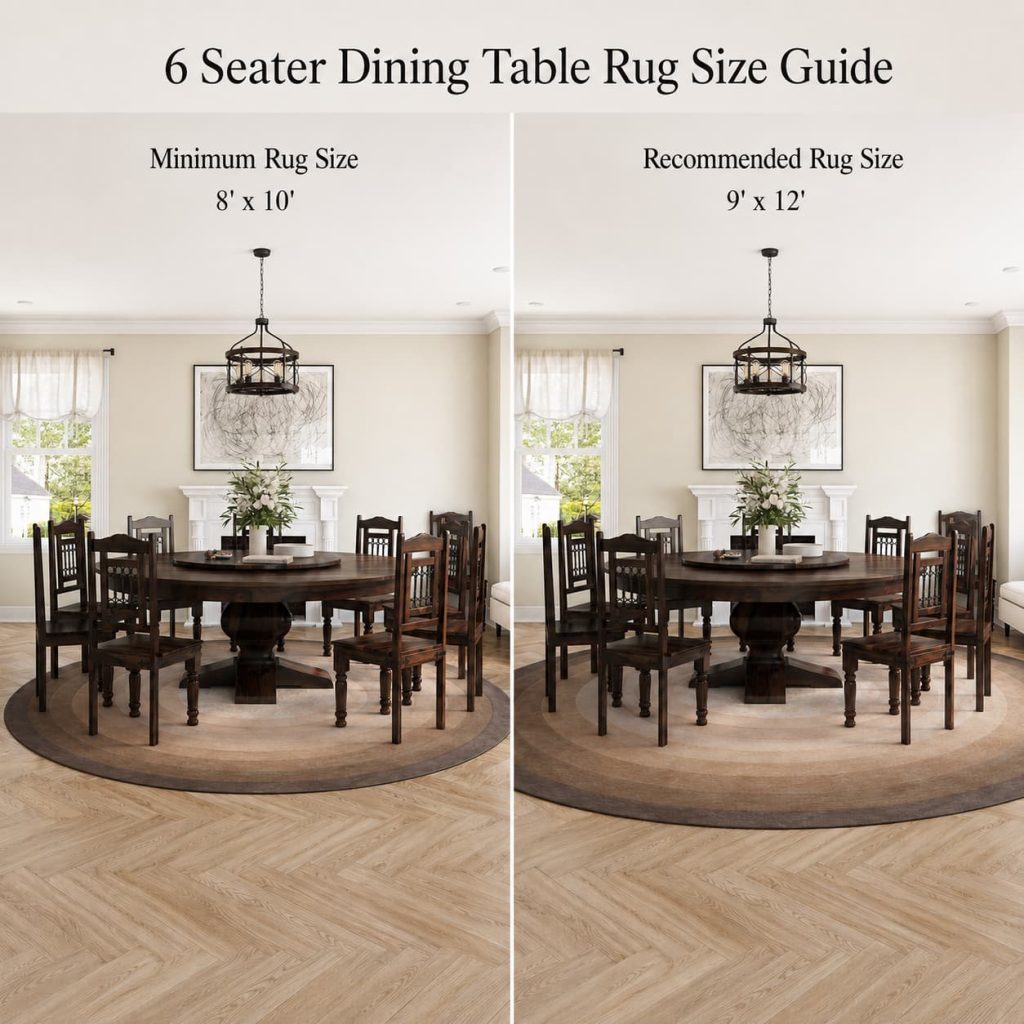
- Minimum rug size: 8×10 feet
- Recommended rug size: 9×12 feet
The 9×12 is the sweet spot for most 6-seater setups. It provides generous coverage and works well if you also have a buffet or sideboard nearby that you want to visually anchor to the dining zone.
What size rug do I need for an 8-seater dining table?
An 8-person table typically measures between 40×84 inches and 42×96 inches. You’ll need:
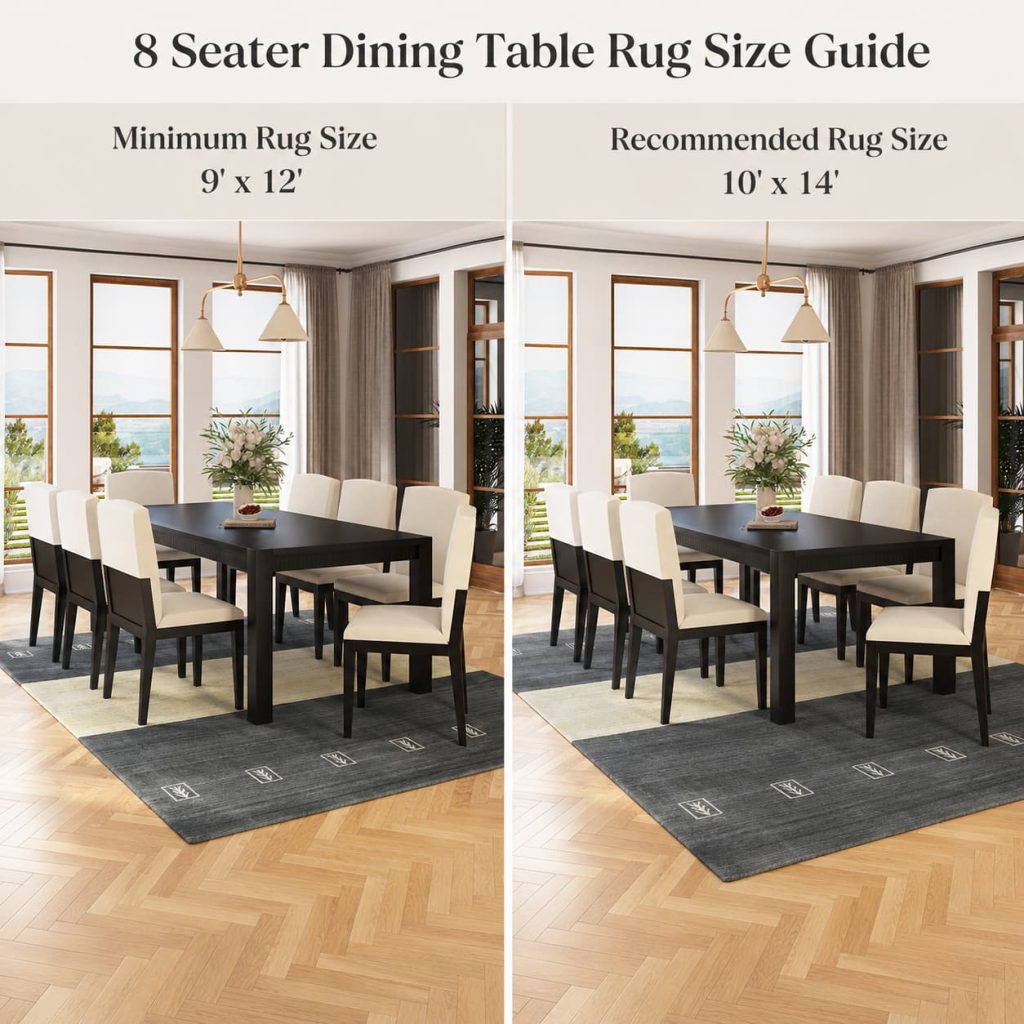
- Minimum rug size: 9×12 feet
- Recommended rug size: 10×14 feet
At this scale, a 9×12 may feel slightly tight if your chairs are large or the table has a wide profile. A 10×14 rug provides extra space and works well in larger dining rooms with extendable tables that can be expanded for entertaining.
What size rug do I need for a 10-seater dining table?
A 10-person table often spans 42×108 inches to 48×120 inches. This calls for:
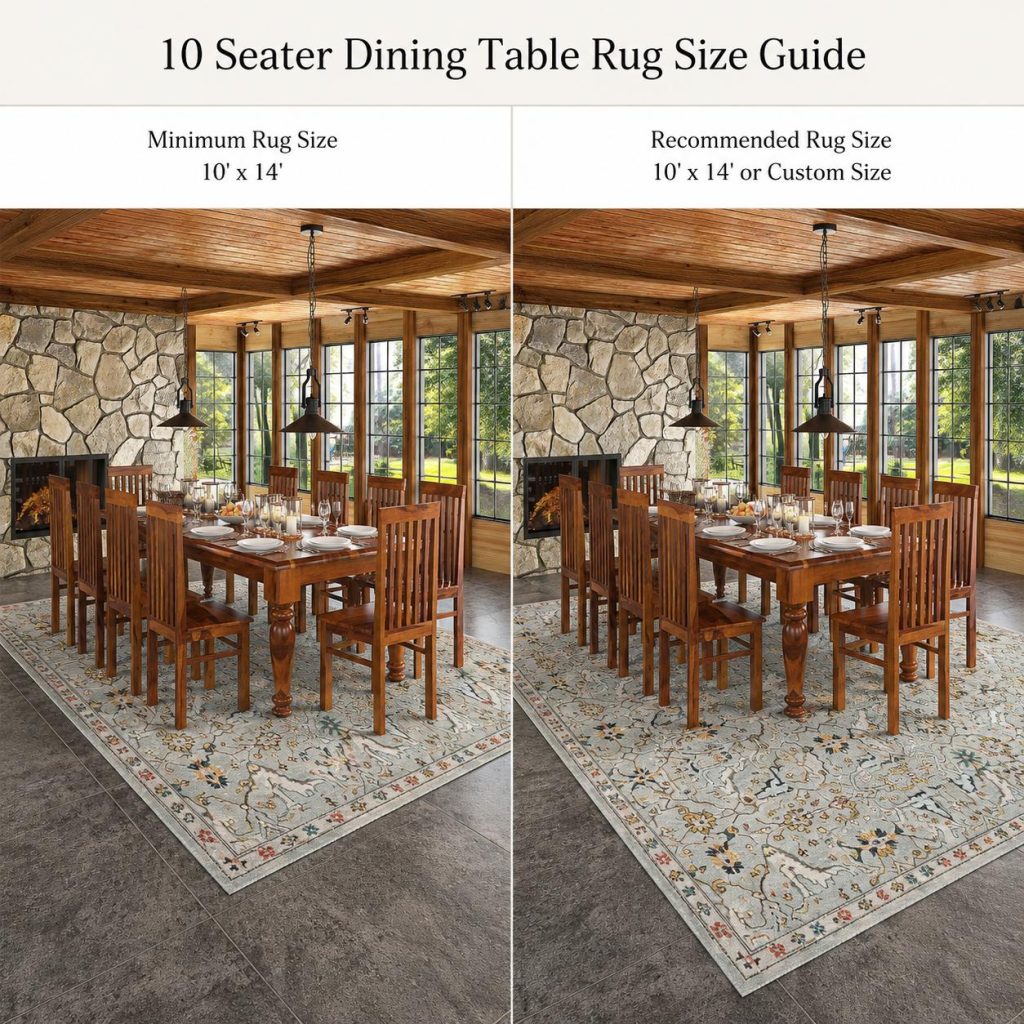
- Minimum rug size: 10×14 feet
- Recommended rug size: 10×14 feet or a custom size
At this length, you may find it difficult to source a standard rug that fits. Consider a custom rug or two overlapping runners placed end-to-end as a design-forward alternative.
Quick Reference Table: Dining Table Rug Size Chart by Seating Capacity
Does Rug Shape Matter for a Dining Table?
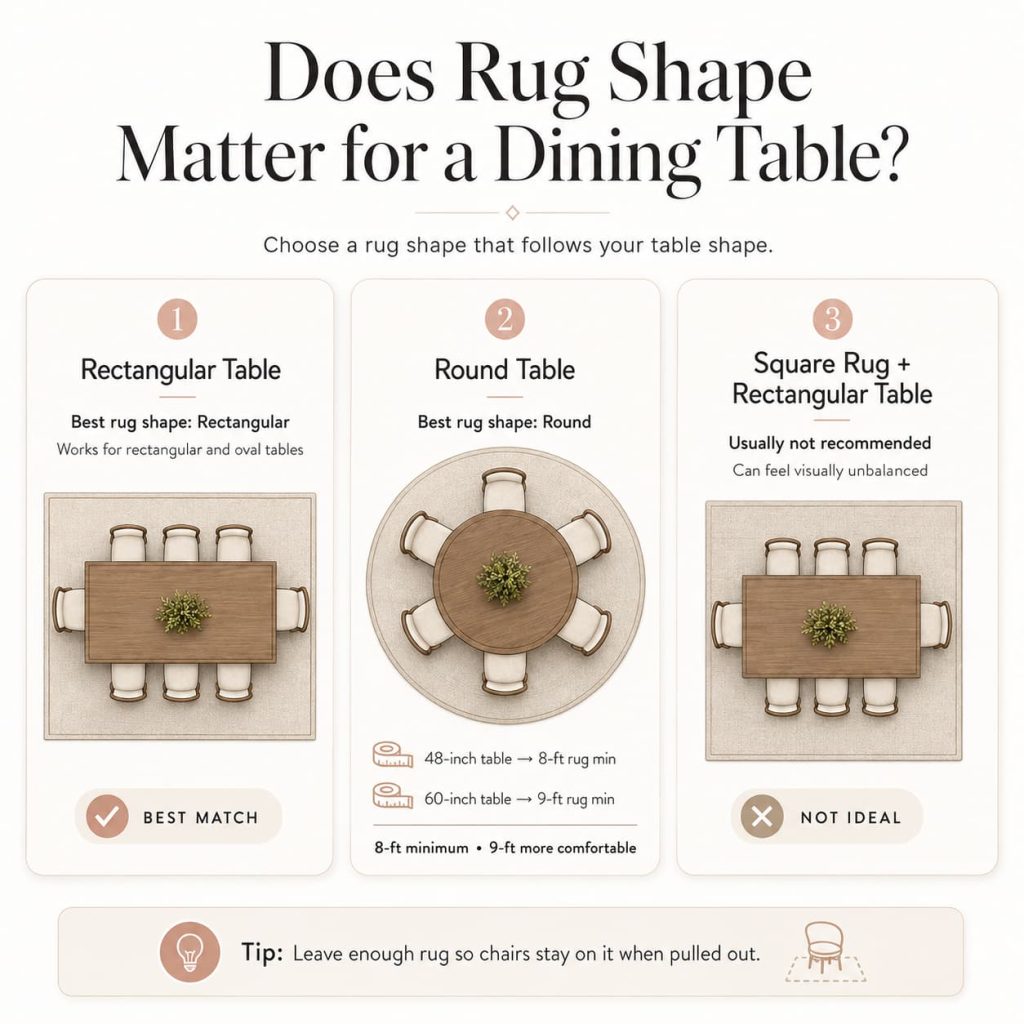
Yes—and the shape of the rug should generally follow the shape of the table.
What shape rug works best under a rectangular dining table?
Rectangular rugs are the most common and most versatile choice for dining rooms. They suit nearly every table configuration and room layout. If your solid wood dining table is rectangular or oval, a rectangular rug is always a safe, aesthetically sound choice.
What size round rug do I need for a round dining table?
Round rugs look stunning under round dining tables and create a cohesive, unified look. The same 24-inch rule applies—just measured from the table’s diameter.
- A 48-inch (4-foot) round table needs a rug at least 8 feet in diameter.
- A 60-inch (5-foot) round table needs a rug at least 9 feet in diameter.
Common round rug sizes include 6-foot, 8-foot, and 9-foot diameters. For most round dining tables, an 8-foot round rug is the minimum; a 9-foot is more comfortable.
Can I use a square rug under a rectangular table?
Technically, yes—but it’s rarely the right call. Square rugs under rectangular dining tables create visual imbalance and often leave the short ends of the table without adequate coverage. Stick to a rectangular rug that mirrors the table’s orientation.
How Room Size Affects Your Dining Rug Choice
The rug has to work within the room, not just under the table. Here’s what to keep in mind:
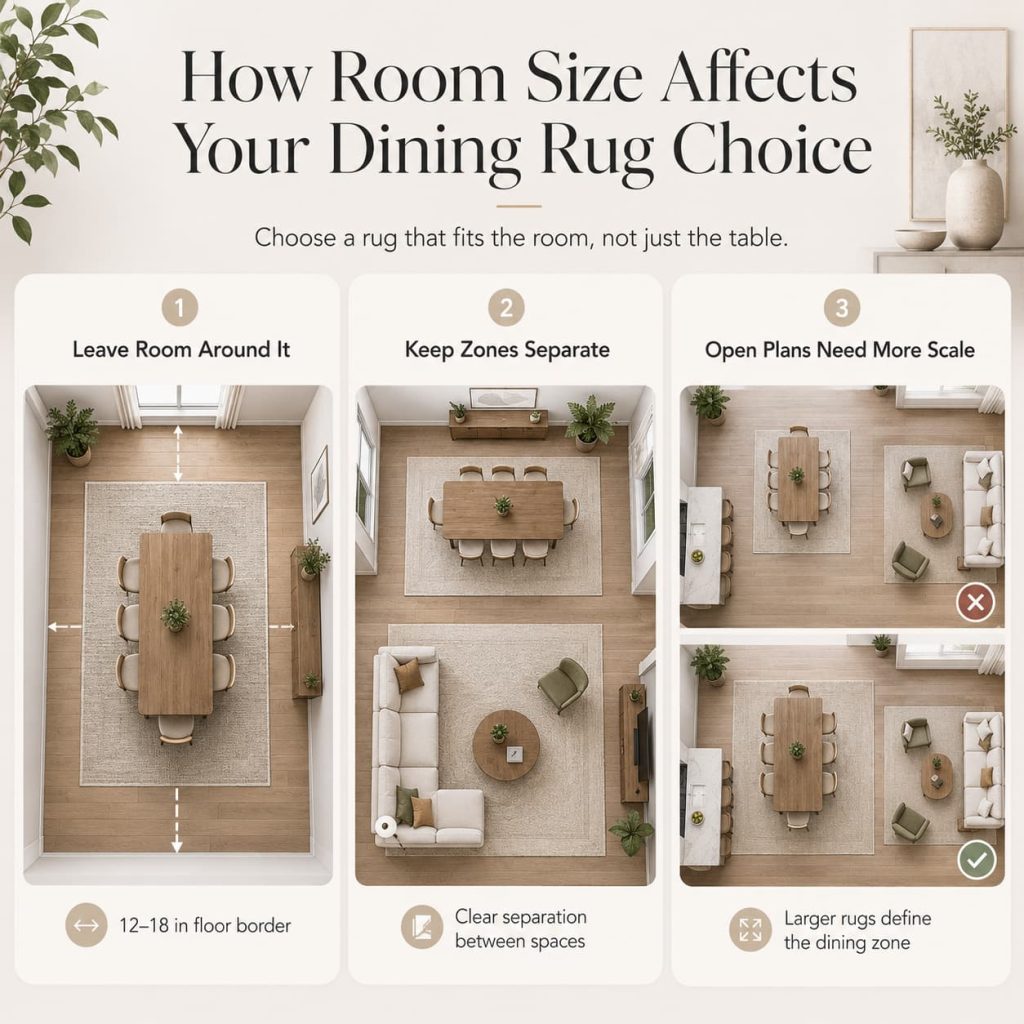
Leave 12–18 inches of bare floor between the rug edge and the wall. This border of exposed flooring creates a visual frame that makes the room feel intentional rather than cluttered. If the rug runs wall-to-wall or too close to baseboards, the room can feel smaller than it is.
Check that the rug doesn’t overlap into adjacent spaces. If your dining room flows into a living area with its own rug, ensure there’s a clear visual separation between the two zones. Rugs that bleed into adjacent spaces disrupt the room’s sense of order.
Open floor plans need larger rugs, not smaller ones. In open-concept layouts, a small rug makes the dining area look like an afterthought. Scale up to reinforce the dining zone as its own defined space—especially useful when a kitchen island or living room furniture is nearby.
What About Extendable Dining Tables?
Extendable tables present a unique challenge. A rug sized perfectly for the table in its compact form may be woefully undersized when leaves are added.
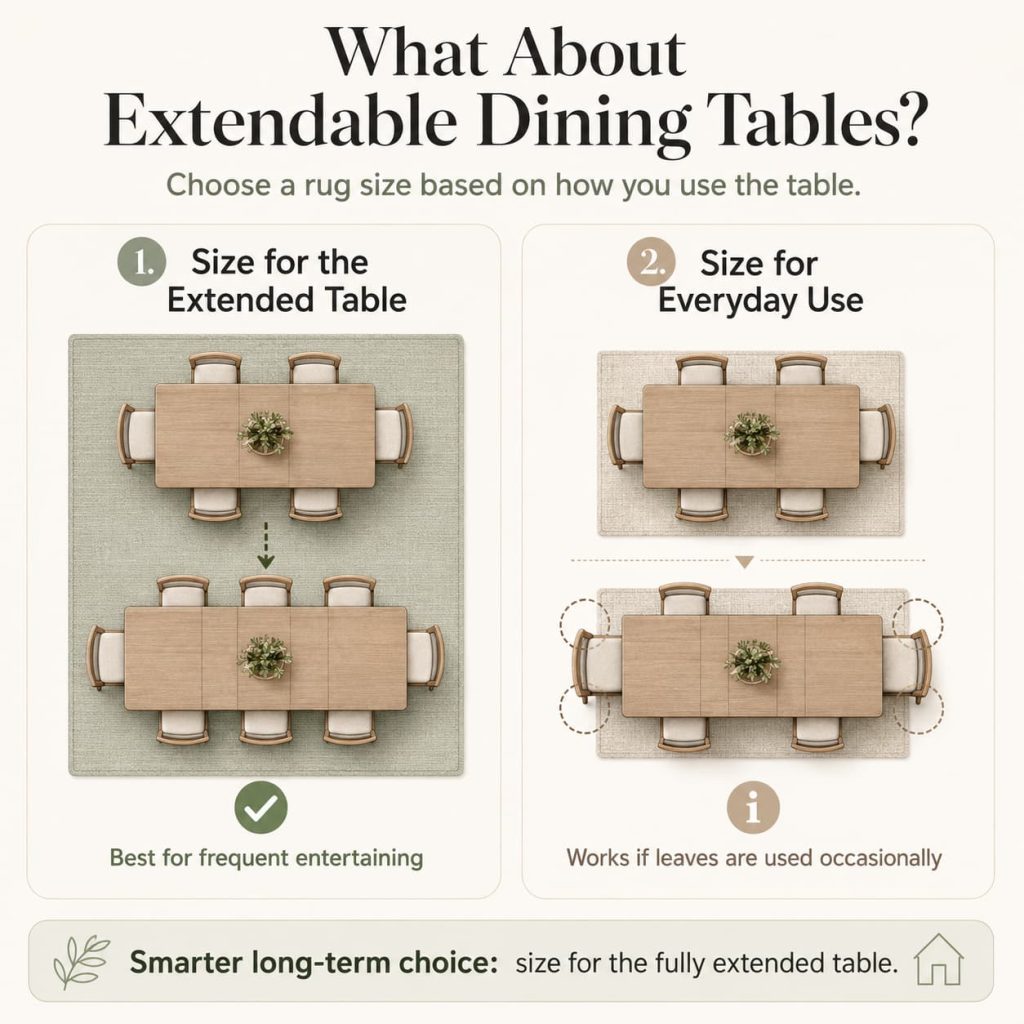
There are two practical approaches:
- Size for the extended table. Choose a rug that accommodates the table at its maximum length. The rug may look slightly large when the table is compact, but it ensures the rug always functions correctly. This is the better option if you entertain frequently.
- Size for everyday use. If extensions are added rarely, size the rug for the standard table configuration and accept that chair legs will partially leave the rug during larger gatherings. Choose a rug material that won’t show wear as easily.
For homes with extendable dining tables, sizing for the extended length is almost always the smarter long-term decision.
Choosing the Right Rug Material for Under a Dining Table
Size matters most—but material runs a close second. Dining areas see heavy foot traffic, food spills, and chair movement. The wrong material becomes a maintenance headache.
Best rug materials for under a dining table:
- Polypropylene (synthetic): Highly stain-resistant, easy to clean, affordable. Excellent for households with children or frequent entertainers.
- Wool: Naturally durable and resilient underfoot. It handles chair traffic well and develops a rich patina over time—a natural partner for the warmth of solid wood dining furniture.
- Jute and sisal: Work well in casual or rustic dining rooms, but absorb stains more readily. Best for low-traffic spaces or households without young children.
- Cotton: Soft and affordable, though less durable under heavy chair movement. Machine-washable options exist, which is a genuine advantage in dining rooms.
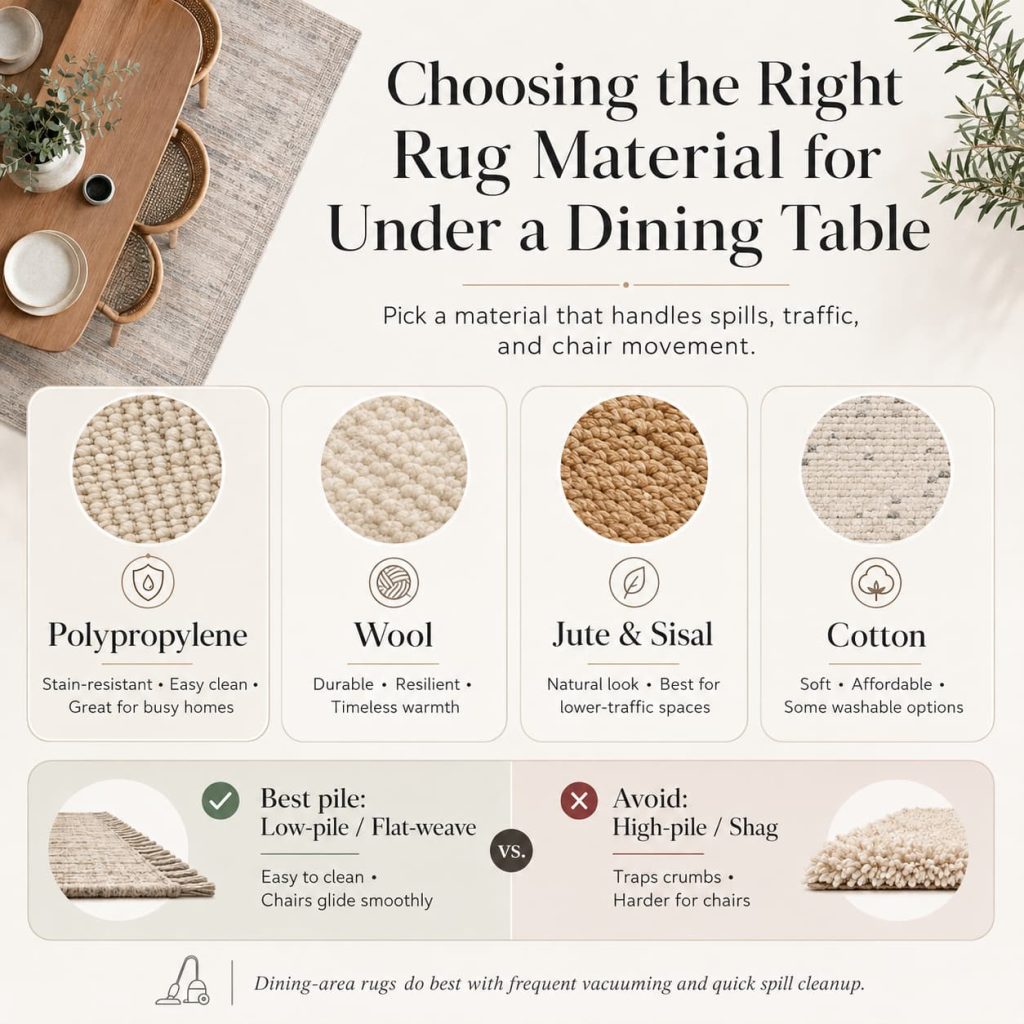
Rug pile height also matters. Low-pile and flat-weave rugs are significantly easier to keep clean and allow chairs to glide smoothly. High-pile or shag rugs trap food debris and make chair movement difficult.
According to guidance from the American Cleaning Institute, rugs in dining areas should be vacuumed at least twice a week and spot-cleaned immediately after spills to maximize longevity.
Rug Placement Tips to Get the Look Right
Even a perfectly sized rug can look off if placed incorrectly. Follow these placement guidelines:
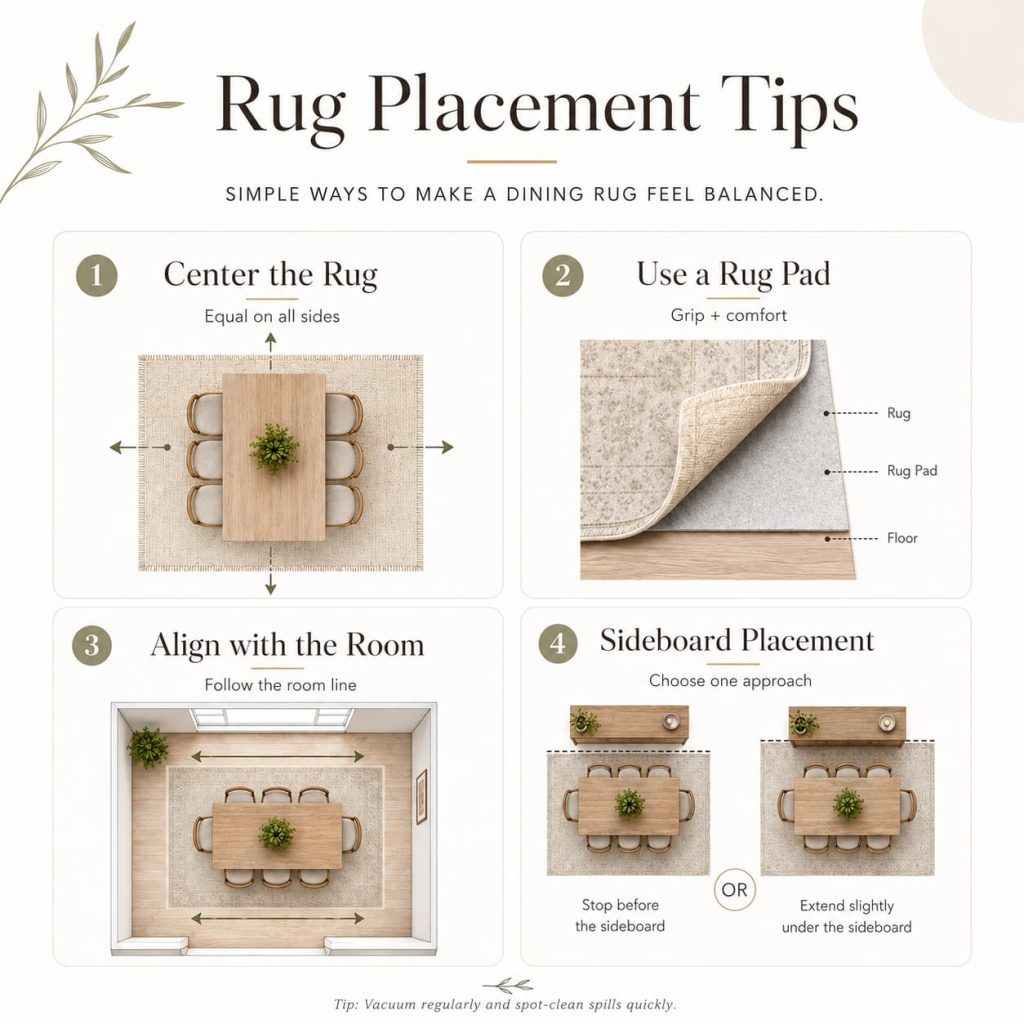
- Center the rug under the table. Equal amounts of rug should extend from each side. An off-center rug immediately reads as a mistake.
- Use a rug pad. A non-slip pad underneath extends the rug’s life, prevents movement, and adds cushioning underfoot. It’s a small investment that makes a real difference—especially on hardwood floors.
- Check alignment with room architecture. On most rectangular rooms, the rug’s longest axis should run parallel to the longest wall. This reinforces the room’s natural proportions.
- Consider the placement of a sideboard or buffet. If your sideboard cabinet sits along one wall adjacent to the table, decide whether you want the rug to extend partially beneath it or stop short. Either can work—just be consistent and deliberate.
How to Protect Your Floors Under a Dining Rug
One of the best reasons to use an area rug under a dining table is floor protection. Hardwood, engineered wood, and tile are all vulnerable to scratching from chair legs, moisture from spills, and general wear from foot traffic.
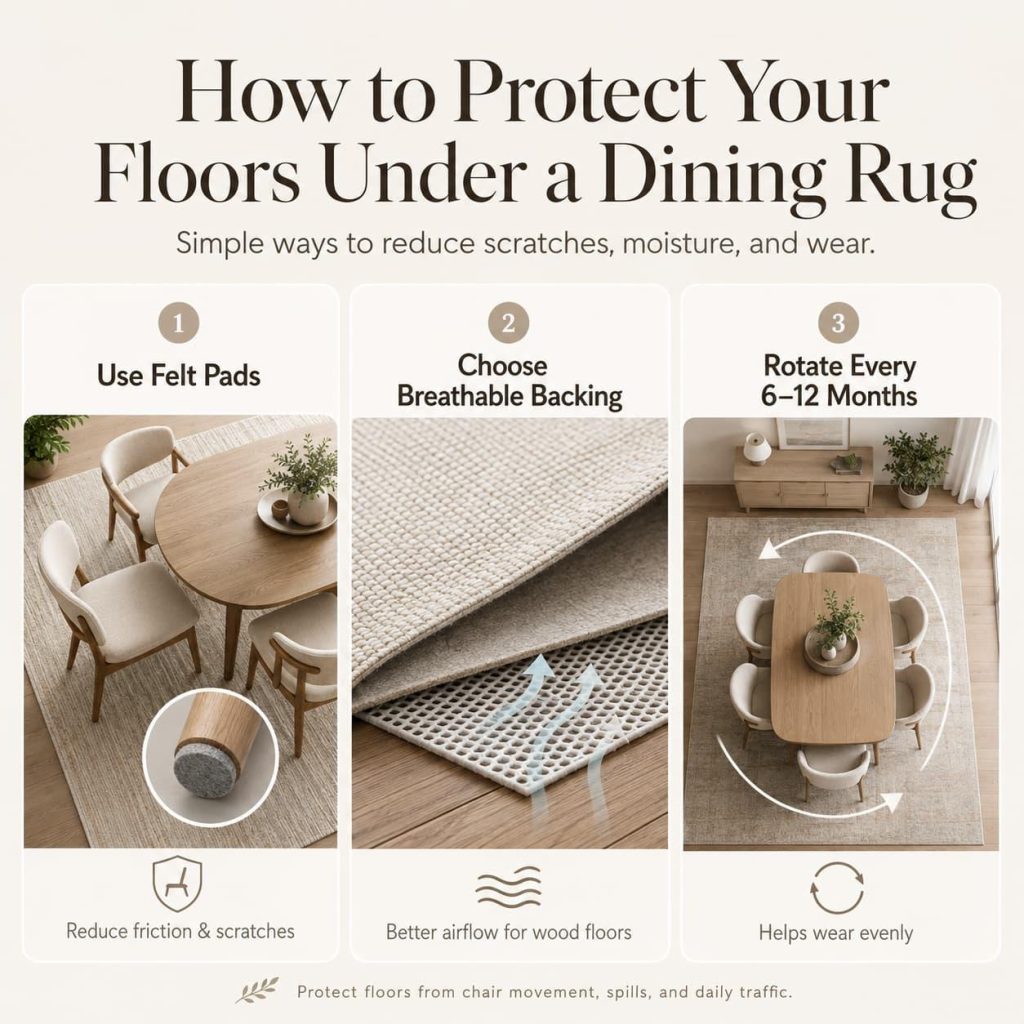
A few best practices:
- Use felt rug pads on chair legs in addition to a rug. Even on carpet or rugs, felt pads reduce the friction that causes wear.
- Choose a rug with a breathable backing. Rubber-backed rugs can trap moisture against hardwood floors over time. Use a separate rug pad with airflow instead.
- Rotate the rug every 6–12 months. This distributes wear evenly and prevents fading on one side from sun exposure.
For guidance on caring for the wood furniture beneath and around the rug, Sierra Living Concepts’ wood furniture care resources offer practical tips tailored to solid wood pieces.
Style and Color: Making the Rug Work with Your Dining Room
Sizing and placement are functional decisions. Color, pattern, and texture are aesthetic ones—and they deserve equal thought.
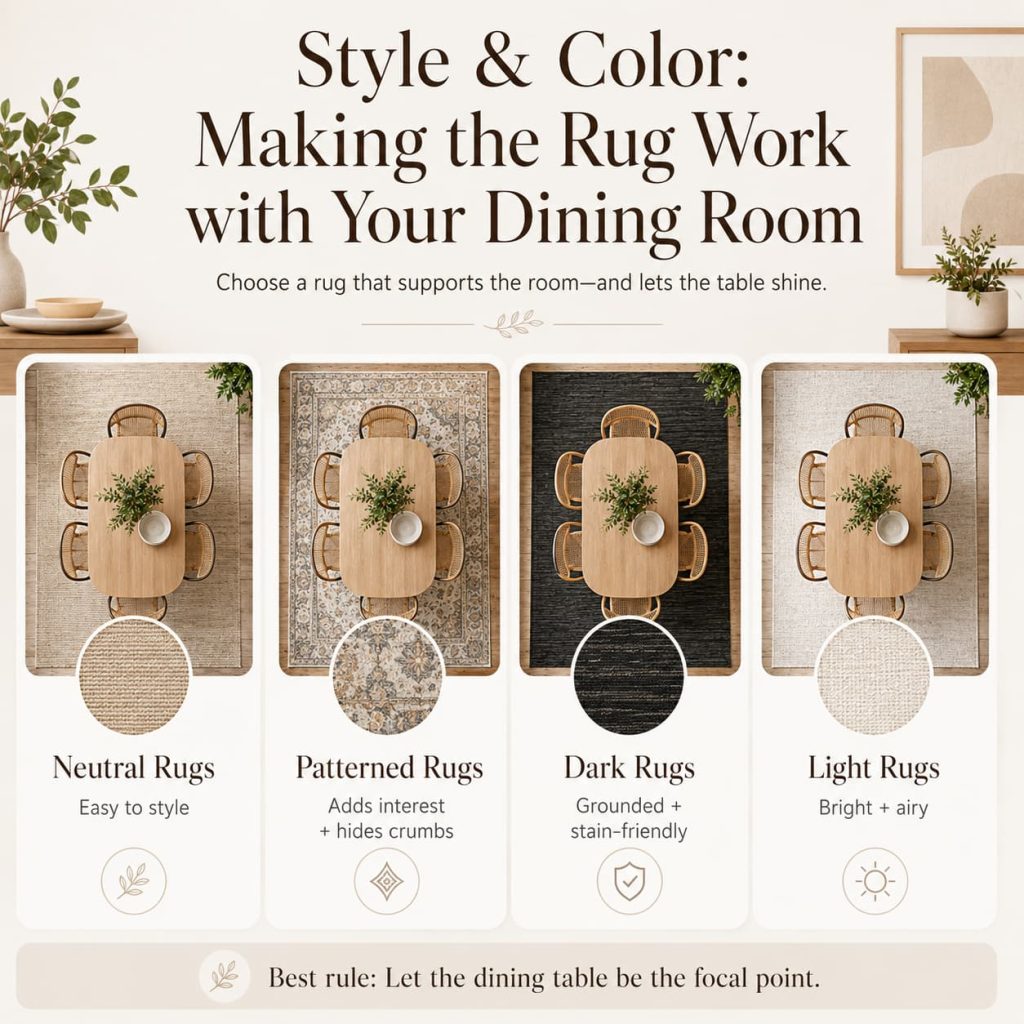
Neutral rugs (beige, gray, cream, and charcoal) are the easiest to incorporate and pair naturally with almost any dining table and chair set. They’re also forgiving when your decor evolves.
Patterned rugs (geometric, floral, or traditional) add visual interest and help camouflage crumbs and minor staining between cleans. A bold pattern can also anchor an otherwise simple dining room.
Dark rugs hide stains well and create a dramatic, grounded effect under a light or natural wood table.
Light rugs brighten a space and pair beautifully with rich, dark woods—but require more frequent cleaning in busy households.
One rule that applies universally: the rug should complement, not compete with, the dining table. If your table is a statement piece—say, a hand-carved solid wood dining table with striking grain—a quieter, textured rug lets the table remain the focal point.
The Right Rug, at Every Scale
Choosing the right rug size for your dining table is genuinely simple once you know the rules. Start with the 24-inch formula, match the rug shape to your table, account for your room dimensions, and choose a material that fits your lifestyle. Size up when in doubt.
The rug you choose will define the feel of the dining room as much as the furniture itself. A well-sized rug under a beautiful dining table pulls the entire space together—creating warmth, structure, and a room that actually invites people to sit down and stay awhile.
Ready to find the table that anchors it all? Browse Sierra Living Concepts’ full collection of solid wood dining tables, round dining tables, and complete dining room sets—all handcrafted to order and built to last.
Frequently Asked Questions About Dining Table Rug Sizes
What is the minimum rug size for a dining table?
The minimum rug size for any dining table extends at least 24 inches beyond each side of the table. For most small dining tables (4 seats), that means a 6×9-foot rug at minimum—though an 8×10 is strongly recommended.
Is an 8×10 rug big enough for a dining table?
An 8×10-foot rug works well for dining tables seating 4 to 6 people, particularly tables measuring up to 72 inches long. For tables longer than 72 inches or tables with wide chairs and benches, step up to a 9×12.
What shape rug should I use under a round dining table?
A round rug is the ideal choice under a round dining table. For a 48-inch round table, choose a rug at least 8 feet in diameter. A 9-foot or larger round rug is best for a 54–60-inch table. The shapes work in harmony and reinforce the visual cohesion of the space.
Should a rug go under dining room chairs when pulled out?
Yes—always. All four legs of every chair should remain on the rug when chairs are pulled out to a seated position. If chair legs slide off the rug’s edge, the rug is too small. This is the most important functional test for any dining room rug.
Does rug size change for an extendable dining table?
Yes. Size the rug based on the table’s maximum extended length, not its compact size. This keeps the rug functional when leaves are added for larger gatherings. A rug sized only for the compact table will be too small the moment the table expands.
What type of rug is easiest to clean under a dining table?
Flat-weave or low-pile polypropylene rugs are the easiest to clean in dining areas. They resist stains, don’t trap food debris, and can often be cleaned with a damp cloth. Wool is also a good choice, naturally resilient and moderately easy to maintain with regular vacuuming and prompt spot cleaning.
