
In This Article

How to Fix Cracked Wood Furniture in 6 Simple Steps

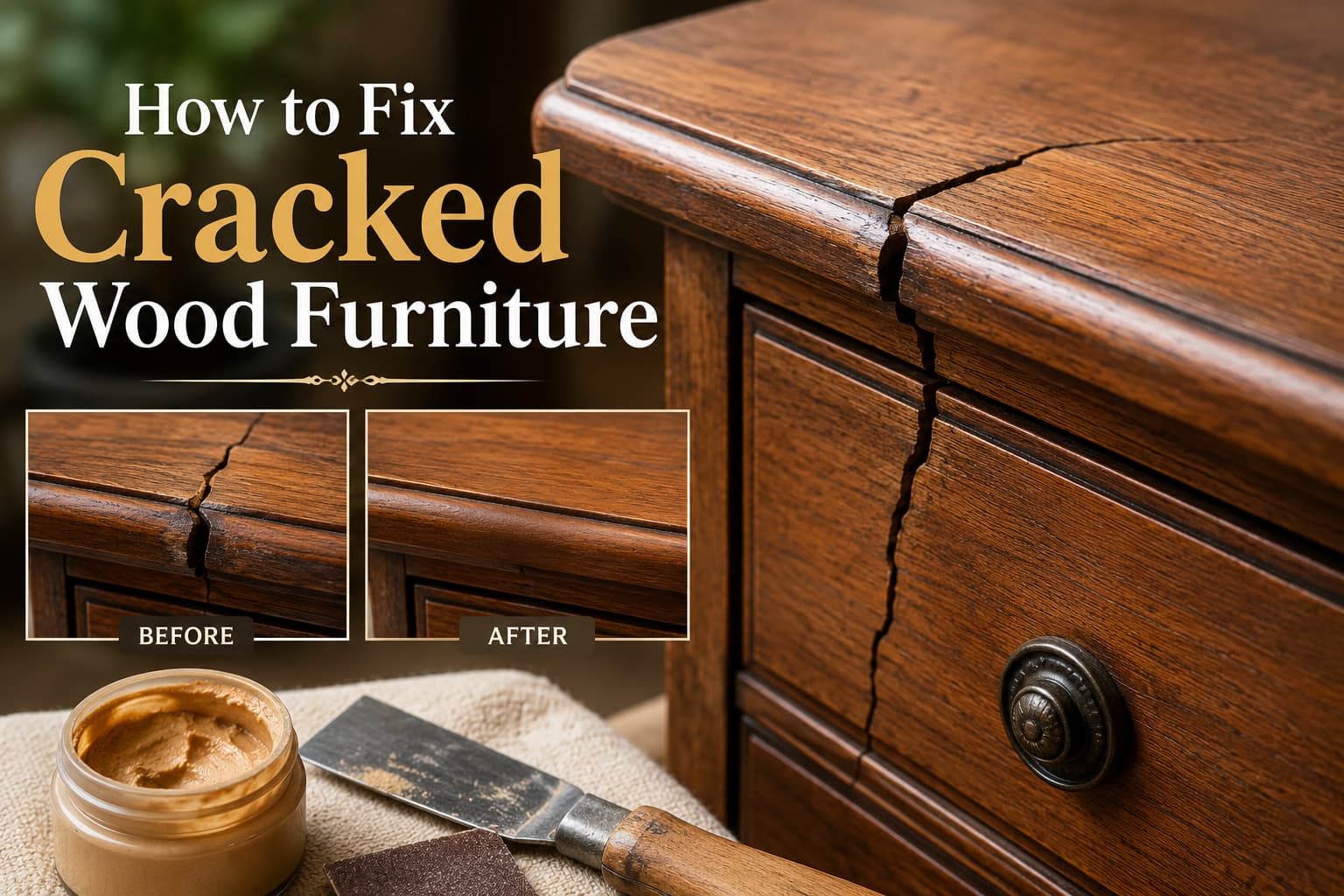
To fix cracked wood furniture, clean the crack, then fill it with wood glue for small splits or two-part epoxy for deeper ones. Clamp the piece firmly, let it cure for 12–24 hours, sand the area smooth, and refinish to match.
A crack in a cherished table or dresser feels like the start of the end. It isn’t. With a few basic tools and some patience, you can rescue almost any split or cracked piece; no carpentry degree required. Better still, repairing furniture you love keeps quality pieces in your home and out of the landfill.
This guide walks you through the why and how of fixing cracked wood furniture. You’ll learn what causes cracks, which materials to choose for different types of damage, and a clear six-step process to bring your favorite pieces back to life.
Why does wood furniture crack in the first place?
Wood is a living material that keeps moving long after it becomes furniture. Understanding what caused your crack helps you fix it properly and prevent the next one. Here are the five most common culprits:
- Humidity changes: Wood absorbs moisture and swells in humid air, then shrinks as conditions dry out. This constant cycle is the leading cause of cracks. Keeping indoor humidity between 40% and 60% reduces the risk.
- Sudden temperature shifts: Placing furniture near a heater or air conditioner creates internal stress. The EPA recommends keeping indoor temperatures between 60°F and 90°F to protect wood.
- Direct sunlight or heat: Sunlight hitting the same spot day after day dries the wood and makes it brittle. Keep furniture away from sunny windows, stoves, and fireplaces.
- Natural wood movement: Even premium solid wood shifts over time. Softwoods crack more easily than stable hardwoods like oak and maple.
- Physical stress and impact: Heavy objects, drops, or constant pressure on one edge can split the grain. Coasters and placemats help, but so does avoiding overload.
What materials do you need to repair cracked wood?
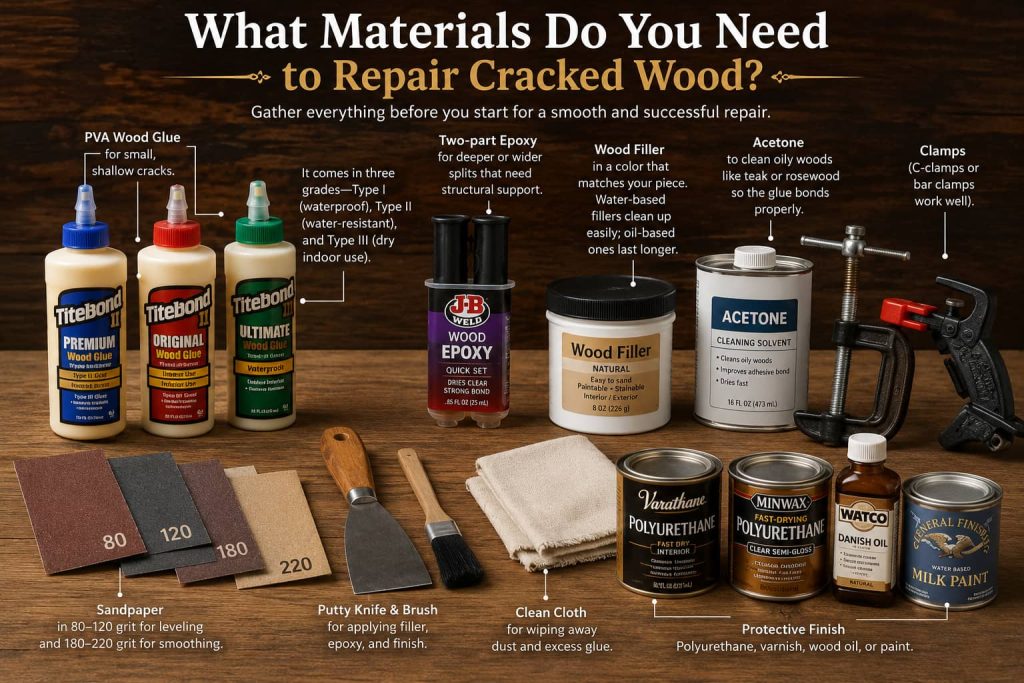
Gathering everything before you start keeps the process calm instead of chaotic. Here’s your repair kit:
- PVA wood glue for small, shallow cracks. It comes in three grades—Type I (waterproof), Type II (water-resistant), and Type III (dry indoor use).
- Two-part epoxy for deeper or wider splits that need structural support.
- Wood filler in a color that matches your piece. Water-based fillers clean up easily; oil-based ones last longer.
- Acetone to clean oily woods like teak or rosewood so the glue bonds properly.
- Clamps (C-clamps or bar clamps work well).
- Sandpaper in 80–120 grit for leveling and 180–220 grit for smoothing.
- Putty knife and a small brush for applying filler, epoxy, and finish.
- A clean cloth for wiping away dust and excess glue.
- A protective finish—polyurethane, varnish, wood oil, or paint.
How do you fix cracked wood furniture step by step?
Whether you’re dealing with a hairline crack or a split running along the grain, the same six steps apply.
Step 1: Gather your tools and inspect the piece
Lay out everything from your repair kit so you’re not scrambling mid-project. Then take a close look at the damage. The size and depth of the crack decide which material you’ll use, and that one choice shapes the whole repair.
Step 2: Assess the damage and clean the crack
Not all cracks are the same:
- Small, shallow cracks usually need nothing more than wood glue.
- Larger or deeper splits call for epoxy or wood filler for a stronger hold.
Once you know your approach, wipe the crack clean with a dry cloth to remove dust and debris. If you’re working with oily woods, swipe the area with acetone to help the adhesive grip.
Step 3: Apply wood glue or epoxy
For small cracks, gently open the split just enough to squeeze glue inside, then spread it with a brush so it seeps all the way in. Press the wood back together.
For deeper splits, mix your epoxy at the exact ratio on the package and work it into the crack with a putty knife or syringe. If the crack runs all the way through, seal the underside first with tape or a plastic sheet so the epoxy doesn’t drip out. Wipe away any excess with a clean cloth while it’s still wet.
Go slow and steady. Even application means no clumps, no drips, and a stronger bond.
Step 4: Clamp the piece and let it cure
Clamp the repair firmly until a little adhesive squeezes out—that pressure is what makes the bond hold. Leave light repairs clamped for at least an hour, and keep stressed joints clamped for 24 hours.
Then wait. Most glues and epoxies need 12–24 hours to cure fully. Removing the clamps too early is the fastest way to watch the crack pop right back open.
Step 5: Sand the repair smooth
This step separates a good fix from a professional-looking one. Start with 80–120 grit sandpaper to level any excess glue or filler. Then switch to 180–220 grit to blend the area into the surrounding wood. Run your hand across it—if it feels seamless, you’re on track.
Step 6: Refinish to match
Give the piece a finish that suits your style. A fresh coat of paint changes the look entirely, while wood oils like linseed or tung highlight the natural grain and guard against future cracking. For everyday pieces, add a layer of varnish or polyurethane for scratch and spill resistance.
Test the finish in a hidden spot first, especially on older furniture, since wood ages in its own way and tones can need adjusting. Let each coat dry fully before adding the next.
How can you prevent wood furniture from cracking again?
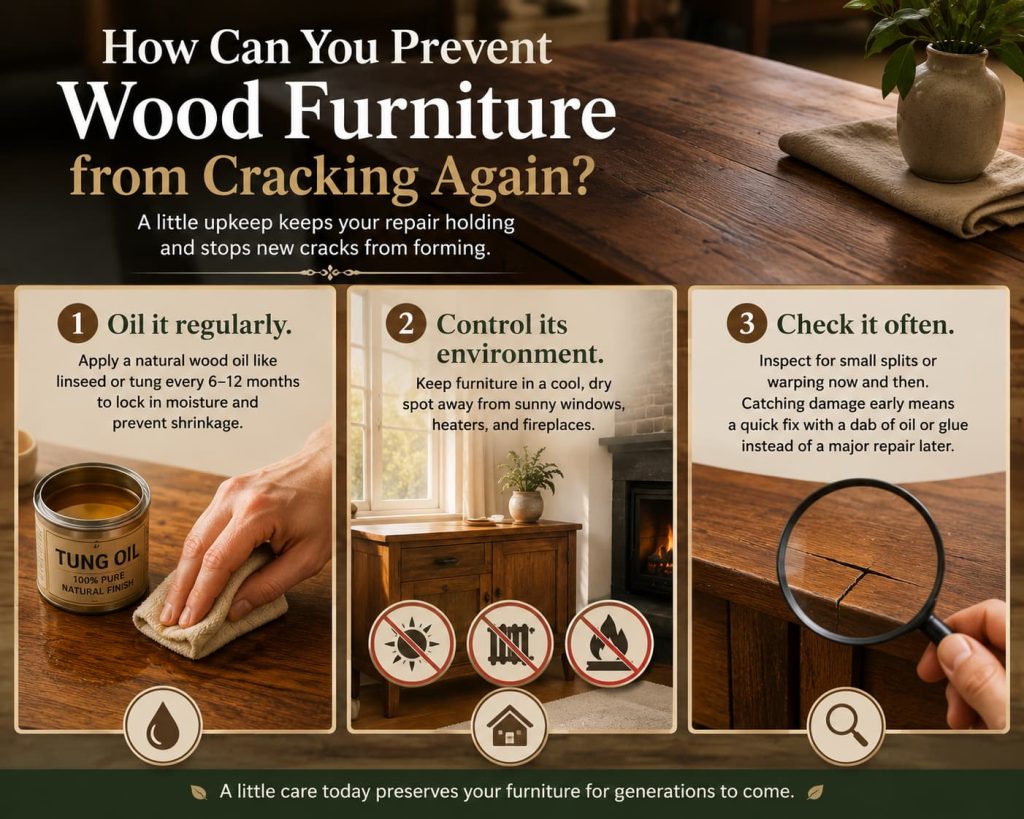
A little upkeep keeps your repair holding and stops new cracks from forming:
- Oil it regularly. Apply a natural wood oil like linseed or tung every 6–12 months to lock in moisture and prevent shrinkage.
- Control its environment. Keep furniture in a cool, dry spot away from sunny windows, heaters, and fireplaces.
- Check it often. Inspect for small splits or warping now and then. Catching damage early means a quick fix with a dab of oil or glue instead of a major repair later.
Keep the furniture you love for years to come
A crack isn’t the end of a beloved piece—it’s a moment that calls for a little care. With wood glue or epoxy, a few clamps, and the six steps above, you can repair almost any split and restore both strength and beauty. The dining table that has hosted countless dinners and the dresser that has followed you through every move both deserve that second chance.
If the crack is severe or the piece is a valuable antique, calling a professional is the safest way to protect its value. For everything else, you now have everything you need to fix it yourself.
Frequently asked questions
Can you fix wood that has split?
Yes. Most split wood can be repaired with glue, epoxy, or filler, depending on the depth of the crack. The key is catching it early, before the split widens or weakens the structure.
How do you fill cracks in wood without wood filler?
Mix sawdust from the same type of wood with wood glue to make a thick paste. Press it into the crack, let it dry, then sand it smooth. The matching sawdust helps the repair blend in.
Which is better for repairs, wood filler or putty?
Wood filler is better for structural repairs because it hardens and bonds with the wood. Putty is best for cosmetic touch-ups after the repair, like hiding tiny surface flaws.
