
In This Article

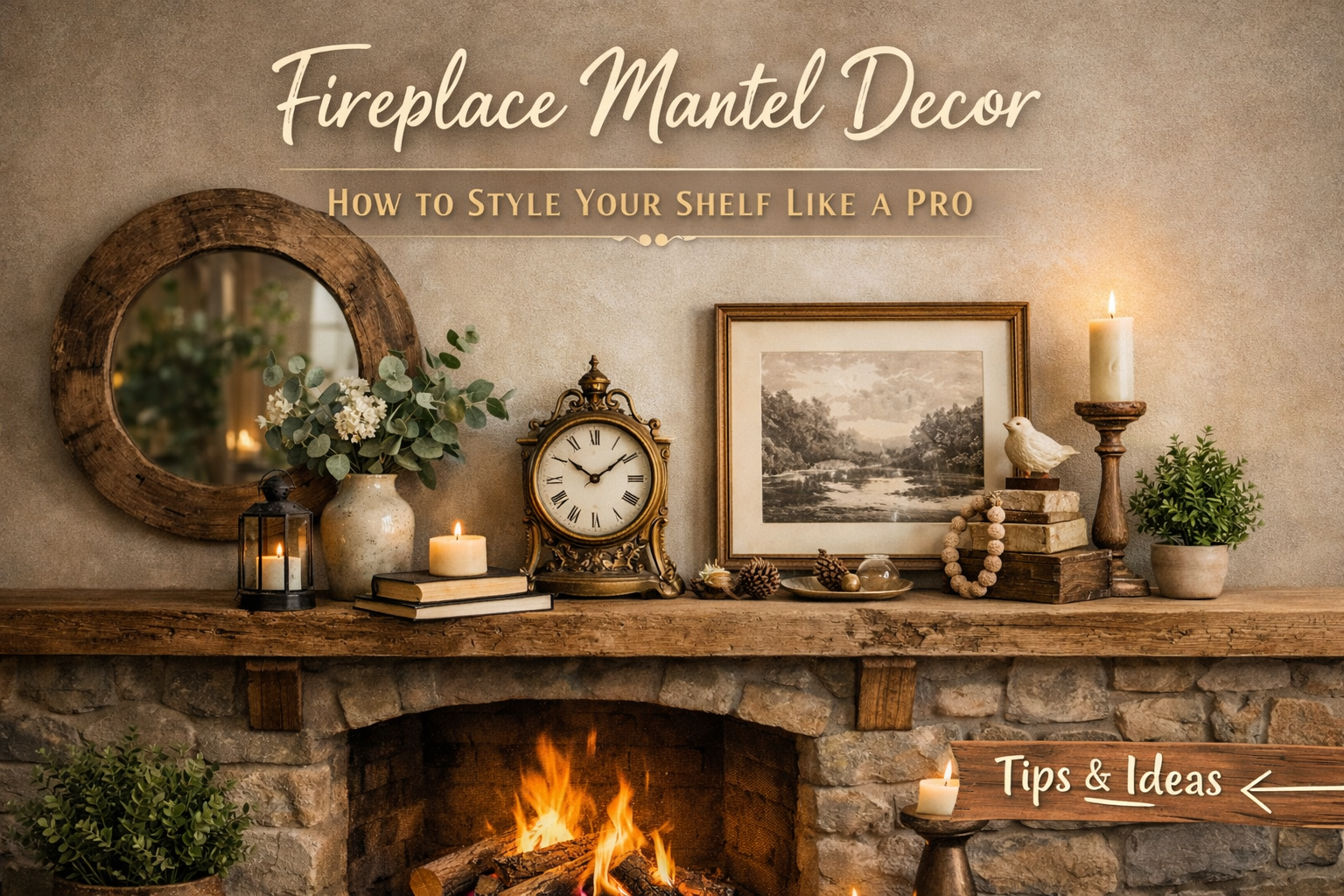
Fireplace Mantel Decor Ideas: How to Style Your Shelf Like a Pro

Last Updated on August 27, 2026 by SierraLivingConcepts
A fireplace mantel is the one shelf in the house every guest looks at first. Get it right and it anchors the whole room. Overload it and it turns into clutter fast. This guide breaks mantel styling down into the principles professional stylists actually use: a single anchor piece, intentional asymmetry, and layered depth. Apply them to any mantel in any style and you can have it looking finished in under an hour.
Why does the mantel matter so much? It’s the first thing the eye finds when you walk into a room, and it ends up as the backdrop for nearly every photo taken in the space. Real estate surveys don’t all agree on the exact dollar figure a fireplace adds to a home’s value, but they land on the same conclusion: buyers respond to it. One widely cited industry survey found that roughly three in four buyers would pay more for a home that has one. Whether or not you’re selling, that’s the same pull you’re designing for at home.
Mantels were originally built to catch smoke. Now they catch attention instead. A well-styled one feels intentional without feeling staged, and you don’t need design training to get there. You need a handful of rules that hold up no matter what your style is. Start with the one every good mantel begins with.
Start with a Strong Anchor
Every standout mantel starts with one large-scale anchor piece, placed before anything else. This is the piece that grounds the whole display and sets the tone for everything you add after it: the color palette, the scale, and the overall style.
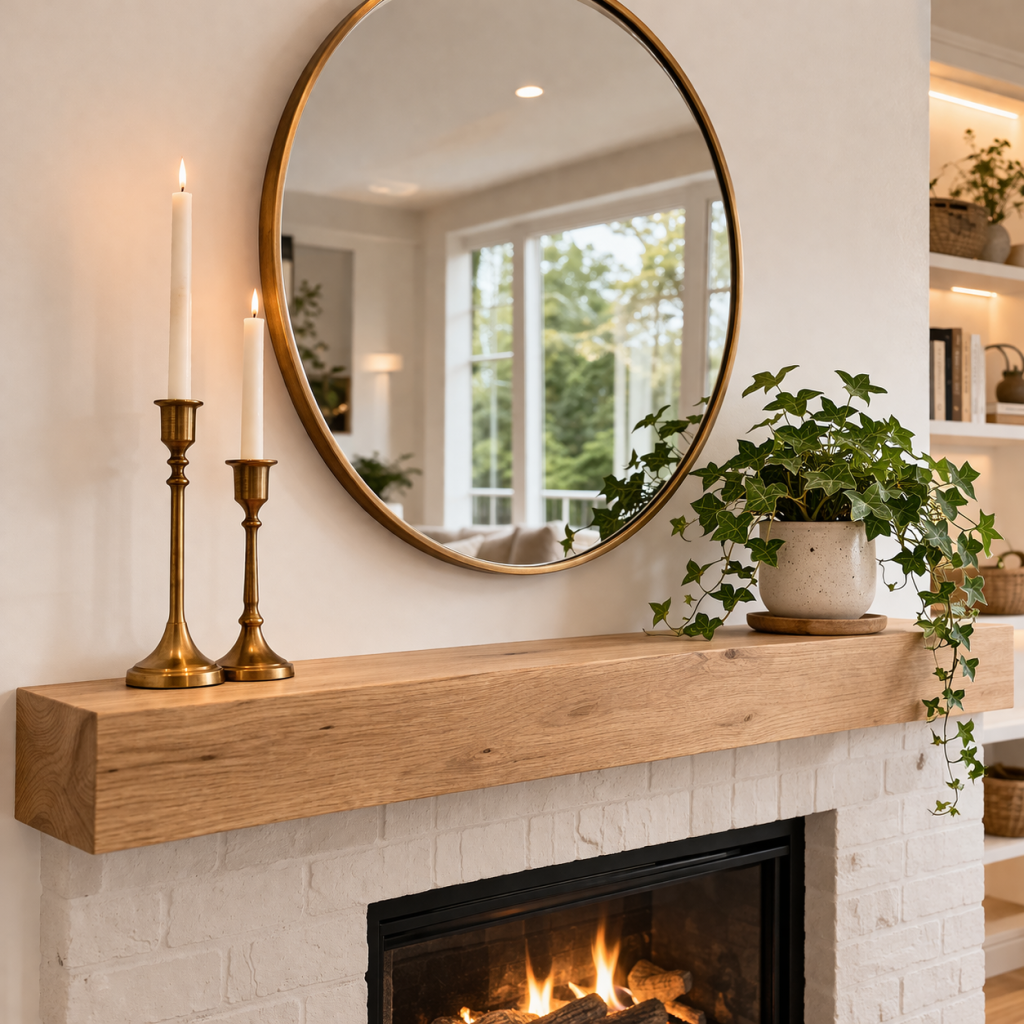
The anchor is usually a large mirror or a significant piece of art, sized to roughly two-thirds of the mantel’s width. Go narrower than that, and it tends to look stranded rather than deliberate. From there you have two ways to place it. Lean it against the wall for a relaxed, collected-over-time feel, or hang it for something more traditional and finished.
A solid wood-framed mirror is probably the most versatile anchor you can choose. It reflects light back into the room, which makes a small living room feel noticeably bigger, and the wood grain gives you a natural material to build the rest of the shelf around.
Mastering Balance: The Art of Asymmetry
Perfect symmetry photographs well, but in person it tends to feel a little formal and static. Asymmetry, done with intention, reads as more dynamic and more lived-in. The goal isn’t to match your objects. It’s to balance their visual weight.
The most reliable tool for this is the Rule of Three: group decor in odd numbers, since the eye finds odd-numbered groupings more naturally pleasing than even ones. Build a visual triangle using three heights.
- A tall object on one end, like a vase with branches or a tall candlestick
- A medium-height object toward the middle, like a framed piece or a stack of books
- A low, wide object on the other end, like a shallow bowl or a low sculptural piece
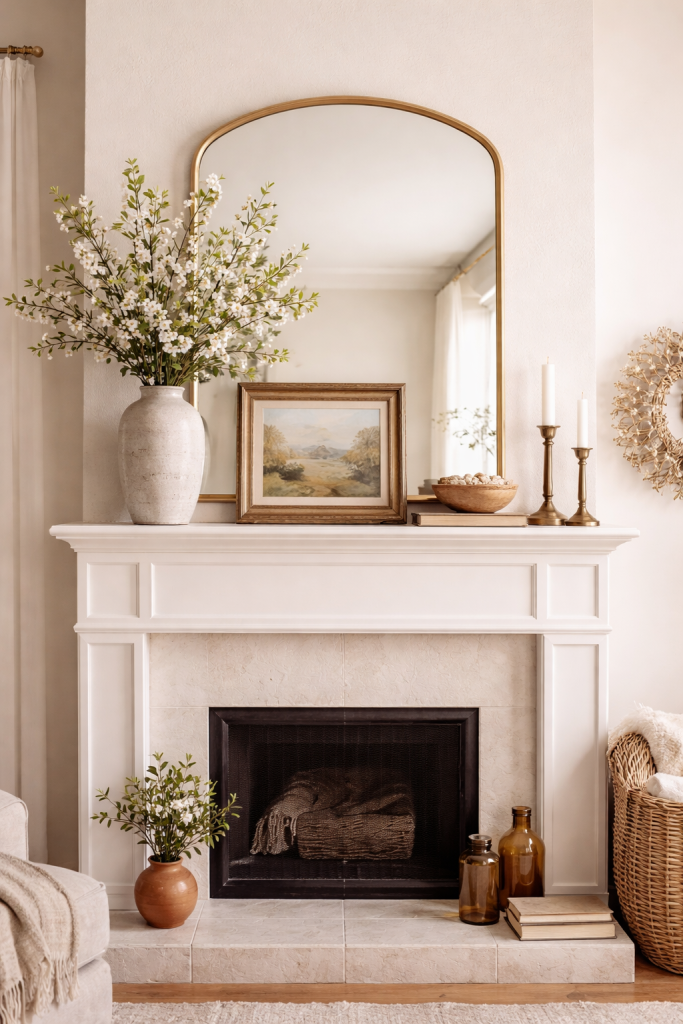
That triangle gives the eye somewhere to travel across the shelf instead of stopping at one point. If a two-object arrangement feels stiff, that’s usually a sign to add a third, smaller piece rather than swap out what’s already there.
Choosing the Right Materials for Your Mantel
Your mantel’s material should inform your decor choices, not fight them.
- Marble mantels pair well with glass and metallic accents like brass, silver, or brushed nickel for a sleek, cool-toned look.
- Wood mantels call for warmer accents: terracotta, bronze, and woven textures. The trick is contrast rather than matching. Wood decor placed directly on a wood shelf tends to disappear into the background, so a metal tray or ceramic vase usually reads better.
- Brick mantels suit organic shapes and textures, like woven baskets, wood beads, or unglazed ceramics.
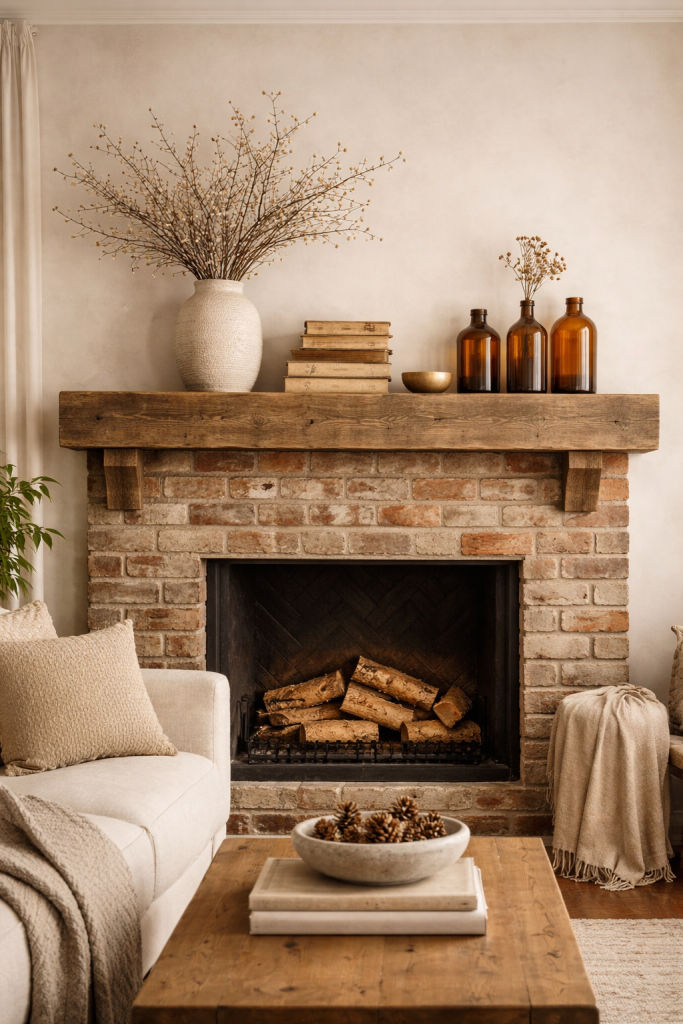
Across all three materials, the same rule holds: mix your textures instead of repeating one. Pair smooth glass with rough stone, or a polished metal tray with a soft trailing plant. The contrast is what makes a shelf look curated instead of accidental.
Greenery is close to a requirement on any mantel. It softens hard edges and adds a natural point of color. Trailing plants like ivy bring movement, and if live plants aren’t practical, dried stems like eucalyptus hold their shape and color for months with zero upkeep. If you’re using real candles near dried or live greenery, keep some distance between flame and foliage. Flameless candles are a practical swap if you have pets, kids, or dry stems nearby.
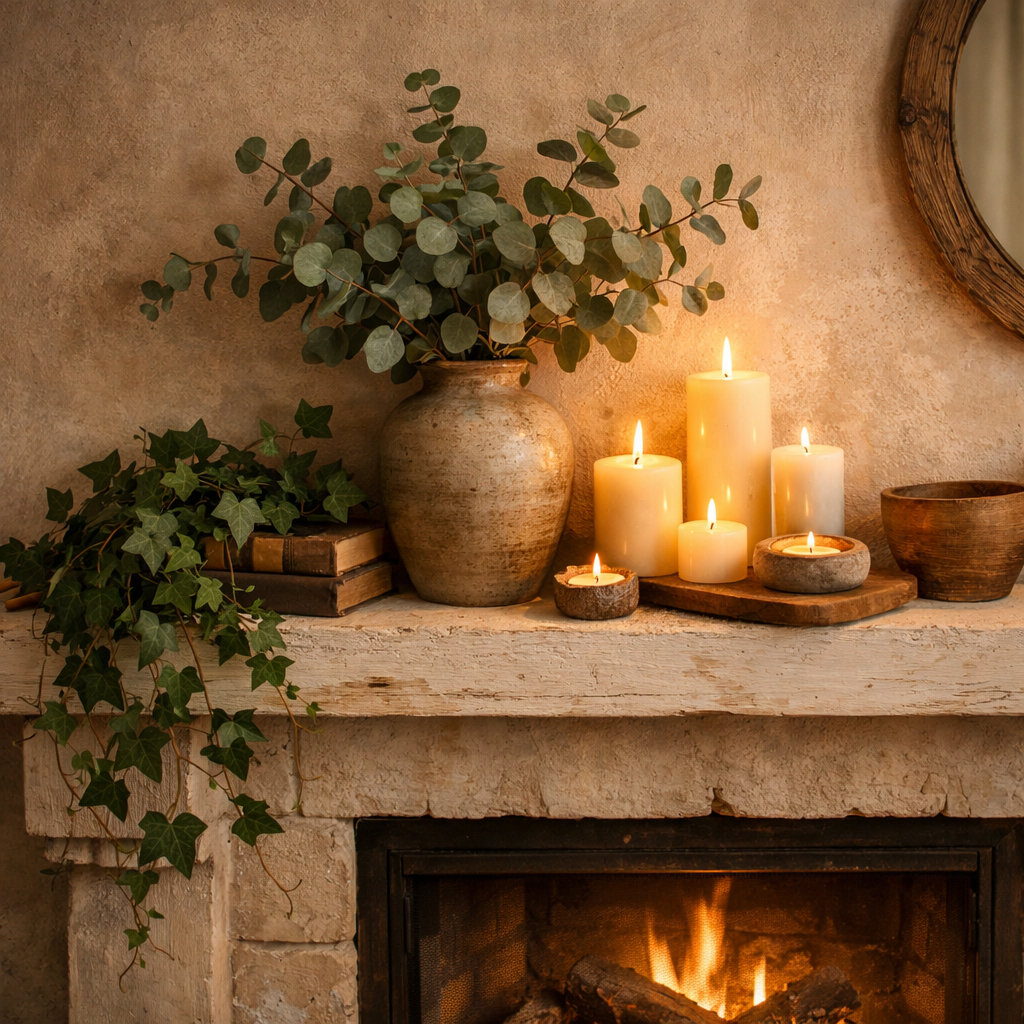
There’s real research behind the greenery instinct, too. A 2015 study published in the Journal of Physiological Anthropology found that interacting with indoor plants measurably lowered participants’ physiological and psychological stress markers compared to a control task. It’s a modest effect, but a real one, and it’s part of why a mantel with a little greenery on it tends to feel like an actual hearth rather than a shelf.
Tailoring to Your Style: Ideas for Every Aesthetic
Modern/Minimalist: Clean lines and a restrained palette. Use an abstract art piece as your anchor, then add one sculptural vase and a pair of sleek metallic candle holders and stop there.
Farmhouse: A distressed windowpane mirror makes a strong anchor for this style. Add galvanized metal pitchers, a small wooden sign, and a garland of eucalyptus or cotton stems.
Eclectic/Bohemian: A vibrant, colorful painting works well as the anchor here. Layer in mismatched brass candlesticks, a few small potted plants in different containers, and objects you’ve actually picked up while traveling.
Whatever base style you’re working in, a solid wood mirror frame tends to adapt across all three. The wood tone and carving detail do most of the work of matching the aesthetic for you.
How to Layer Your Mantel Decor in 3 Steps
Layering is what separates a styled mantel from a shelf that just has things sitting on it. Instead of lining objects up in a row, build in three depths, back, middle, and front, so the display reads as dimensional rather than flat.
- Back layer. Your tallest items go against the wall: the anchor mirror or art, tall vases with branches, and taller picture frames.
- Middle layer. Medium-height objects slightly overlap the back layer: candlesticks, smaller framed art, and sculptural pieces.
- Front layer. Your smallest, shortest pieces sit in the foreground: a decorative bowl, a strand of wooden beads draped over the edge, and a low trailing plant.
Overlapping objects slightly, a small frame partly in front of the mirror, a tray tucked under a cluster of candles, is what gives a mantel that “collected over time” feel instead of looking like a store display. Stacked books are a cheap, easy way to add height variation to the middle layer. Turn the spines inward for something neutral, or leave them facing out if you want more color and personality on the shelf.
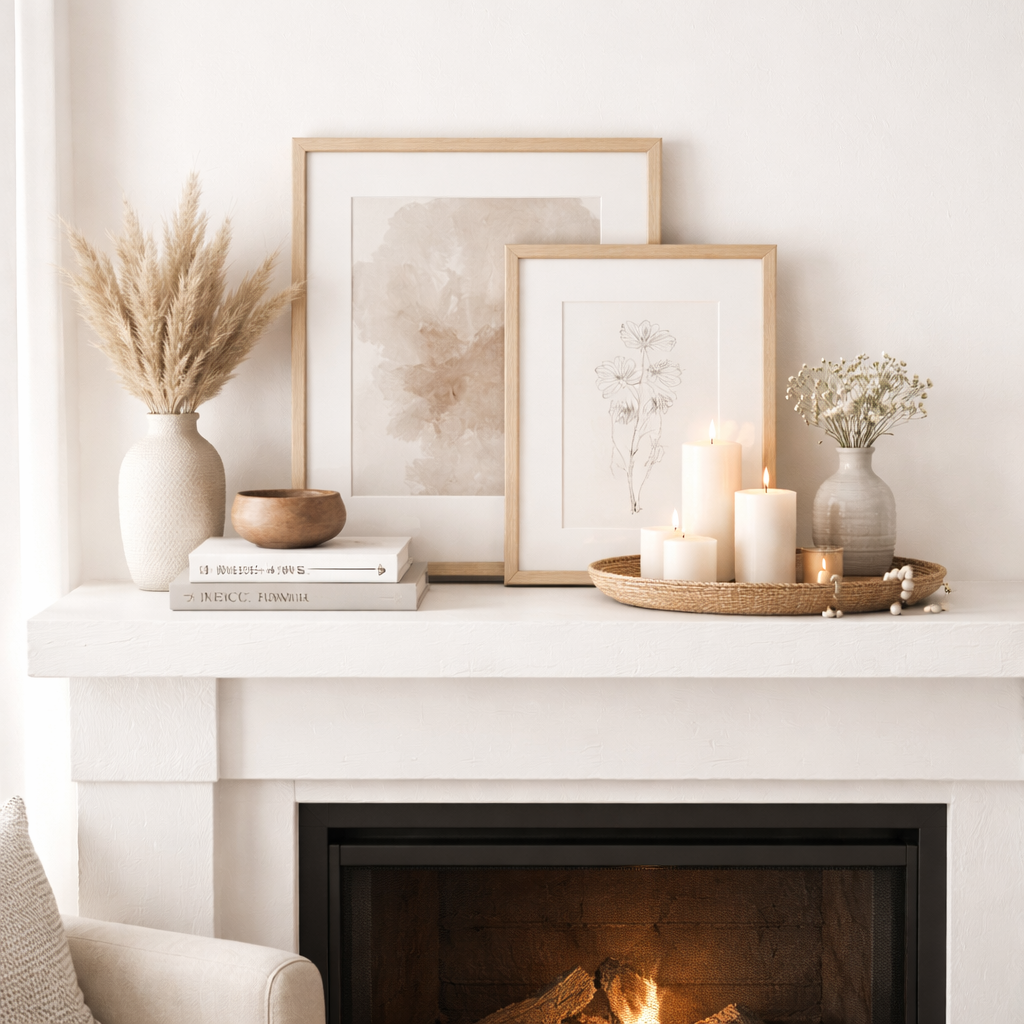
Don’t overlook the wall space above the mantel. It carries just as much visual weight as the shelf itself. High ceilings suit a tall vertical piece that pulls the eye upward. Low ceilings do better with something horizontal, a wide mirror or a landscape painting, which widens the wall visually instead of drawing attention to how low it is.
As a general scale rule, one large, confident piece almost always reads better than five small ones. Small trinkets tend to look like clutter from across the room even when they’re genuinely appealing individually. A side table is a better home for those than the mantel itself.
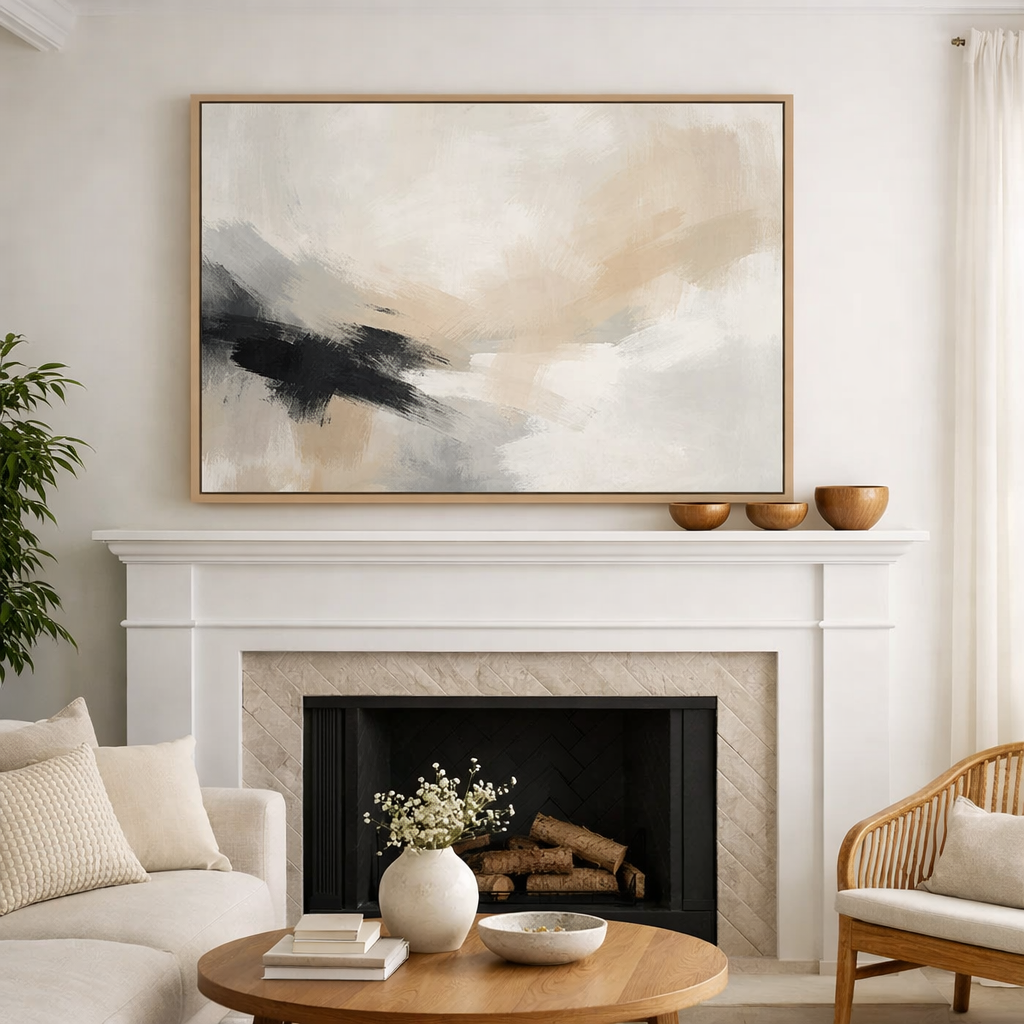
Always measure your space before buying new decor. Scale is everything in interior design. A large piece is better than five small ones. Small items can quickly become visual clutter. We want to create a calm and peaceful space. Your mantel should be a place of rest.
Working with a TV: How to Decorate Around a Screen
A mounted TV doesn’t have to fight your styling. It just needs to be worked with instead of ignored. A few ways to soften it:
- Paint the wall behind it a dark tone, charcoal or navy, so the screen blends in rather than reading as a black rectangle when it’s off.
- Use an asymmetrical arrangement on the mantel itself: a taller item like a vase with branches on one side, a shorter, heavier cluster on the other, so the shelf balances the screen instead of competing with it.
- Keep decor low-profile near the TV. Stacked books, small bowls, or a decorative tray work well; anything tall enough to interrupt the sightline doesn’t.
Materials do a lot of the softening work here too. Pairing the screen with natural textures like wood, pottery, and plants keeps the whole wall from feeling like an electronics display. If you’re shopping for a new setup, a solid wood TV console below the mantel gives you that natural-texture anchor at eye level, which honestly does more to balance a screen than anything placed on the shelf above it.
Keeping it Fresh: Simple Seasonal Swaps
A mantel doesn’t need a full overhaul every season. Small swaps are usually enough to keep it feeling current.
- Spring: Swap dried branches for fresh tulips or cherry blossoms and bring in a few pastel accents.
- Summer: Lean coastal, a bowl of seashells, a single large tropical leaf in a clear vase.
- Autumn: Small pumpkins, amber glass candles, a garland of dried leaves or berries.
- Winter: Pinecones, frosted branches, brass or silver accents, and a few extra candles for warmth.
Common Pitfalls to Avoid in Mantel Styling
Overcrowding the Mantel
The most common mistake is filling every inch of available space. Leaving some space empty, what designers call “negative space,” gives the eye somewhere to rest and actually makes the pieces you do have stand out more.
Using the Wrong Scale
Small trinkets get lost from across the room. Step back to the doorway and see if each piece is still clearly visible. If it isn’t, it probably belongs on a side table instead, which frees up the mantel for fewer, bolder pieces with a stronger silhouette.
Ignoring Lighting
A mantel that goes dark at night loses most of its impact. Cordless picture lights, the magnet-mounted kind that need no wiring, are an easy way to highlight art or a mirror after sunset. Stick to warm white bulbs, since cool blue tones tend to clash with the warmth of a fire, and a glass jar of fairy lights is a nice option for softer, ambient glow.
Frequently Asked Questions
What is the “rule of three” in mantel styling?
It’s the practice of grouping decor in odd numbers, typically a tall, a medium, and a low item, arranged to form a visual triangle. Odd-numbered groupings tend to read as more balanced to the eye than even ones.
How wide should my anchor piece be?
Roughly two-thirds of the mantel’s width. Narrower pieces tend to look stranded, while the two-thirds proportion keeps the display from looking top-heavy or sparse.
How do I decorate a mantel with a mounted TV?
Use an asymmetrical arrangement, a taller item on one side and a shorter cluster on the other, keep decor low-profile near the screen, and consider painting the wall behind the TV a dark tone so it blends in when off.
What’s the best material to pair with a wood mantel?
Contrast, not matching. Warm accents like terracotta and bronze work well, and pairing wood decor with a different material, glass, ceramic, or metal, keeps individual pieces from disappearing into a wood shelf.
How often should I change my mantel decor?
A full seasonal swap four times a year is enough for most homes. Small changes in color and texture, florals in spring, pumpkins in fall, tend to work better than a complete redesign each time.
