

In This Article

How to Clean a Wool Rug: A Complete Home Care Guide

How to clean a wool rug safely depends on its construction, condition, and care instructions, but the basic approach is gentle: vacuum regularly, treat spills quickly, use a wool-safe cleaner with minimal moisture, blot rather than scrub, and let the rug dry completely. Wool is naturally durable and soil-resistant, but excessive water, heat, harsh chemicals, and aggressive cleaning can damage the fibers, backing, or color.
This guide walks you through everything from routine cleaning and stain removal to hand cleaning, washing, drying, and knowing when professional help is the better choice.
Before You Clean a Wool Rug, Know What You’re Working With
Before reaching for a cleaner, take a moment to understand the rug itself. Wool rugs can differ considerably in construction, backing, dyes, pile, age, and overall condition. What works for one rug may not suit another.
Wool naturally handles everyday wear well, but excessive moisture, heat, harsh chemicals, or vigorous scrubbing can cause dye bleeding, felting, shrinkage, or backing damage.
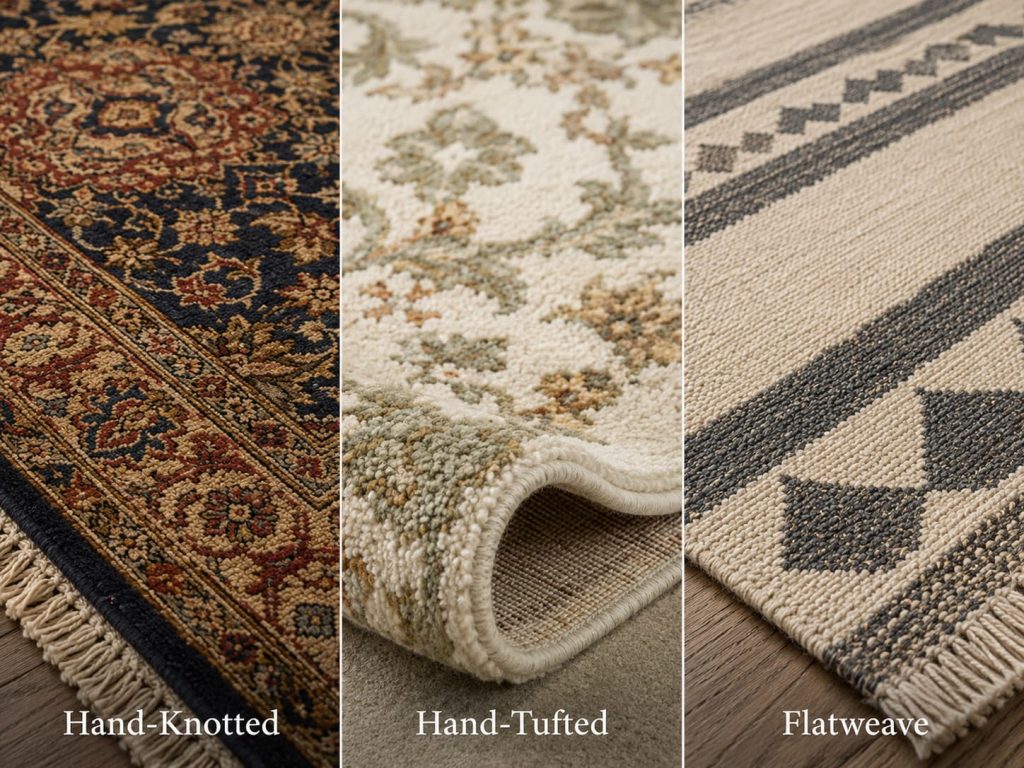
Hand-Knotted Wool Rugs
Hand-knotted rugs, especially antique, Persian, or valuable pieces, deserve extra care. Their dyes, fibers, and foundation may be delicate, so deeper cleaning is often best left for a professional.
Hand-Tufted Wool Rugs
Hand-tufted rugs can have backing materials that react differently to moisture. Check out the manufacturer’s care instructions before using water or cleaning products.
Flatweave Wool Rugs
Flatweave wool rugs have a flatter construction and can be easier to handle for some everyday cleaning tasks. However, they are not automatically suitable for washing or soaking.
The Golden Rule: When in Doubt, Use Less
Not sure what type of wool rug you have or how much moisture it can handle?
Use less.
That means:
- Less water
- Less detergent
- Less pressure
- Less heat
This is a simple way to reduce the risk of over-wetting, residue, color bleeding, or fiber damage. If you cannot confirm the correct cleaning method, gentle surface or spot cleaning is safer than taking a more aggressive approach.
What You’ll Need to Clean a Wool Rug
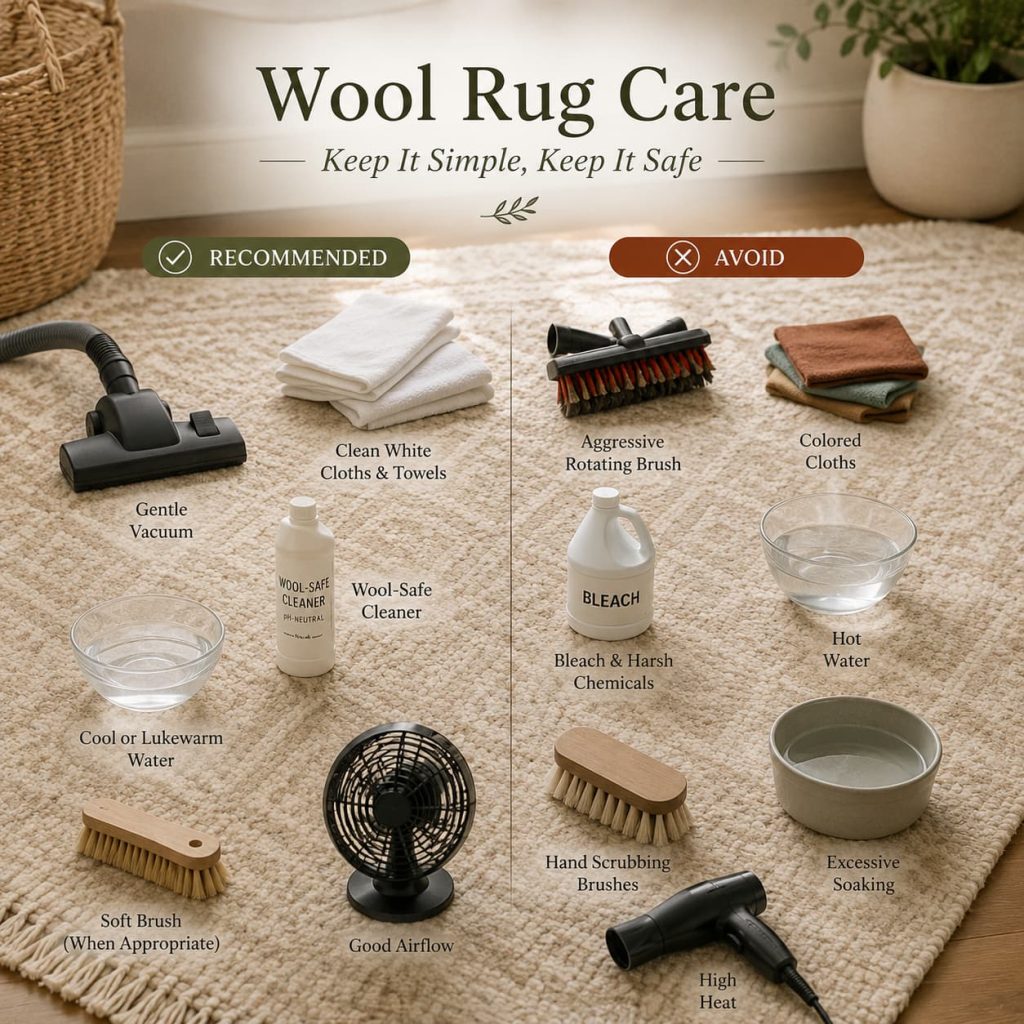
Basic wool rug cleaning does not require a cupboard full of products. Keep the process simple.
| Recommended | Avoid |
| Gentle vacuum | Aggressive rotating brush |
| Clean white cloths | Colored clothes |
| Wool-safe or pH-neutral cleaner | Bleach and harsh chemicals |
| Cool or lukewarm water | Hot water |
| Soft brush when appropriate | Hand scrubbing brushes |
| Clean towels | Excessive soaking |
| Fan or good airflow | High heat |
Use a cleaner specifically intended for wool when one is needed. If the manufacturer’s instructions recommend a particular product, follow those directions rather than relying on a universal homemade solution.
How to Clean a Wool Rug at Home in 7 Gentle Steps
If you are wondering how to clean wool rugs at home, start with the least aggressive method that can solve the problem.
1. Check the Care Instructions
Always begin with the care label or manufacturer’s recommendations.
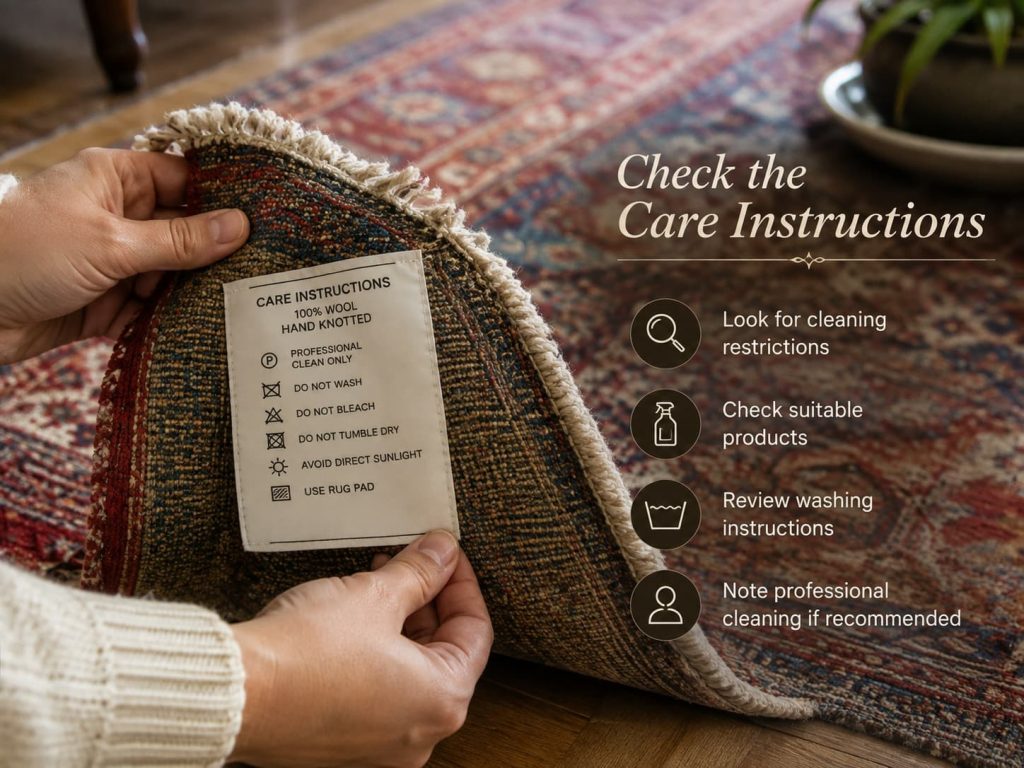
Look for cleaning restrictions, suitable products, washing instructions, and professional cleaning recommendations. This is particularly important for antique, hand-knotted, heavily dyed, or delicate rugs.
2. Vacuum the Rug Gently
Regular vacuuming is one of the easiest ways to maintain a wool rug. It removes loose dirt and grit before they settle into the pile.
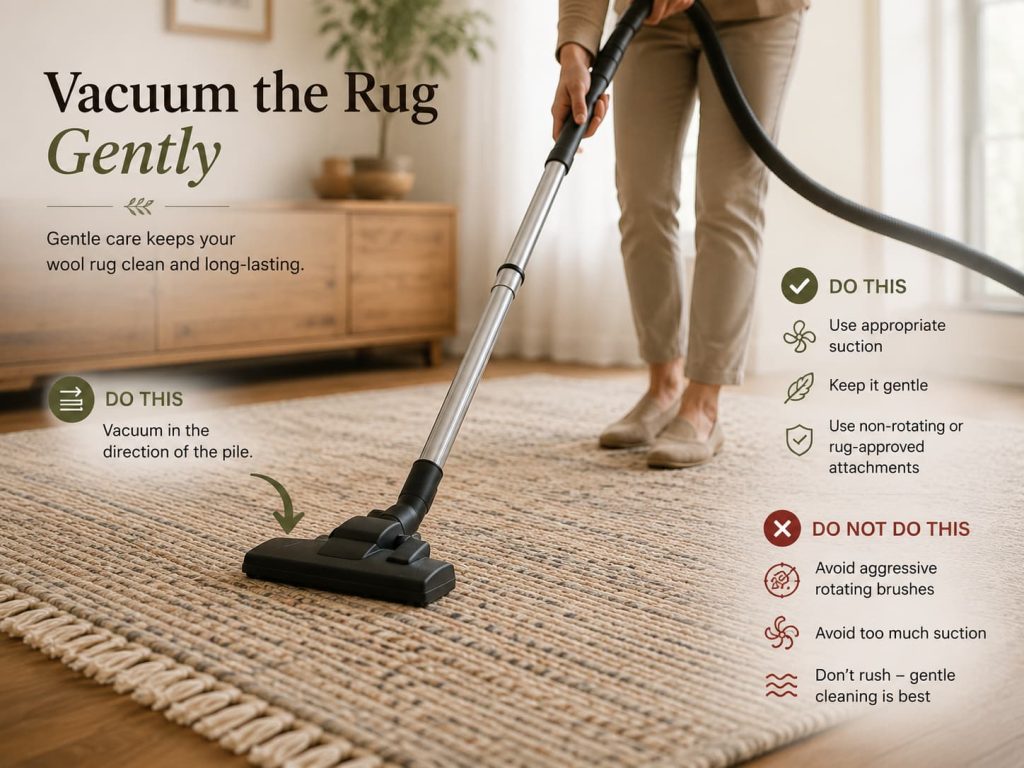
Use appropriate suction and avoid aggressive rotating brushes unless approved by the manufacturer. Vacuum in the direction of the pile when practical and take extra care around the fringe.
Depending on the rug construction, gently vacuuming the reverse side can also help loosen embedded dirt.
3. Test for Colorfastness
Before applying any cleaner, test it on a small, hidden area.
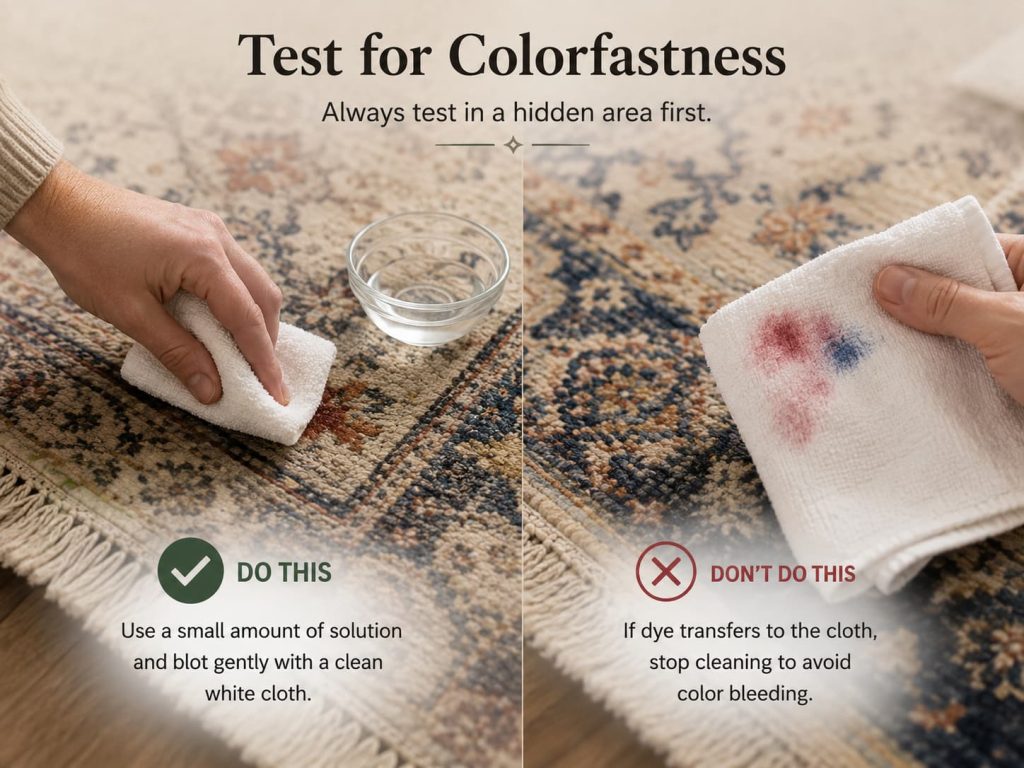
Use a tiny amount of the solution and blot with a clean white cloth. If dye transfers onto the cloth, stop cleaning. Continuing could cause visible color bleeding.
4. Spot-Clean Spills Immediately
So, how do you spot clean a wool rug?
Start by carefully lifting away solid material. For liquid spills, gently blot with a clean white cloth.
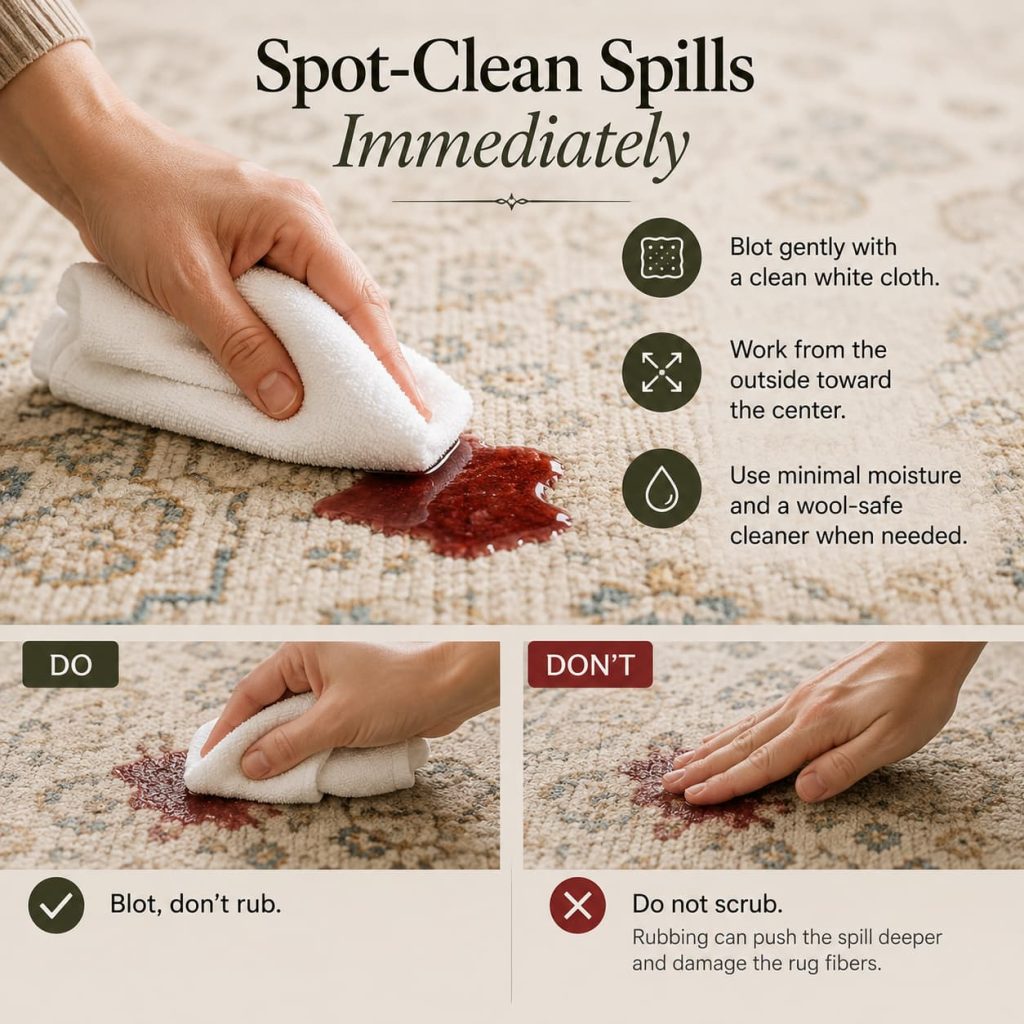
Work from the outside of the spill toward the center. Use minimal moisture and a wool-safe cleaner when appropriate.
Most importantly, do not scrub. Rubbing can push the spill deeper into the fibers and disturb the rug pile.
5. Clean Small Areas Gently
If a particular section needs additional cleaning, work in small areas instead of wetting the whole rug.
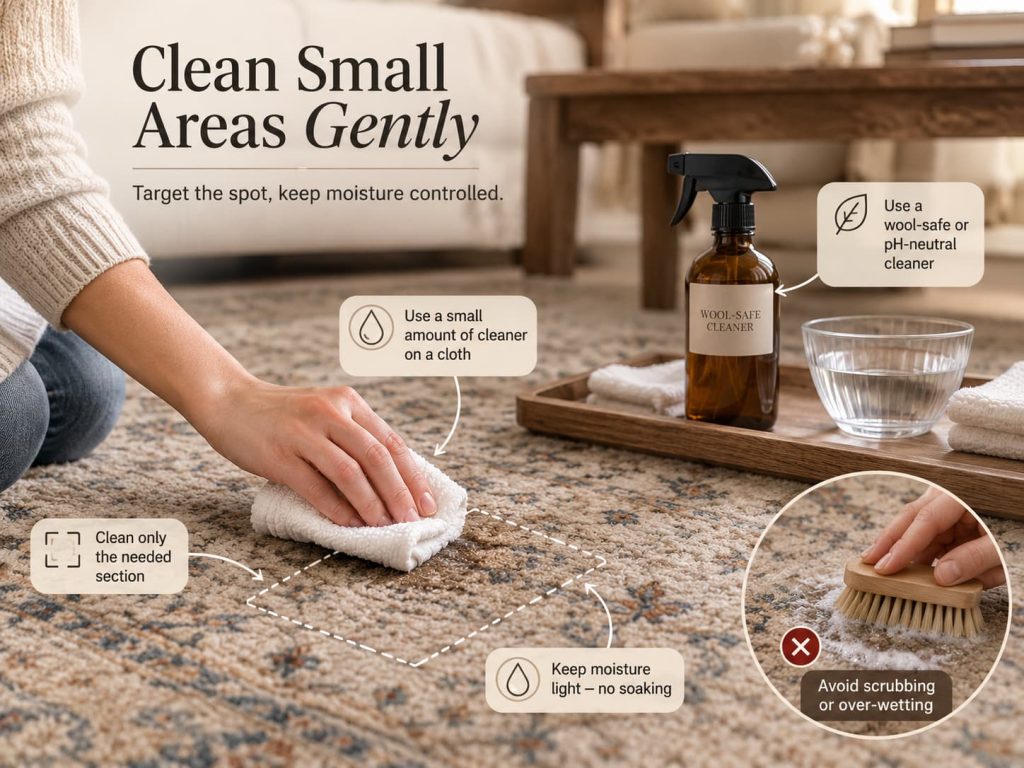
Apply a small amount of cleaning solution to a cloth rather than pouring it directly onto the rug. Keep the moisture controlled and avoid saturating the backing.
6. Remove Cleaning Residue
Once the area is clean, follow the cleaner’s instructions for removing residue.
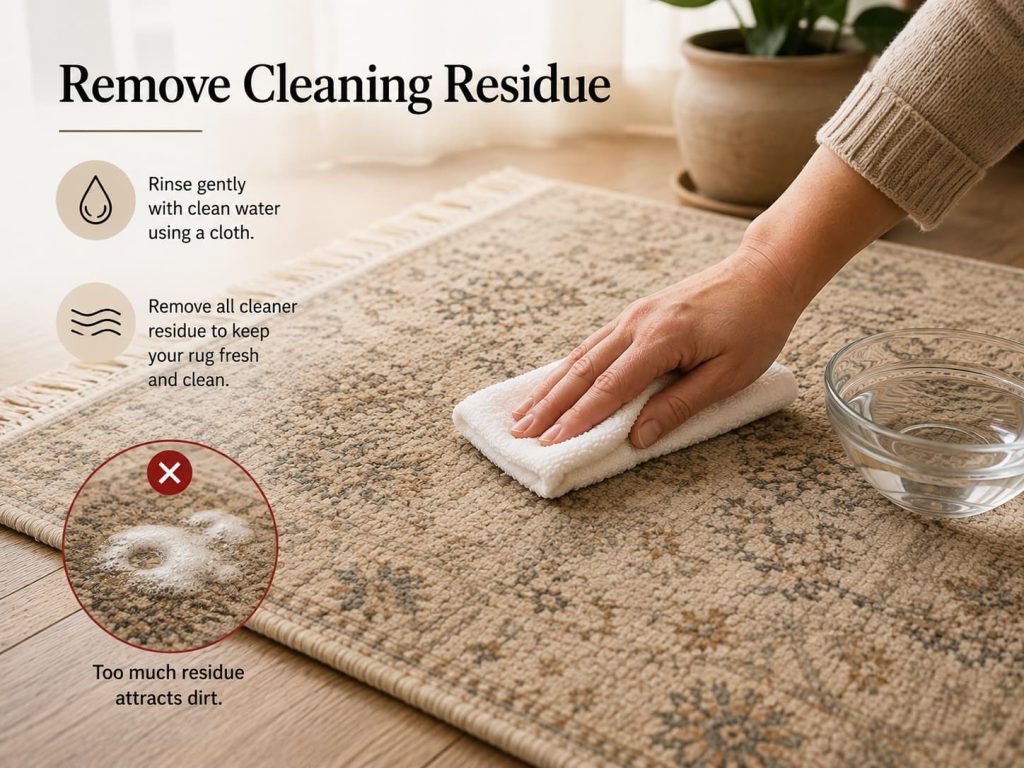
Too much product left behind can attract dirt and make the area look soiled again. Use only as much water as necessary.
7. Dry the Wool Rug Completely
Drying is just as important as cleaning.
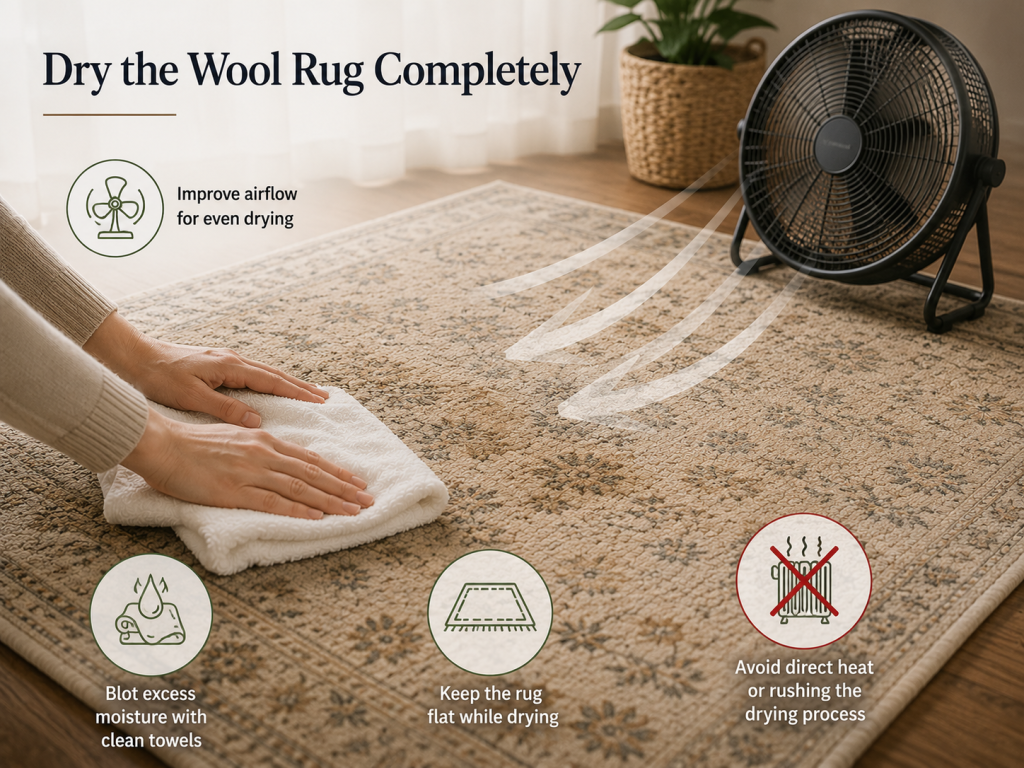
Blot away excess moisture with clean towels and improve airflow with a fan if needed. Keep the rug flat where appropriate and allow it to dry fully before regular use.
Avoid excessive heat. Never try to rush the process with intense direct heat.
How to Clean a Wool Rug by Hand
How to clean a wool rug by hand depends on whether you are dealing with a small spot or the entire rug.
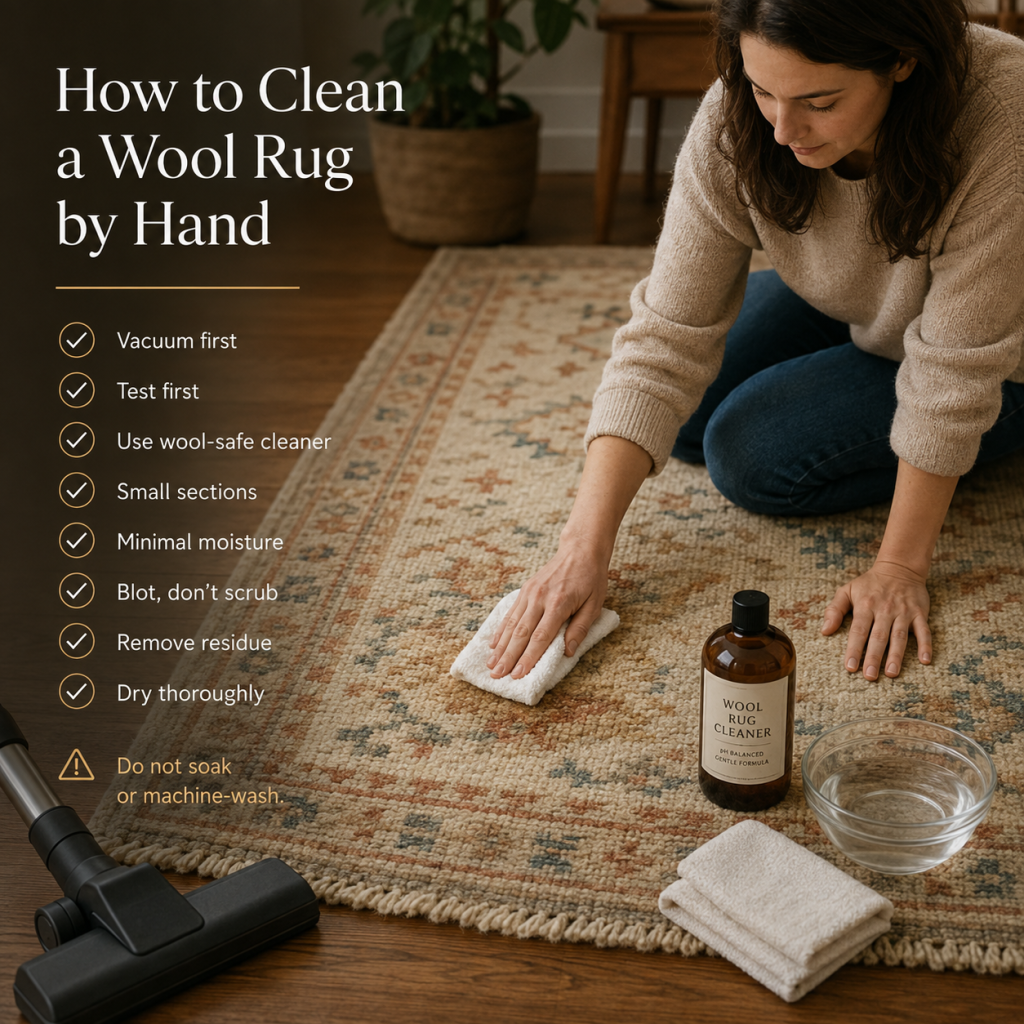
For everyday hand cleaning:
- Vacuum first.
- Test the cleaning solution.
- Use a wool-safe product.
- Work in small sections.
- Use minimal moisture.
- Blot instead of scrub.
- Remove residue.
- Dry thoroughly.
Hand cleaning does not mean soaking the entire rug in a bathtub. Valuable, antique, hand-knotted, or delicate wool rugs should not be immersed or machine-washed unless the manufacturer specifically allows it.
How to Clean Common Stains from a Wool Rug
The sooner you address a spill, the easier it is to manage. Start by blotting and avoid adding unnecessary moisture.
| Stain or Spill | First Response | Avoid |
| Coffee | Blot immediately | Scrubbing |
| Wine | Blot and use a suitable wool-safe treatment | Hot water |
| Food | Remove solids, then blot | Rubbing |
| Grease | Carefully remove surface residue and blot | Excess liquid |
| Pet accidents | Blot promptly and use suitable wool-safe treatment | Saturating |
| Mud | Let it dry enough to remove solids, then vacuum | Rubbing wet mud into fibers |
For old, stubborn, or unidentified stains, avoid experimenting with multiple household ingredients. A wool-safe stain treatment or professional cleaner is safer when you are unsure how the rug will react.
How to Clean a Wool Area Rug vs. a Small Wool Throw Rug
The size of a rug affects how easy it is to handle, but it does not determine which cleaning methods are safe.
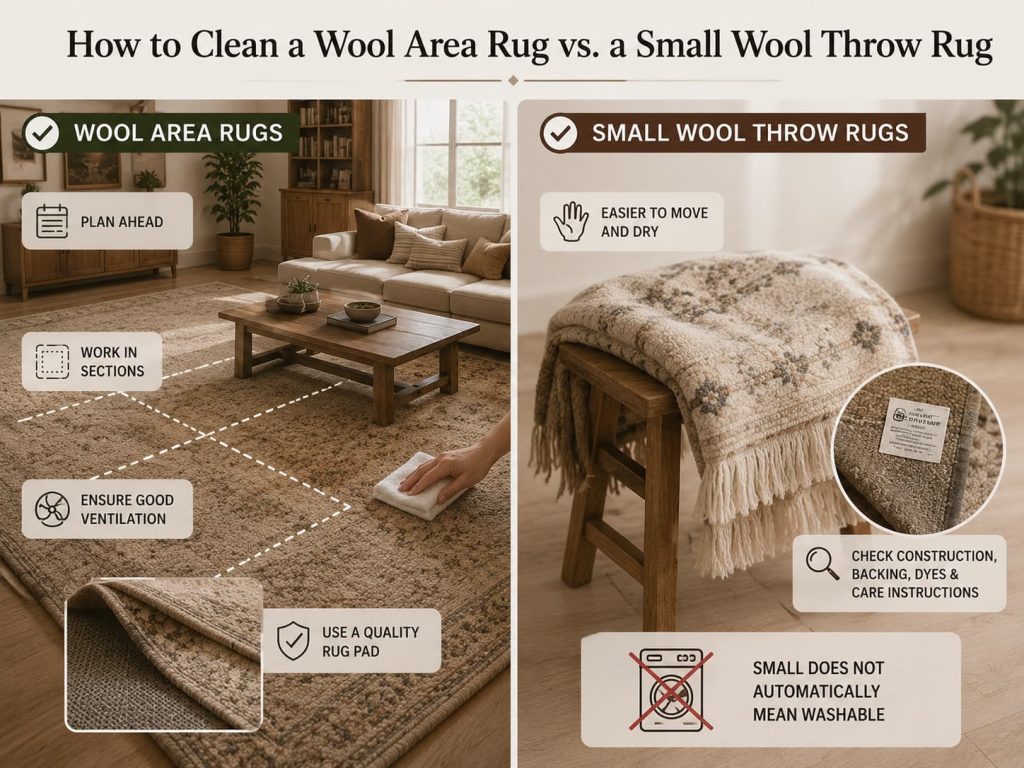
Wool Area Rugs
Larger rugs need more planning. Consider the furniture above them, the flooring underneath, ventilation, and how you will dry the rug.
When cleaning a wool area rug, work in manageable sections rather than applying a large amount of water at once. A quality rug pad can also help keep the rug stable and reduce unnecessary movement.
Small Wool Throw Rugs
A small throw rug may be easier to move and dry, but small does not automatically mean washable.
Its construction, backing, dyes, and care instructions still determine whether deeper cleaning is appropriate.
Can You Wash a Wool Rug?
If you are searching for how to wash wool rugs, first remember that washing can mean different things.
Spot cleaning, surface cleaning, professional washing, and full immersion are not the same.
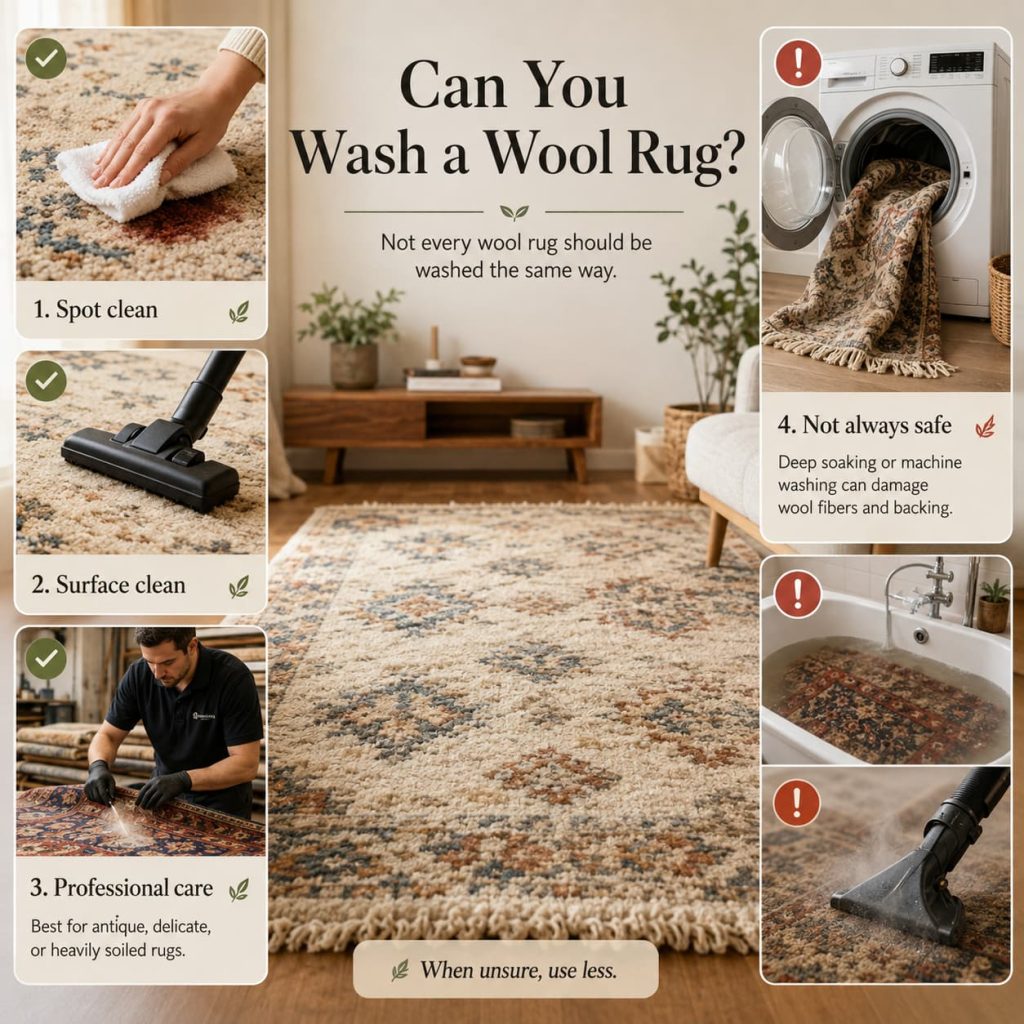
Some wool rugs may tolerate particular deeper-cleaning methods, while others may not. Never assume a washing machine, bathtub soak, steam cleaner, or carpet-cleaning machine is safe simply because it works on another rug.
When the instructions are unclear, follow the golden rule: use less. For valuable, antique, delicate, or heavily soiled rugs, professional cleaning is the safer choice.
What Not to Use on a Wool Rug
Avoid cleaning methods and products that are unnecessarily harsh.
- Bleach
- Harsh or highly alkaline cleaners
- Hot water
- Excessive moisture
- Aggressive scrubbing
- Hard-bristle brushes
- Generic carpet cleaners not intended for wool
- Strong stain removers without wool-safe labeling
- Washing machines unless specifically approved
- Steam cleaning unless specifically approved
- Excessive heat during drying
When you’re unsure about a product or method, don’t use more to get better results.
How Often Should You Clean a Wool Rug?
There is no universal cleaning schedule for every wool rug. Traffic, pets, children, location, and construction all make a difference.
| Routine | Suggested Frequency |
| Vacuuming | Weekly or according to traffic |
| Spill treatment | Immediately |
| Light surface cleaning | As needed |
| Deeper cleaning | Based on condition and care instructions |
| Professional cleaning | When heavily soiled, valuable, delicate, or difficult to clean safely |
For most homes, regular vacuuming and quick spill treatment are the foundation of good wool rug maintenance.
Everyday Wool Rug Care That Makes Cleaning Easier
Good wool rug care is mostly about preventing problems before they require intensive cleaning.
- Vacuum regularly and gently.
- Treat spills as soon as they happen.
- Use a quality rug pad.
- Rotate the rug periodically to distribute wear.
- Keep unnecessary moisture away.
- Protect it from prolonged direct sunlight.
- Follow the manufacturer’s care instructions.
- Watch for unusual shedding, loose fibers, or visible damage.
Some shedding can be normal with wool rugs, particularly when new. However, check for unusual or persistent shedding, loose edges, or structural damage.
The better you care for the rug between cleanings, the less often it needs aggressive treatment.
When Should You Have a Wool Rug Professionally Cleaned?
Not every wool rug needs professional cleaning. For routine dirt and small spills, careful home care may be enough.
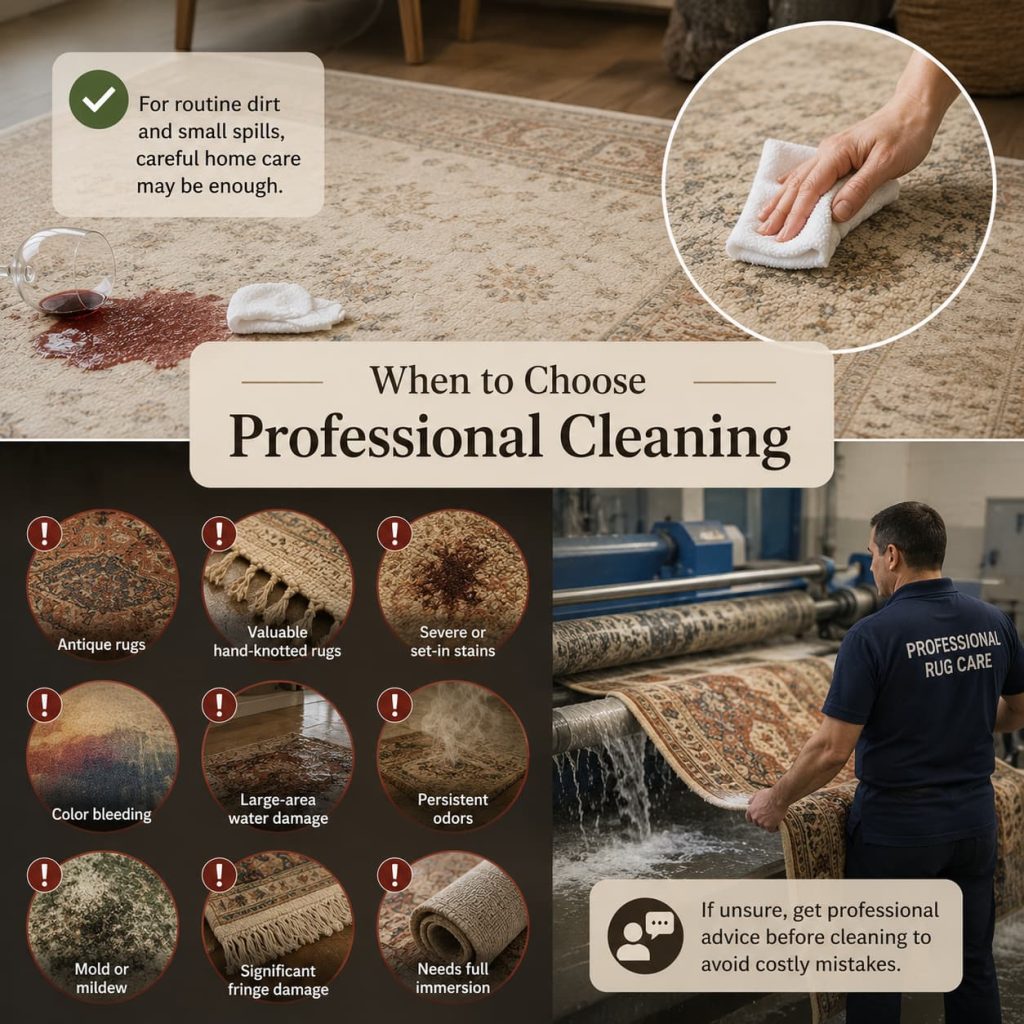
Professional cleaning becomes the better choice when dealing with:
- Antique wool rugs
- Valuable hand-knotted rugs
- Severe or set-in stains
- Color bleeding
- Large-area water damage
- Persistent odors
- Mold or mildew concerns
- Significant fringe damage
- Rugs requiring full immersion
- Unclear construction or care instructions
If you are unsure whether your rug can safely handle a particular cleaning method, getting professional advice before proceeding can prevent an expensive mistake.
Common Wool Rug Cleaning Mistakes
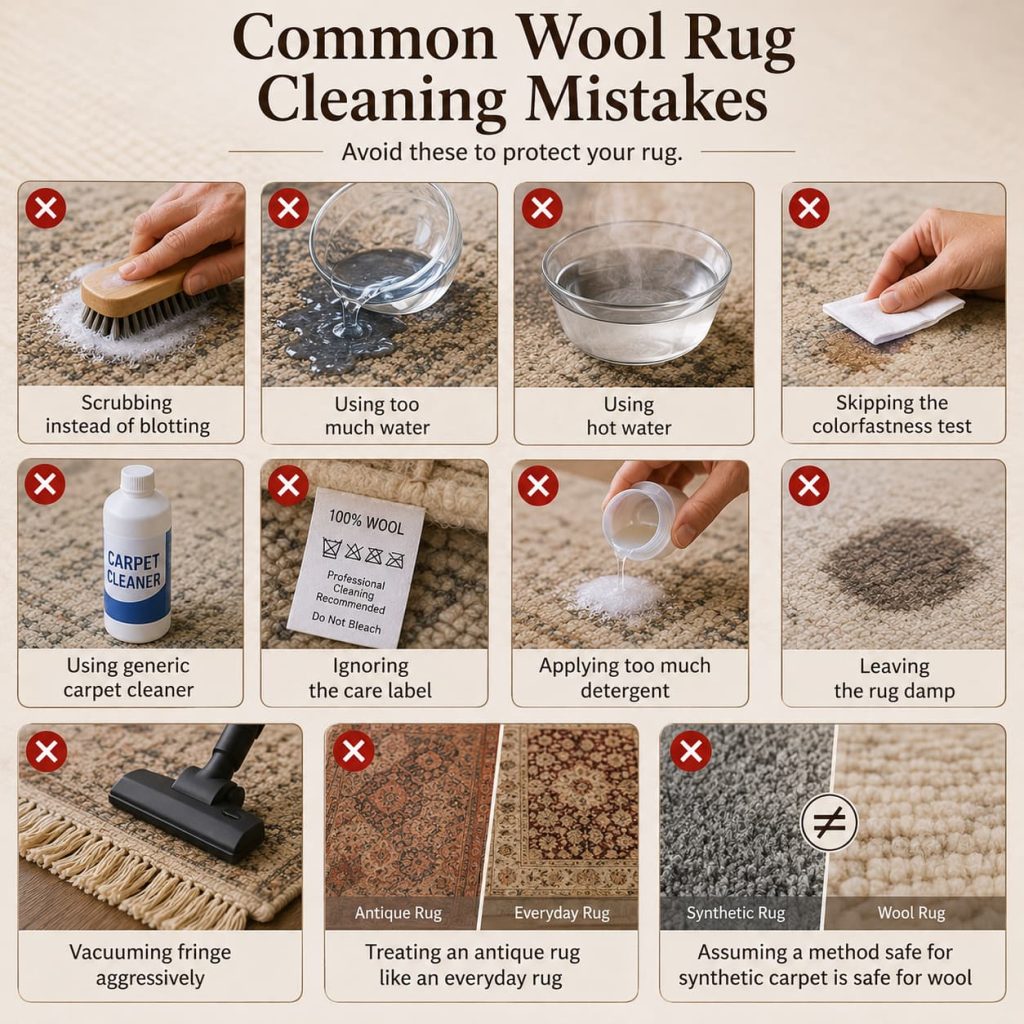
Avoid these common mistakes when cleaning a wool rug:
- Scrubbing instead of blotting
- Using too much water
- Using hot water
- Skipping the colorfastness test
- Using generic carpet cleaner
- Ignoring the care label
- Applying too much detergent
- Leaving the rug damp
- Vacuuming fringe aggressively
- Treating an antique rug like an everyday rug
- Assuming a method safe for synthetic carpet is safe for wool
When in doubt, go back to the simplest rule: use less.
Quick Wool Rug Cleaning Checklist
- Check the manufacturer’s care instructions
- Vacuum gently
- Treat spills promptly
- Test the cleaning product first
- Use a wool-safe product
- Use minimal moisture
- Blot instead of scrub
- Remove cleaning residue
- Dry the rug completely
- Avoid excessive heat and moisture
- Get professional help when the rug is valuable or seriously soiled
How do you clean a wool rug at home?
Vacuum gently, treat spills quickly, and use a wool-safe cleaner sparingly when needed. Blot instead of scrubbing and dry the rug completely.
What is the best way to clean a wool rug?
Use the gentlest method that gets the job done: regular vacuuming, quick spill treatment, minimal moisture, and careful blotting.
Can you use dish soap or vinegar on a wool rug?
It is better not to use household ingredients as universal wool cleaners. Choose a wool-safe product and follow the rug’s care instructions instead.
Can you steam clean a wool rug?
Only if the manufacturer specifically approves it. Heat and moisture can be unsuitable for some wool rugs and their backing.
How do you clean wool throw rugs?
Check the care label first. If home cleaning is allowed, vacuum gently, spot-clean with a wool-safe product, avoid soaking, and dry completely.
Conclusion
Learning how to clean a wool rug does not require complicated products or an aggressive cleaning routine. In most homes, regular vacuuming, quick attention to spills, controlled moisture, gentle blotting, and proper drying are enough to keep a wool rug looking fresh.
The most useful rule to remember is simple:
When you’re unsure, use less—less water, less detergent, less pressure, and less heat.
And when a rug is antique, valuable, badly stained, water-damaged, or simply too delicate to identify confidently, professional cleaning is worth considering. Knowing when not to clean it yourself is just as important as knowing how to clean it.
