
In This Article

5 Types of Closets for Every Room—Solid Wood Edition

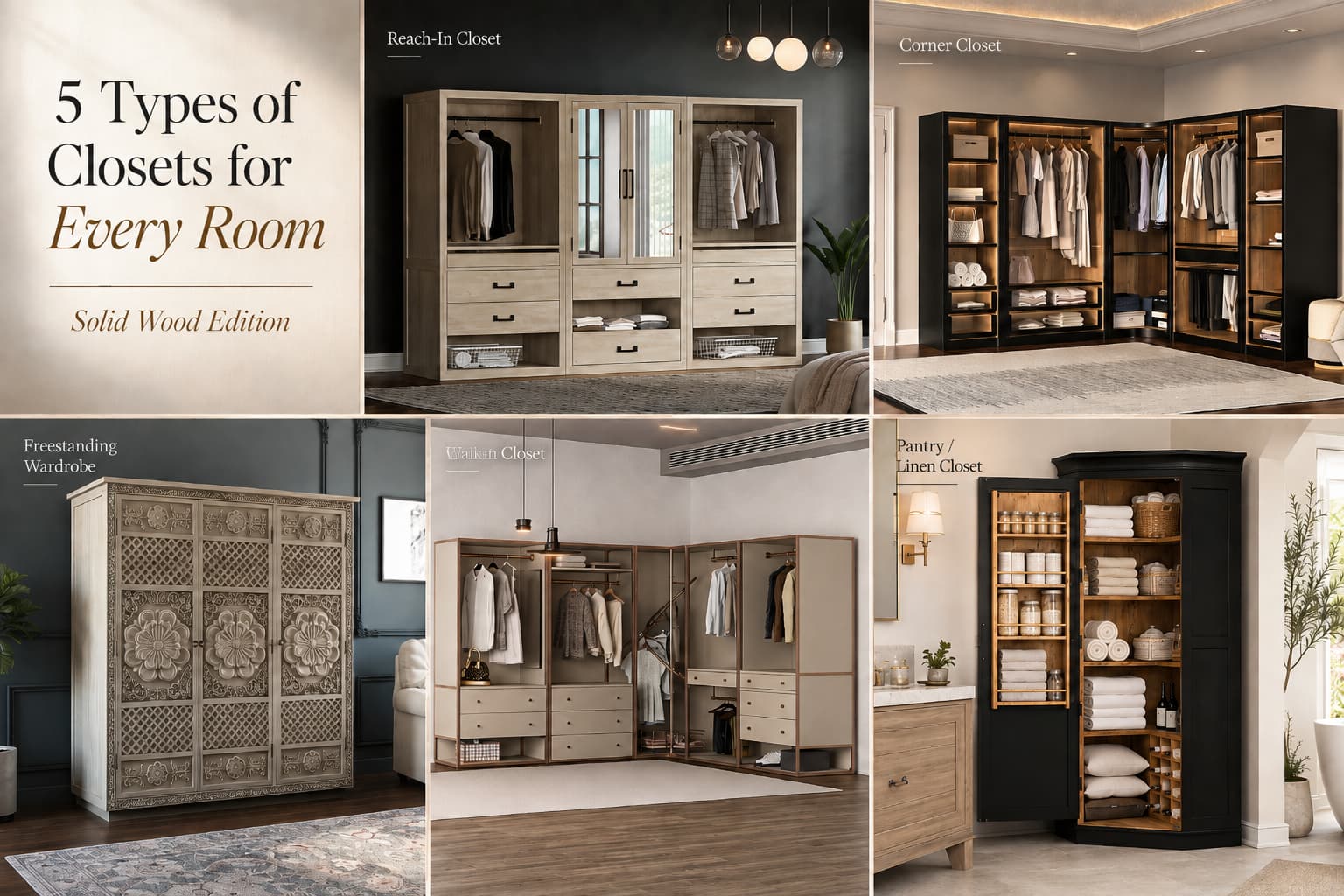
The five main types of closets are reach-in, walk-in, freestanding wardrobe & armoire, corner closet, and pantry/linen closets. Each suits a different space and storage need. Solid wood offers excellent load-bearing strength, longevity, repairability, and a natural finish that can age beautifully over time.
The key is matching the type of closet to your room, storage needs, and the solid wood species best suited to the job.
Most closet guides treat “type” and “material” as separate decisions. They’re not. The type of closet you choose shapes how much solid wood you need, which species makes sense, and how the finished system holds up over time.
Here’s a breakdown of all five types of closets in this solid wood edition—what they are, where they work best, and what to look for in solid wood construction.
1. Reach-In Closet
The most common closet type in American homes, a reach-in closet features a single or double door that opens from the front, with a standard depth of 15–24 inches. The 15-inch depth works well for folded clothing and accessories, while 24 inches accommodates hanging clothes with doors in front.
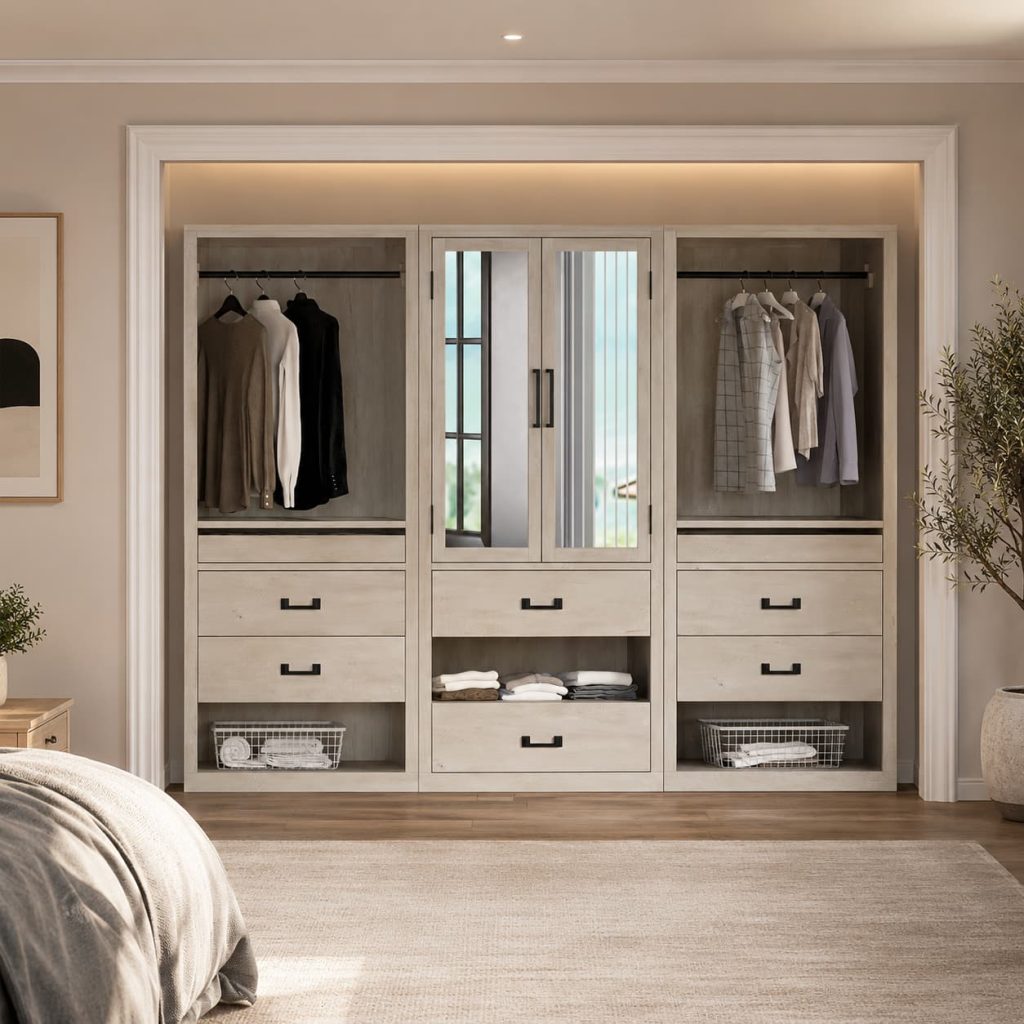
Best for: Guest bedrooms, kids’ rooms, and hallways.
Solid wood advantage: Solid maple or pine handles daily use without the feel of lightweight, disposable construction. Properly built solid wood shelving can support substantial loads without sagging when appropriately sized and supported.
Starting cost (solid wood): From ~$2,288 for an 8-foot reach-in.
2. Walk-In Closet
A walk-in closet is large enough to enter and move around in, making it the preferred option for master bedrooms. The extra floor space allows for custom islands, seating areas, and zone-based organization—hanging sections, shoe shelving, and drawer towers all in one room.
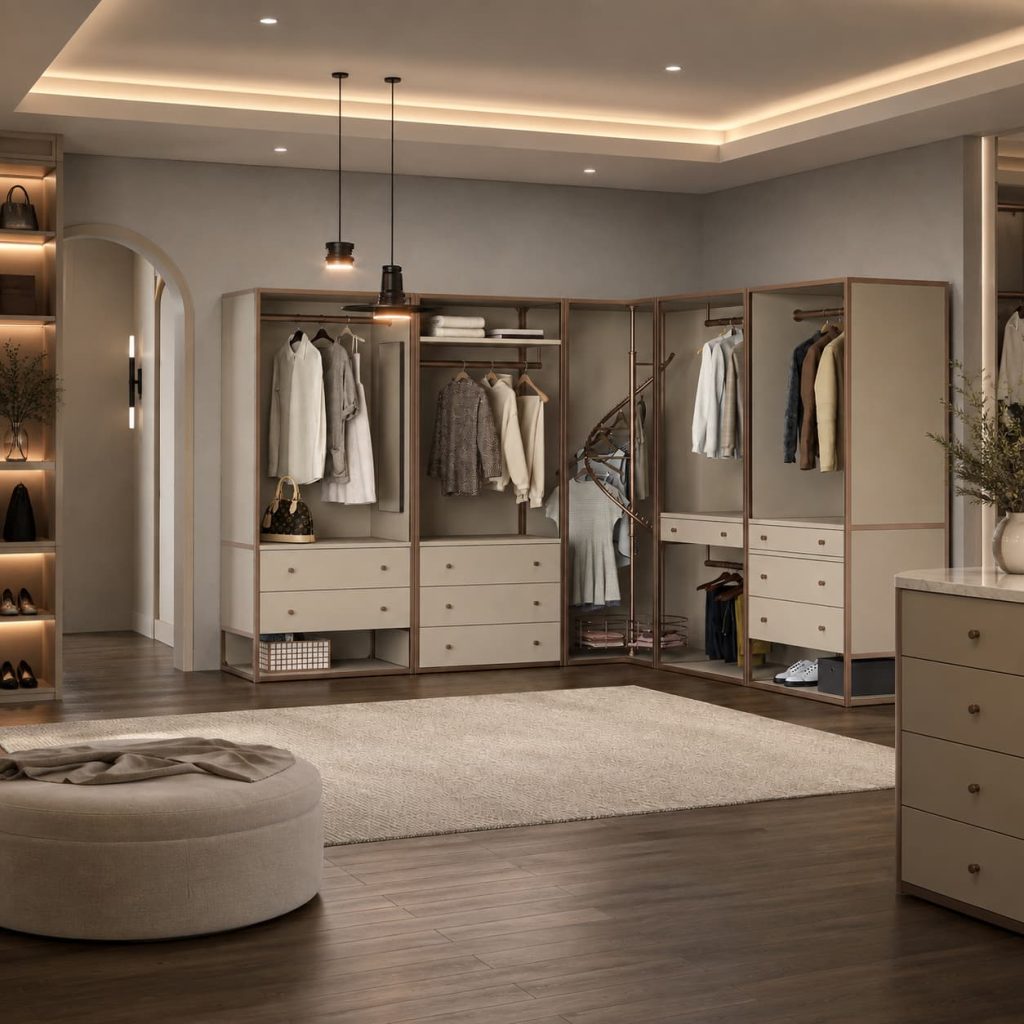
Best for: Master bedrooms, luxury homes, and high-volume wardrobes.
Solid wood advantage: Wood’s natural warmth suits the dressing-room aesthetic better than laminate. Solid hardwoods like maple, oak, and walnut provide strong, durable shelving and cabinetry, which matters when you’re loading full shoe walls or heavy sweater stacks.
Starting cost (solid wood): From ~$3,287 for a small walk-in; $12,000–$30,000 for custom hardwood millwork.
3. Freestanding Wardrobe
No studs, no installation, no contractor needed. A freestanding solid wood wardrobe is a modular unit that stands independently—ideal for renters, older homes without built-in closet space, or rooms where you want flexibility to reconfigure later.
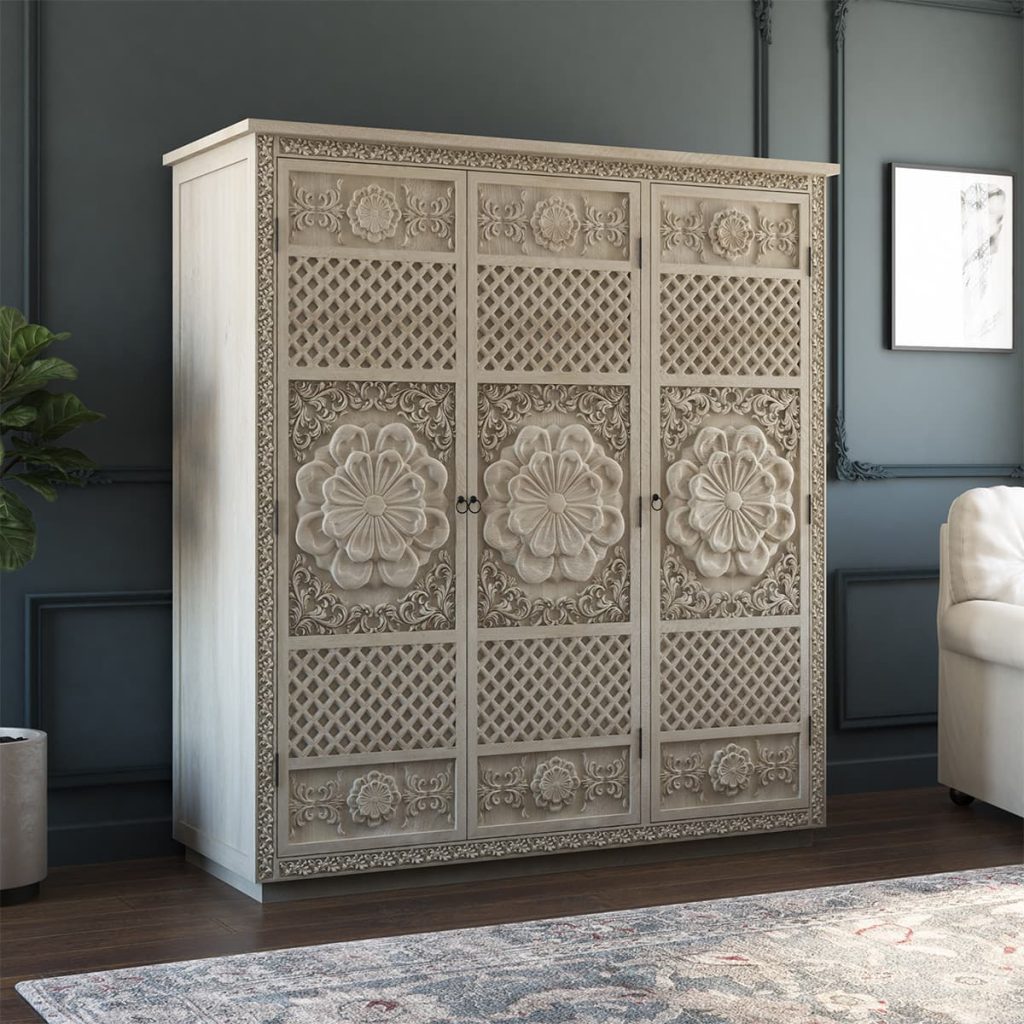
Best for: Rentals, apartments, historic homes, and spare bedrooms.
Solid wood advantage: Unlike flat-pack wardrobes that manufacturers build from particle board, solid wood freestanding units offer greater durability, and you can often repair or refinish them rather than replace them.
What to check: Confirm it’s 100% solid wood—not MDF or plywood with a wood veneer, which many brands market simply as “wood.”
4. Corner Closet System
Corner closets are L-shaped systems designed to maximize storage in unused corner spaces. They’re less common but highly efficient in rooms where a straight reach-in or walk-in won’t fit.
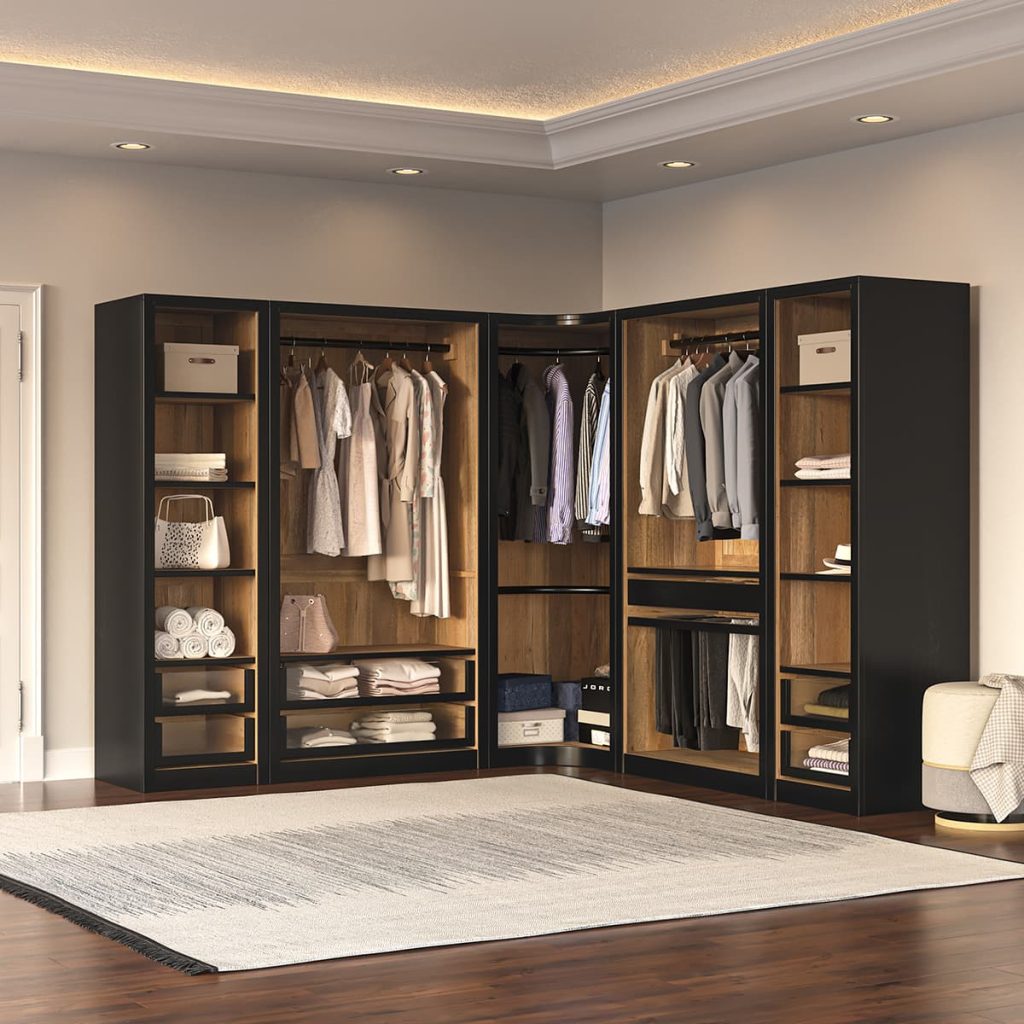
Best for: Awkward bedroom layouts, small rooms with dead corner space.
Solid wood advantage: Solid wood corner units provide sturdy construction and can hold their shape well under everyday use when properly joined and supported. However, this is particularly important at the joint where the two sections meet, since that’s typically where stress concentrates.
Design tip: Additionally, opt for adjustable shelving so you can adapt the layout as storage needs change.
5. Pantry/Linen Closet
Pantry cabinet closets and linen closets are shelving-heavy utility systems—less about hanging, more about organized stacking. Whether storing canned goods, bedding sets, or bathroom supplies, these closets maximize every square inch.
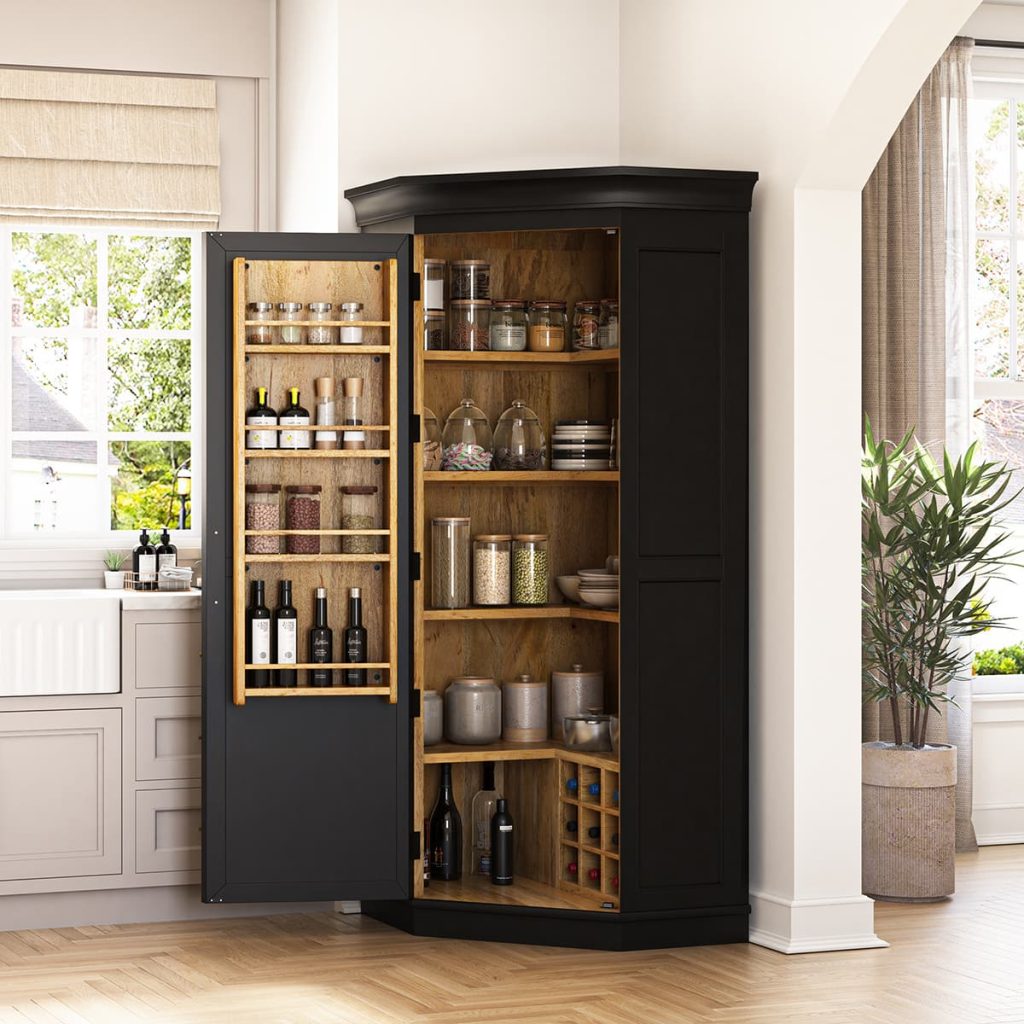
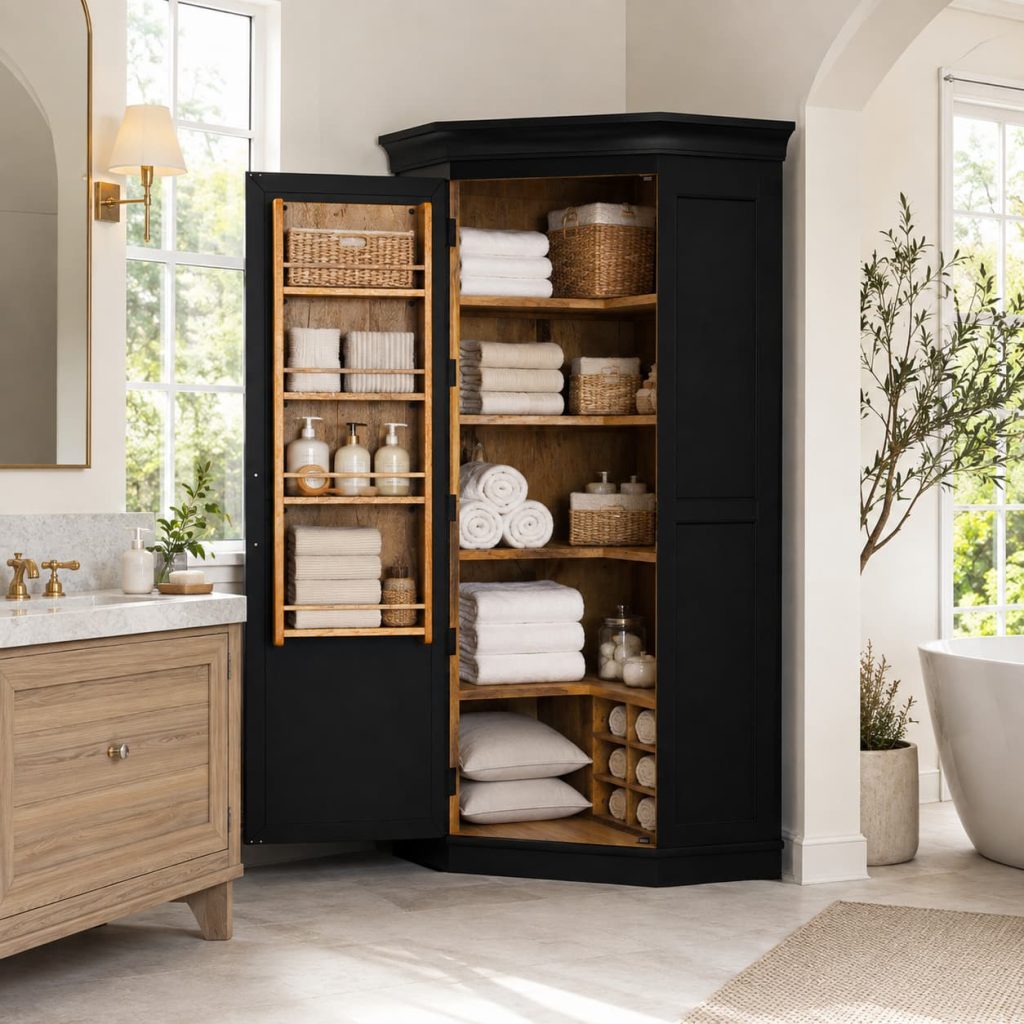
Best for: Kitchens, hallways, laundry room organization, and bathrooms.
Solid wood advantage: Overall, solid wood shelves can provide dependable support for consistent loads when properly constructed and sized. Additionally, they offer a more durable alternative to untreated particle board, especially in utility areas where everyday wear is common.
Species tip: Pine and poplar work well here at a lower price point. Reserve hardwoods like maple or walnut for high-visibility spaces.
Which Solid Wood Closet Type Is Right for You?
| Closet Type | Best Room | Depth | Key Feature |
| Reach-In | Bedroom, hallway | 15–24″ | Accessible, space-efficient |
| Walk-In | Master bedroom | 72″+ | Full organization zones |
| Freestanding Wardrobe | Rental, spare room | 24″ | No installation required |
| Corner Closet | Small/awkward rooms | Varies | Maximizes dead space |
| Pantry / Linen | Kitchen, bathroom, hall | 12–18″ | Heavy-load shelving |
The Right Type Starts with the Right Material
Choosing the right type of closet matters. Choosing the right material determines how long it lasts. Solid wood is valued for its strength, repairability, refinishing potential, and natural character. Unlike many composite-based closet systems, well-made solid wood furniture can often be sanded, repaired, and refinished after years of use rather than simply replaced. As a result, it tends to offer better long-term value.
Additionally, whether you’re outfitting a master walk-in or a simple hallway linen closet, choosing the right solid wood closet system helps ensure the storage system fits both your space and your lifestyle.
FAQs:
What are the main types of closets in a solid wood closet system?
The five main types of closets—solid wood edition—are reach-in, walk-in, freestanding wardrobe, corner, and pantry/linen closets. Each type is designed around a different room layout and storage requirement.
What is the most common type of solid wood closet?
Reach-in closets are the most common type found in American homes. They typically measure 15–24 inches deep and are accessed through a single or double front door.
How much does a solid wood closet cost compared to laminate?
Solid wood closet systems typically cost more than laminate alternatives, with the exact difference depending on the size, wood species, construction, and degree of customization.
A basic solid wood reach-in can start around $2,288, while laminate reach-ins may start around $1,200–$1,400 installed. The trade-off is durability, repairability, natural character, and long-term use.
Are solid wood closets formaldehyde-free?
True solid wood itself does not contain the formaldehyde-based resins commonly associated with composite wood products such as particle board and some MDF. However, the complete closet system can include adhesives, finishes, or other components, so it’s important to check the specifications if low-emission or formaldehyde-free construction is a priority.
What wood species is best for closets?
Maple is a popular choice because it is dense, durable, and stains evenly. Oak offers a stronger grain pattern and handles everyday use well. Walnut is a premium option with rich color and distinctive grain. Pine and poplar are more affordable and work well for utility closets like pantries and linen closets.
Can solid wood closets be reconfigured later?
It depends on the construction type. Modular solid wood systems can allow reconfiguration, while custom millwork with fixed joinery generally cannot be easily rearranged without professional help.
Which type of solid wood closet is best for a small room?
A reach-in or corner closet is usually the most practical choice for a small room. Reach-ins use existing wall space efficiently, while corner closets can turn otherwise unused corners into valuable storage.
