



Wooden furniture brings warmth, character, and lasting beauty to a home, but everyday dust, fingertips, food spills, and moisture can slowly dull its finish.
The good news is that learning how to clean wooden furniture at home doesn’t have to be complicated. In most cases, a few gentle cleaning habits are all it takes to keep your furniture looking its best.
The key to safe wooden furniture cleaning is knowing what to use, how much moisture to use, and what to avoid. Harsh cleaners, too much water, or rough scrubbing can wear down the finish over time.
In this guide, you’ll learn how to clean wooden furniture safely and effectively, from everyday dusting to dealing with sticky spots, stains, and routine maintenance.
Before You Begin: Know Your Furniture Finish
Before reaching for a cloth or cleaner, take a moment to identify your furniture’s finish. Different finishes react differently to moisture and cleaning products, so understanding the finish is an important first step in knowing how to clean wood furniture properly.


Here’s a quick guide:
| Finish | Best Cleaning Approach |
| Sealed Wood | Handles light damp cleaning well |
| Lacquered Wood | Wipe gently with a microfiber cloth and mild soap solution |
| Oiled Wood | Avoid excess water and condition occasionally to maintain its natural look |
| Waxed Wood | Use minimal moisture to protect the wax coating |
| Painted Wood | Clean gently to prevent chipping or dulling the painted surface |
If you’re unsure about the finish, check the manufacturer’s care instructions before using any cleaning solution. This small step can help prevent accidental damage.
Step 1: Gather the Right Cleaning Supplies

What You’ll Need
- Microfiber cloth
- Soft cotton cloth
- Mild dish soap
- Warm water
- Spray bottle (optional)
- Soft-bristle brush for detailed or carved areas
Avoid Using
- Bleach
- Ammonia-based cleaners
- Steel wool
- Abrasive scrubbers
- Excess water
When learning how to clean wooden furniture, choosing gentle tools is just as important as choosing the right cleaner. Soft cloths help remove everyday grime without unnecessarily scratching or wearing down the finish.
Step 2: Remove Dust Before Using Any Cleaner
When cleaning wooden furniture, always dust first and clean second.
It may seem like a small step, but removing loose dust before wiping the surface makes a noticeable difference.
Tiny dust particles can act like fine sandpaper. If you move them around with a damp cloth, they may create light scratches that gradually dull the finish.
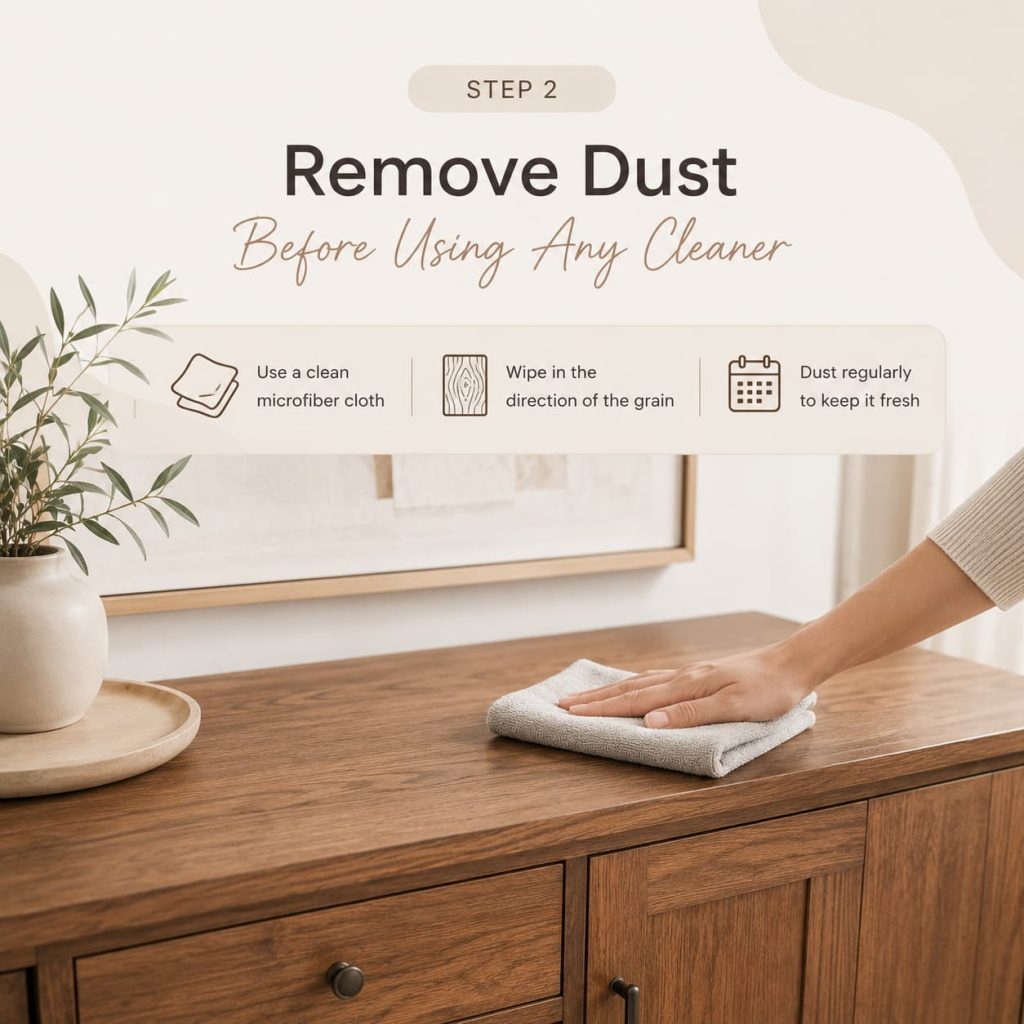
For best results:
- Dust with a clean microfiber cloth.
- Wipe in the direction of the wood grain.
- Dust high-use furniture once or twice a week.
- Dust decorative pieces every couple of weeks.
Regular dusting is one of the easiest ways to reduce the need for deeper cleaning while keeping wooden furniture looking fresh.
Step 3: Clean the Surface Using a Gentle Solution
Once the dust is gone, it’s time to clean the surface.
For routine cleaning, one of the simplest ways to clean wooden furniture is to use a few drops of mild dish soap mixed with warm water.
Lightly dampen a microfiber cloth with the solution. The cloth should feel damp—not dripping. Wipe along the wood grain using gentle strokes, then rinse and wring out the cloth as needed.
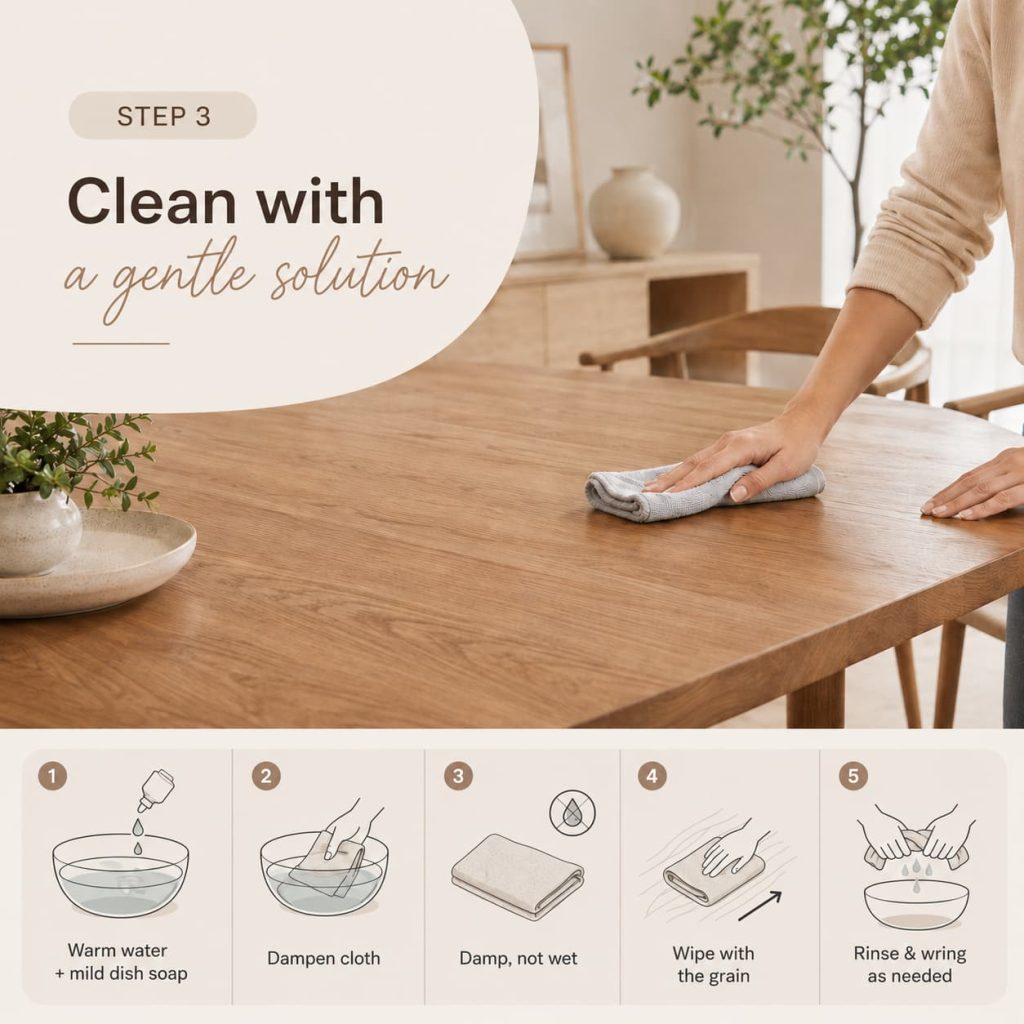
Avoid soaking the surface or allowing water to sit on the wood. Using minimal moisture is an important part of safe wood furniture care, particularly around joints, edges, seams, and unfinished areas.
Too much moisture can seep into joints or small cracks, increasing the risk of swelling, discoloration, or finish damage.
Step 4: Tackle Sticky Spots and Light Stains Carefully
Every day use can leave behind sticky fingerprints, food residue, water rings, or dried spills. These marks often come off with patience rather than force.
If you’re wondering how to clean wooden furniture with sticky spots, start with the gentlest method and give the cleaner time to loosen the residue instead of scrubbing aggressively.
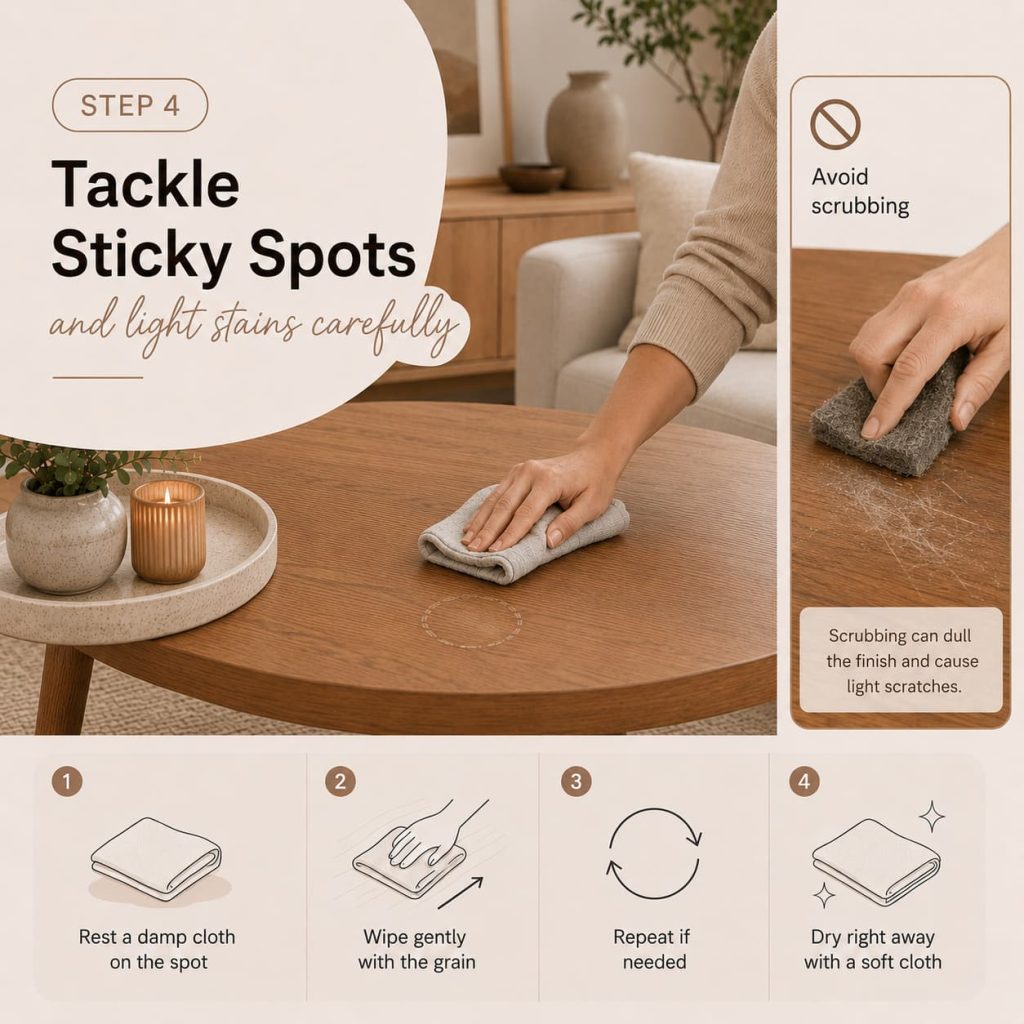
Try this approach:
- Let a lightly damp microfiber cloth rest on the spot for a few seconds.
- Wipe gently along the wood grain instead of scrubbing.
- Repeat if needed rather than using harsh cleaners.
- Dry the area immediately with a clean, soft cloth.
If you’re trying to remove stains from wood furniture, avoid scraping with sharp objects or rough sponges. Deep stains, heat marks, discoloration, or visible cracks may require more than cleaning.
If you notice cracks in the wood, you can check our guide on [How to Fix Cracked Wood Furniture in 6 Simple Steps] for practical repair tips before attempting aggressive DIY methods.
The goal of wooden furniture cleaning is to remove dirt without damaging the finish underneath it.
Step 5: Dry the Surface Right Away
After cleaning, use a dry, soft microfiber or cotton cloth to remove any remaining moisture.
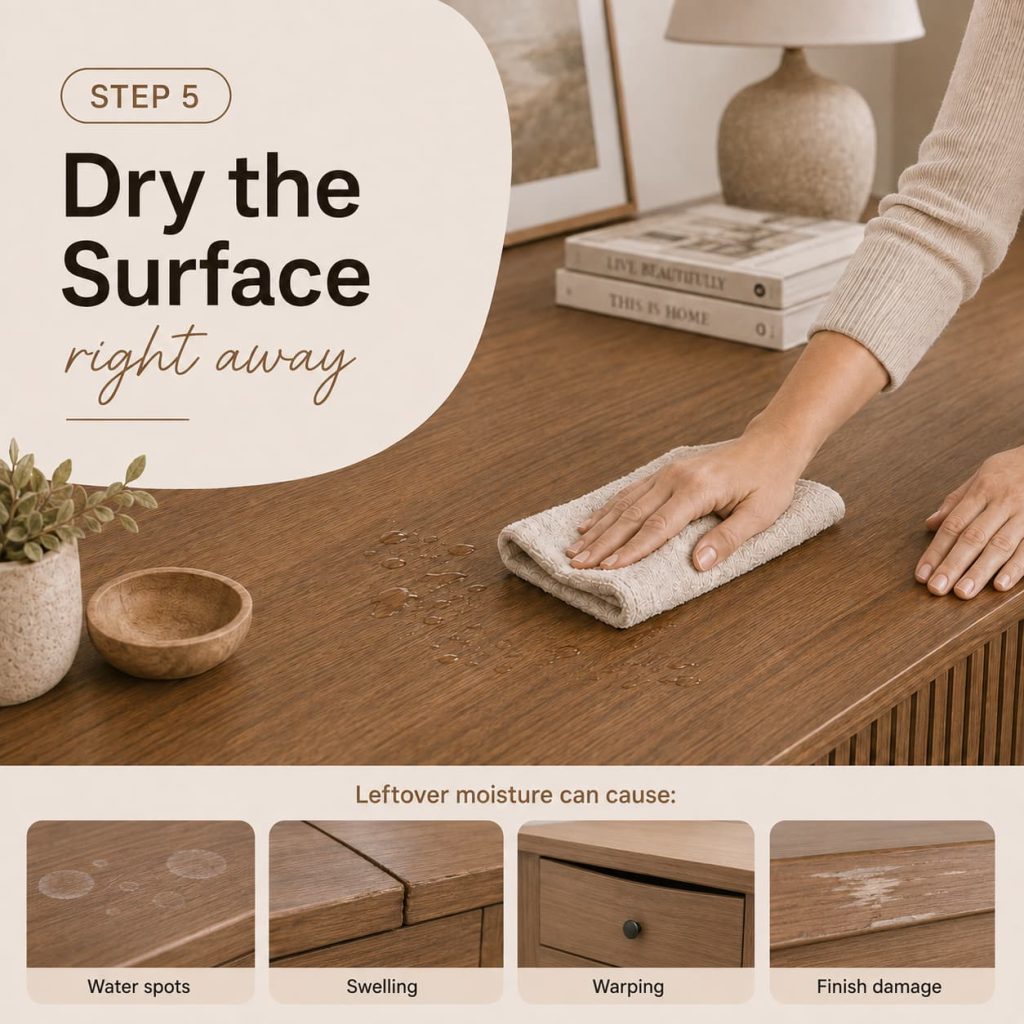
Drying is an essential part of knowing how to clean wooden furniture correctly. Even small amounts of water left behind can contribute to:
- Water spots
- Swelling
- Warping
- Damage to the protective finish
A quick wipe only takes a minute but goes a long way in helping protect wood furniture for years to come.
When cleaning solid wood furniture, never leave a damp surface to air-dry if you can easily wipe it dry.
Step 6: Polish or Condition Only When Needed
Cleaning, polishing, and conditioning each serve a different purpose.
- Cleaning removes dust, dirt, and everyday residue.
- Polishing restores a soft sheen.
- Conditioning helps maintain certain oil-finished woods.
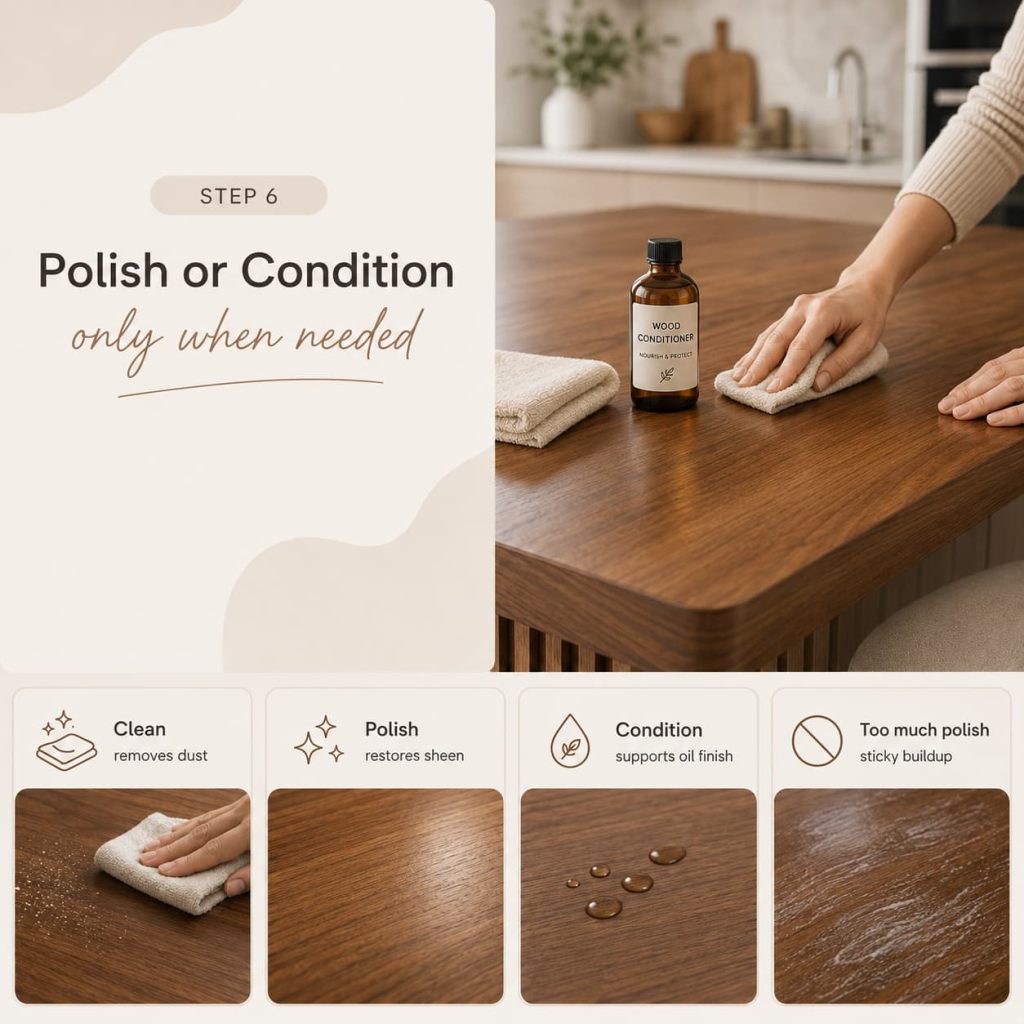
Contrary to popular belief, you don’t need to polish wood furniture every time you clean it. For many pieces, polishing once or twice a year may be enough, depending on the finish and manufacturer’s recommendations.
Over-polishing can leave behind a sticky buildup that attracts dust, so regular cleaning should not automatically mean regular polishing.
For oil-finished furniture, use a conditioner specifically recommended for that type of finish. When in doubt, follow the care instructions provided with your furniture rather than adding a new product to your cleaning routine.
Common Mistakes to Avoid
Even quality furniture can lose its finish if cleaned the wrong way. Knowing what not to do is just as important as knowing how to clean wooden furniture.
Avoid these common mistakes:
- Using too much water.
- Cleaning with vinegar too often, as its acidity may dull some finishes.
- Scrubbing with rough sponges or steel wool.
- Spraying cleaner directly onto the wood instead of onto the cloth.
- Letting dust build up over time.
- Leaving spills sitting on the surface.
- Placing hot dishes or cups directly on wooden surfaces without protection.
- Using a cleaning product without checking whether it is suitable for the furniture’s finish.
Simple protective habits can reduce how often your furniture needs deeper cleaning. Use coasters, placemats, trivets, and felt pads to help prevent stains, heat marks, and scratches.
Room-by-Room Wooden Furniture Care
The best wooden furniture cleaning routine can vary slightly depending on where the furniture is used. High-traffic pieces generally need more frequent attention than decorative furniture.
- Living Room: Dust coffee tables, TV consoles, and side tables regularly to remove everyday buildup and fingerprints.
- Dining Room: Clean food and drink spills immediately, and use placemats, coasters, and trivets to protect the surface.
- Bedroom: Dust dressers, nightstands, and bed frames weekly to prevent fine particles from settling.
- Home Office: Wipe desks more frequently to remove fingerprints, crumbs, and keyboard dust.
- Covered Outdoor Spaces: Outdoor furniture needs a little extra attention to pollen, dirt, and moisture. For a step-by-step routine, see our guide on [How to Clean Outdoor Furniture in 6 Easy Steps (2026 Guide)].
A room-by-room approach makes wood furniture care easier because you can focus your cleaning routine on the areas that experience the most daily use.
How Often Should You Clean Wooden Furniture?
There isn’t one schedule that works for every piece of furniture. How often you should clean wooden furniture depends on how frequently it is used, where it is placed, and how quickly dust or spills accumulate.
A simple routine can help you stay on top of everyday care:
| Frequency | What to Do |
| Daily | Wipe away spills |
| Weekly | Dust all surfaces |
| Monthly | Clean with a mild soap solution |
| Every 6 Months | Check the finish and condition if needed |
| Annually | Inspect for signs of wear or damage that may need professional attention |
Regular, gentle cleaning is much easier than trying to restore furniture after years of neglected buildup.
Quick Wooden Furniture Cleaning Checklist
Use this simple checklist whenever you clean wooden furniture at home:
- Dust regularly with a microfiber cloth.
- Use mild dish soap and warm water when appropriate.
- Always wipe along the wood grain.
- Use as little moisture as possible.
- Dry the surface immediately after cleaning.
- Clean the spills as soon as possible.
- Polish only when necessary.
- Follow the care instructions for your furniture’s finish.
- Protect furniture from direct heat and prolonged sunlight.
- Use coasters, placemats, and trivets to help prevent stains and scratches.
FAQs
Occasionally, a diluted vinegar solution may be suitable for some sealed finishes, but frequent use can dull or damage certain protective coatings. For routine wooden furniture cleaning, a mild soap solution is generally a safer starting point unless the manufacturer recommends another product.
Yes. A few drops of mild dish soap mixed with warm water are generally safe for routine cleaning of many finished wood surfaces. Always use a lightly damp cloth rather than soaking the furniture, and check the manufacturer’s care instructions when available.
Yes. Excess moisture can cause swelling, warping, stains, discoloration, and finish damage if it remains on the surface or reaches unfinished areas. Using minimal water and drying the surface immediately are key parts of safe wood furniture cleaning.
Most furniture does not need frequent polishing. Once or twice a year may be sufficient for many pieces, but the right frequency depends on the finish and the manufacturer’s recommendations.
For many finished solid wood pieces, a microfiber cloth with a small amount of mild dish soap diluted in warm water is a simple option for routine cleaning. The safest choice ultimately depends on the furniture’s finish, so always follow the manufacturer’s care instructions when available.
Start by removing dust and surface grime with a gentle cleaning routine. Once the surface is clean and dry, use a suitable polish or conditioner only if the furniture’s finish requires it.
Avoid trying to create shine by repeatedly applying polish, as product buildup can make the surface look dull or attract more dust.
Conclusion
Learning how to clean wooden furniture at home is less about buying expensive cleaning products and more about using the right techniques consistently. Dust regularly, use minimal moisture, clean spills promptly, and choose products that suit the furniture’s finish.
Whether you’re caring for a family dining table, a handcrafted dresser, a solid wood desk, or your favorite coffee table, a simple wooden furniture cleaning routine can help preserve its finish, natural character, and craftsmanship for many years to come. If you’re looking for handcrafted solid wood furniture made with the same focus on lasting quality, explore Sierra Living Concepts.
The best approach is simple: clean gently, avoid excess moisture, protect the surface from everyday damage, and follow the care needs of your specific finish.