

In This Article

Do You Need a Box Spring for Your Platform Bed Frame?

Last Updated on May 13, 2026 by Amelia Rose
Setting up a perfect bedroom is not merely about selecting a cozy mattress. Every element matters, right from selecting pillows and cushions to seeking warm blankets, soft rugs, and gorgeous bedsheets.
But have you ever wondered what lies beneath your mattress? The base of your bed—be it a box spring, platform bed, or slatted frame—will significantly impact your comfort and support while you sleep. With so many choices available, you might sometimes wonder whether you even need it or not.
As we know, this has been a common part of traditional bed setups for many years, but many modern beds and mattresses are crafted to work without them.
In this guide, we’ll look deeper to understand if you need a box spring, what box springs do, the downsides of using box springs, and other alternatives to box springs that can help you create the ideal bed setup without extra bulk or expense.
Let’s begin by finding the answer to a common question: Do you need a box spring, and what box spring is.
Do You Need a Box Spring with a Platform Bed
No, Platform beds already have an in-built base, either solid or slatted, that is meant to support the mattress completely without the use of a box spring. Here’s why:
- Built-In Support – Platform beds are specifically made to support modern mattresses on their own.
- Better Airflow – Slatted platform beds, in particular, improve ventilation, which helps regulate temperature and is ideal for foam mattresses.
- Sleek, Modern Look—By eliminating the requirement for a box spring, platform beds offer a clean, low-profile look.
Opting for a platform bed can save you money, simplify your bed setup, and often enhance mattress breathability.
What Is a Box Spring?
It is a big, fabric-covered platform that’s the same size as your mattress. It’s typically built with wood or metal and might have springs or a grid-like structure inside. You pop your mattress on top of it, and it does a few neat things. It raises your mattress off the ground, gives it a bit of a bounce, and provides some extra support, too.
It was originally designed to absorb the impact from innerspring mattresses, which can wear out quickly without something to protect them from the bed frame. Although useful, many modern beds now feature built-in support, which reduces or even eliminates the need for a box spring.
Let’s take a closer look at what the purpose of a box spring is for your bed.
What Does a Box Spring Do?
It serves several key purposes—
- Provides Stable Support – It helps stabilize your mattress by absorbing movement and providing an extra layer of support underneath.
- Increase Bed Height: Raising the mattress’s height off the floor using a box spring makes it easier for certain people to get in and out of bed.
- Extends Mattress Lifespan – It can help prolong the life of a conventional spring mattress by keeping it off the frame.
- Adds Bounce and Comfort – The springs or grids inside add a little bounce, making the mattress feel softer and more responsive.
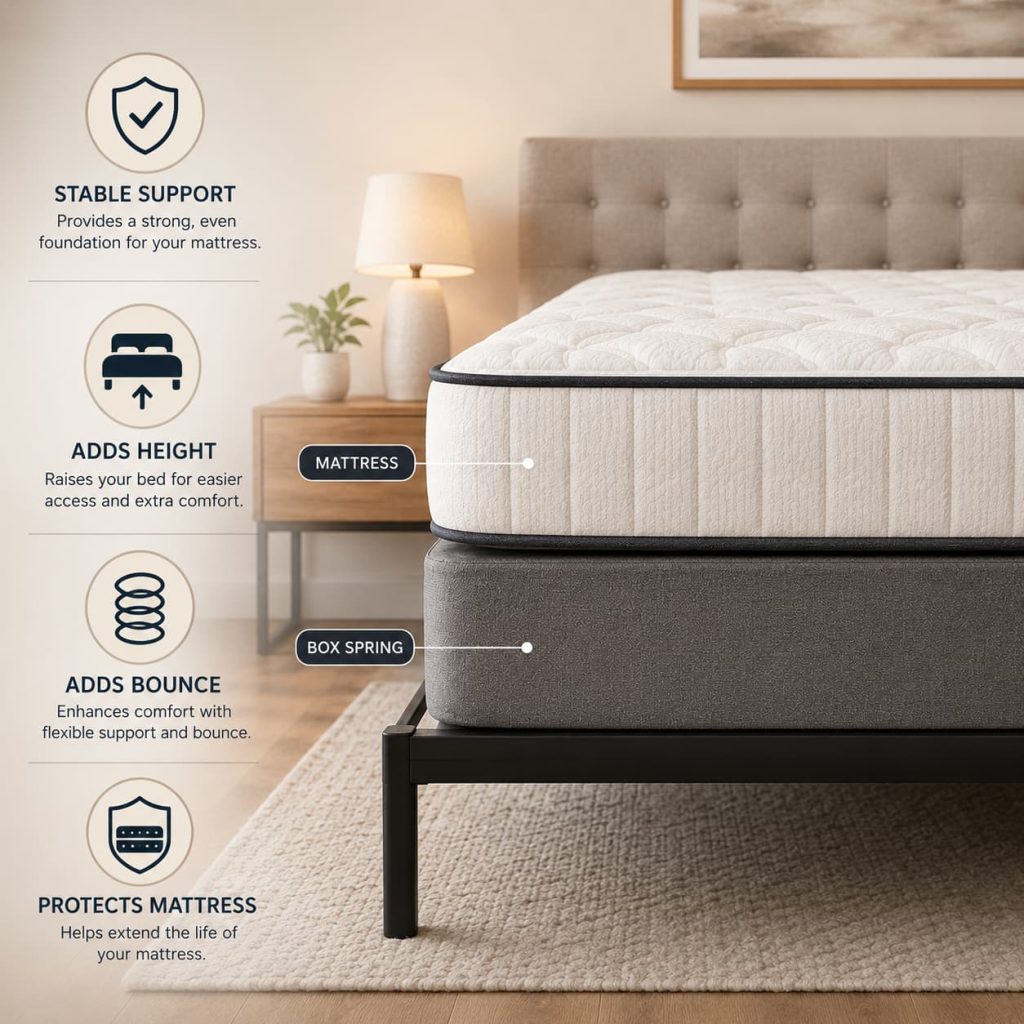
Although it serves useful functions for traditional innerspring mattresses, a lot of modern foam and hybrid mattresses don’t require additional support or elevation.
Different Box Spring Heights
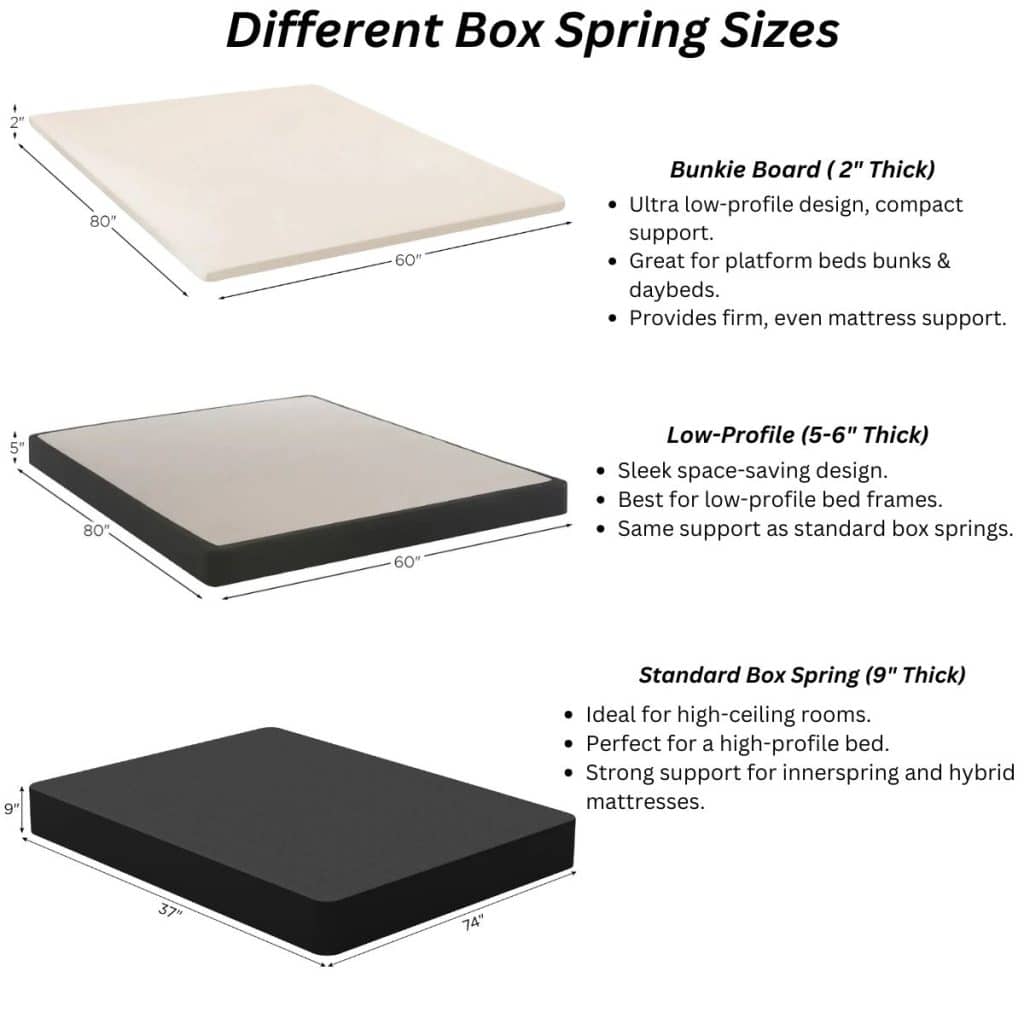
If you choose to use it, there are typically three common heights to consider:
- Standard Height (around 9 inches)—This is the most considered size that adds a lot of height, which is great for rooms with high ceilings or for those who prefer a high-profile bed.
- Low Profile (about 5-6 inches)—With less height and the same amount of support, this size offers a sleeker appearance that may be more appropriate for modern low-profile bed frames or smaller spaces.
- Bunkie Board (around 2 inches)—A bunkie board provides a minimalistic, low-profile support system, typically about 2 inches thick. It is ideal for platforms, bunks or daybeds where there isn’t much room for height, giving a firm, even base for your mattress without making it much taller.
Your choice between these sizes will depend on your personal choice, your bedroom layout, and how high you want your bed to be.
Important Factors to Consider If You Do Need a Box Spring
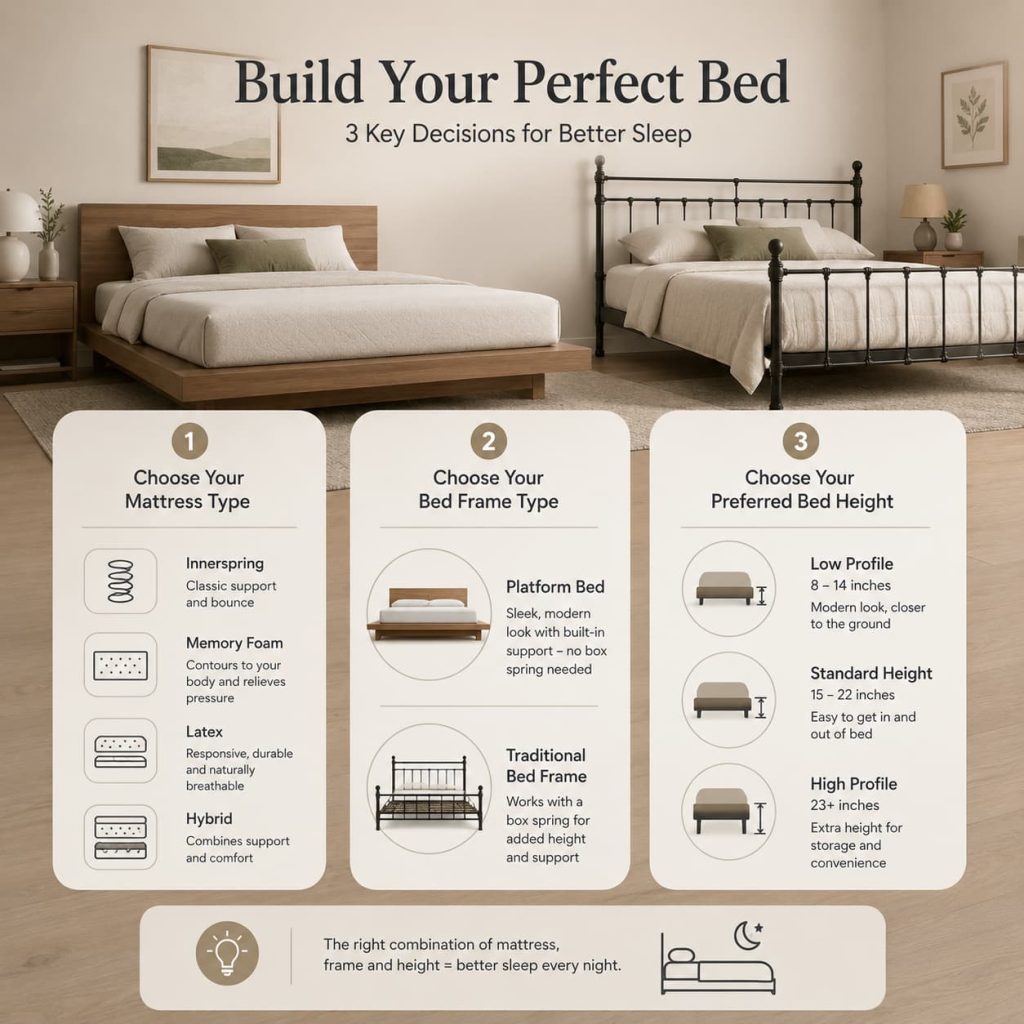
Whether you need it or not depends on a few important factors:
- Mattress Type – Usually beneficial for innerspring mattresses, though it can interfere with their original design; memory foam, latex, and hybrid mattresses perform better on firm floors or slats.
- Bedframe Type—Platform beds and solid wood bed frames with slats are not required since they already possess their own support. Old metal bed frames tend to require a box spring to stabilize the mattress.
- Preferred Bed Height—If you like your bed to be higher, a box spring can easily add height. But if you prefer a lower bed, you might not want the extra lift it gives.
By taking these things into account, you can decide whether or not a box spring is the best option for your mattress.
Benefits of a Box Spring
It has been a staple in bed setups for decades, offering several benefits:
- Provides Support – Helps prevent sagging, especially with innerspring mattresses, by providing a strong base.
- Adds Height—To make getting in and out of bed easier and can provide the necessary height if you prefer a taller bed.
- Shock Absorption – The design of this absorbs weight and movement, lessening the pressure on your mattress.
The Downsides of Using a Box Spring
They have pros and cons, especially compared to modern beds and frames:
- Limited airflow: It can cause discomfort by retaining heat and moisture, especially when used with foam mattresses that need enough ventilation.
- Increased Height – Adding a box spring can elevate your bed higher than some people prefer, making it more difficult to get in and out of bed comfortably.
- Additional Cost—Investing in a box spring might raise the cost of your bed by $200 or more.
- Support Issues Over Time – As boxsprings age, they can lose their support, causing the mattress to sag and negatively affecting sleep quality.
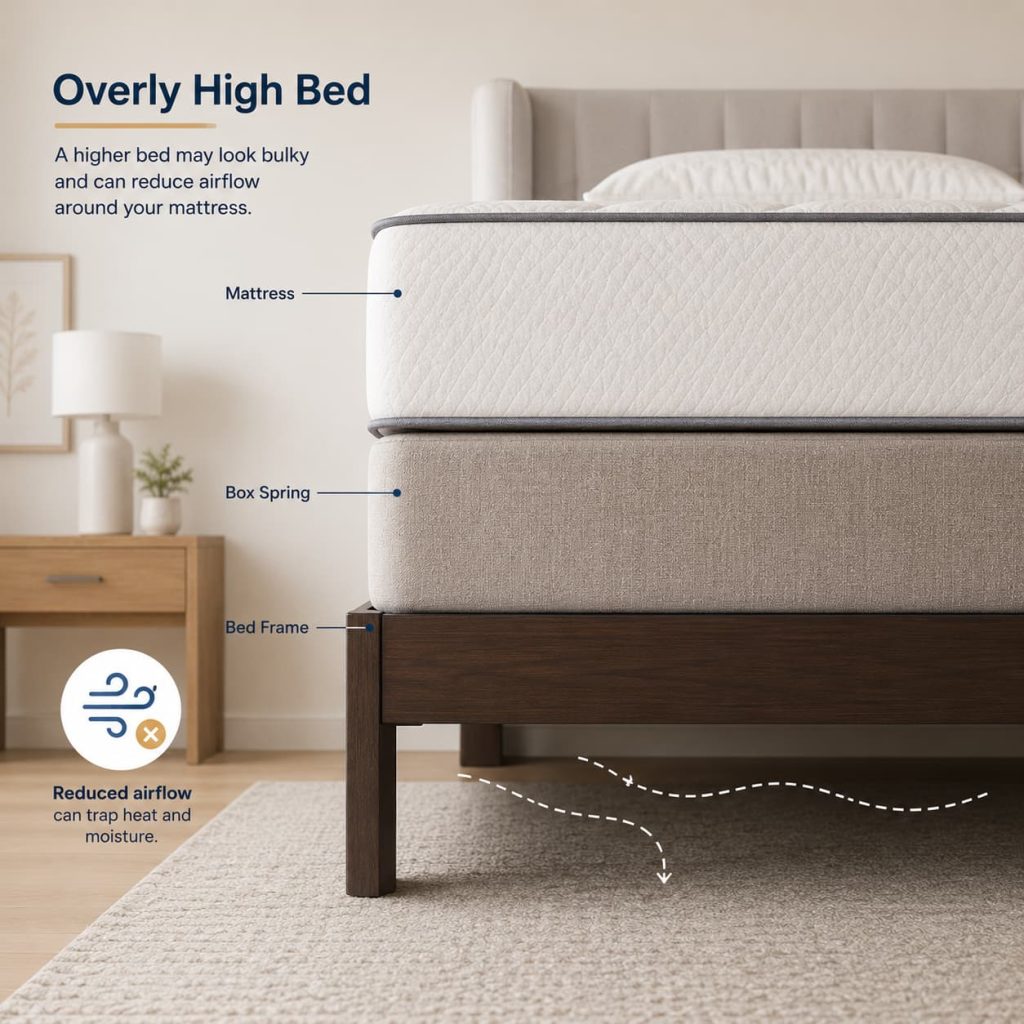
Because of these drawbacks, platform beds and slatted wooden frames are worth considering. They improve airflow and help create a cleaner, more streamlined setup.
Why Do Mattresses Need Airflow?
Proper airflow helps regulate mattress temperature and prevents moisture buildup. This keeps the mattress clean and free from mold or unwanted odors. Slatted bed frames also improve ventilation, making them ideal for foam and latex mattresses that tend to retain heat.
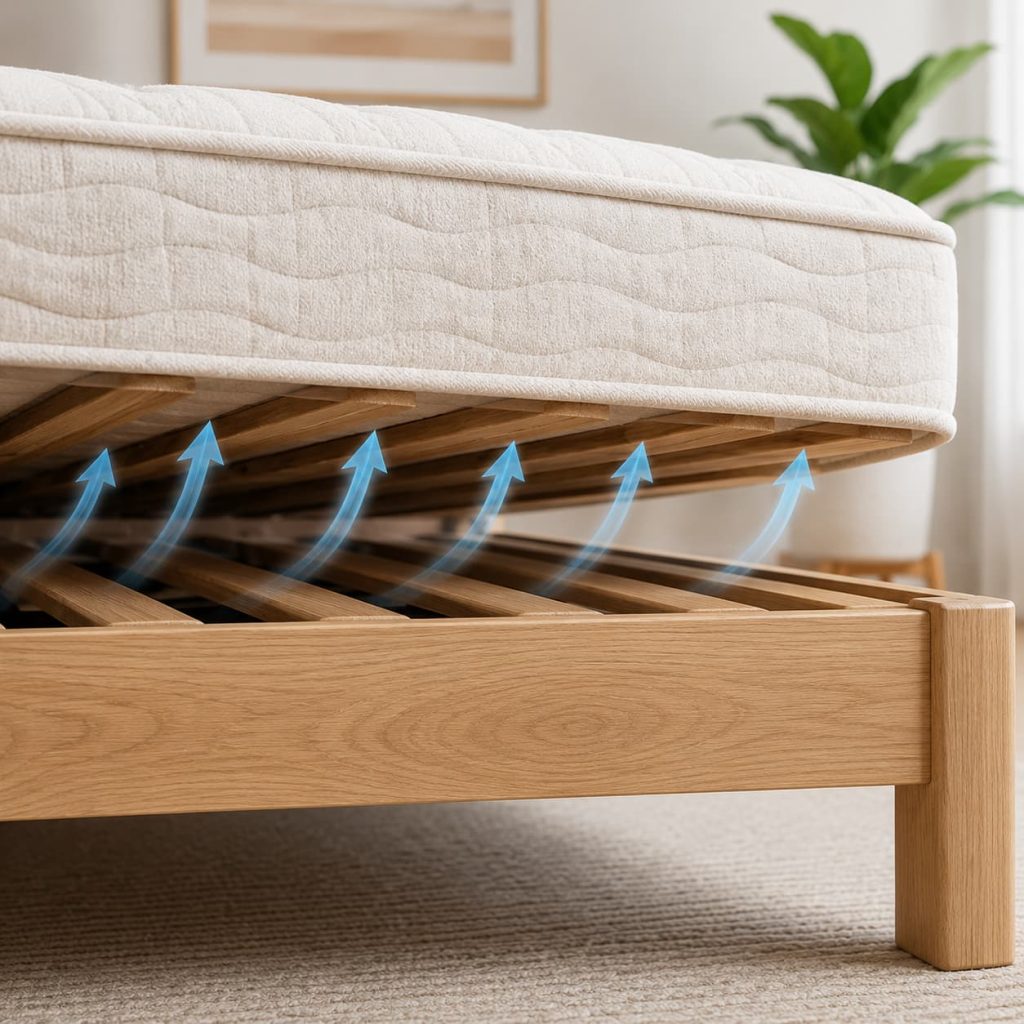
Understanding the differences between bed frames, box frames, and box spring setups is essential.
Every part of your bed has a specific role:
- Bed Frame – This is the main structure that supports the mattress and foundation, typically featuring headboards and footboards.
- Box Frame—A solid foundation that lacks springs but provides support for a mattress.
- Box Spring—The traditional support for innerspring mattresses, designed to absorb shock and add height.
Knowing about these components will assist you in choosing the best option for your comfort and support requirements.
Box Spring vs. Bed with Slats—Key Differences
Should you pick a box spring or a platform bed? Here’s a simple comparison:
- Box Springs – Since they offer both height and softness, innerspring mattresses are ideal. They work well with traditional metal bed frames or frames without built-in support.
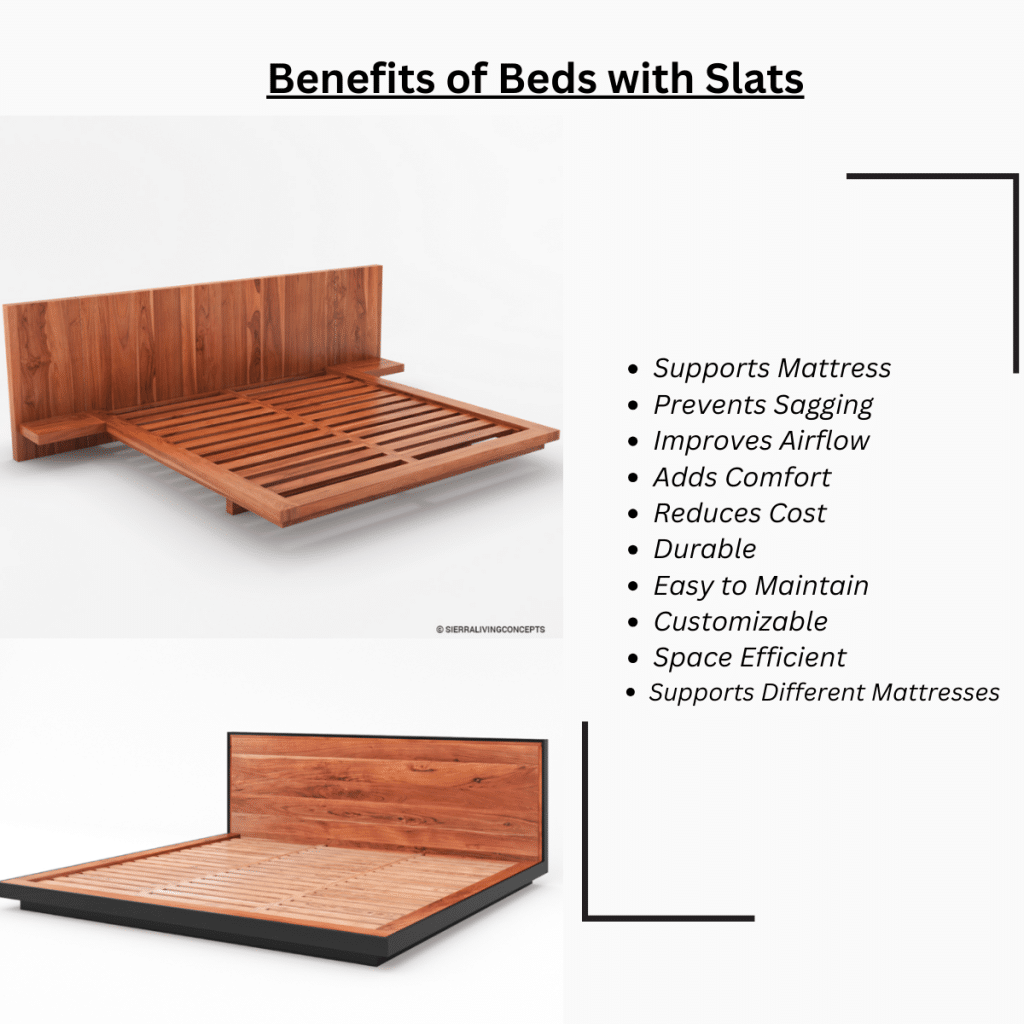
- Beds with slats—Such beds are a great choice for many mattress styles, like memory foam and hybrids, because they provide a solid foundation with an integrated slat system.
You won’t need a box spring with these, and they help with airflow while often adding a contemporary feel to your bedroom.
Your selection between the two will be based on your mattress type, desired bed height, and individual comfort requirements.
Are Box Springs Necessary for All Mattress Types?
- Innerspring Mattresses—These traditional mattresses benefit from the added support and bounce that box springs provide.
- Memory Foam & Hybrid Mattresses – Foam and hybrid mattresses perform better on solid or slatted bases, enhancing both stability and airflow. A box spring is not necessary for these types.
- Latex Mattresses—Similar to foam mattresses, latex models offer firm support without the bounce. They are best placed on slatted bed frames or solid wood platform beds.
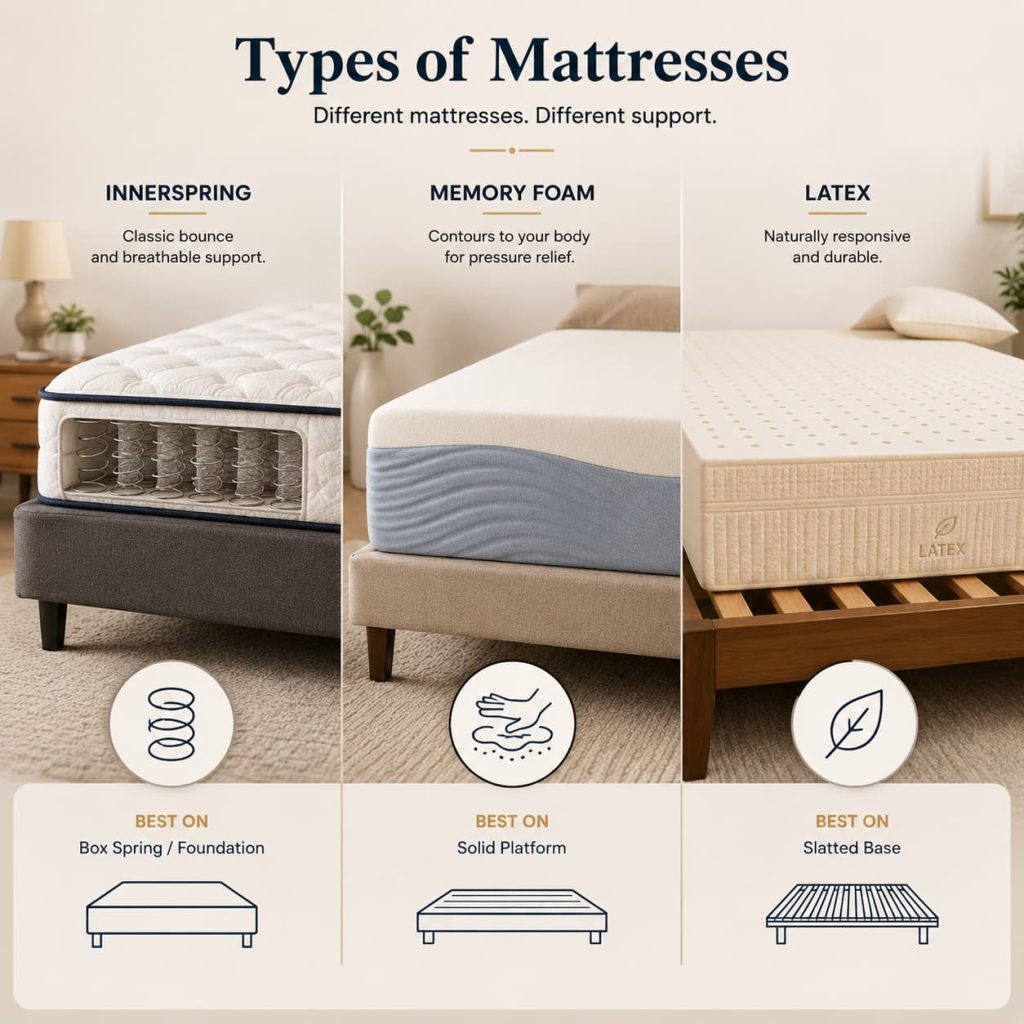
Many modern mattresses are now designed to perform optimally without a box spring, particularly when paired with a supportive base.
When Can You Skip the Box Spring?
There are several situations where a box spring may not be necessary:
- A supportive bed frame with sturdy wooden slats or a built-in base can often provide enough support for most mattresses.
- Memory foam, latex, and hybrid mattresses typically perform best on a firm, flat surface without requiring the extra bounce of a box spring.
- Choosing to skip the box spring also creates a lower-profile bed setup and helps the room feel more open and spacious.
In such cases, forgoing a box spring is both practical and cost-effective.
The Role of Slats in a Bed Frame
Slats are another typical component of bed frames. These horizontal wooden boards keep the mattress securely in place, eliminating the need for a box spring. Using wooden slats in a bed frame ensures balanced mattress support and improved ventilation.
This feature is significant because proper airflow helps keep mattresses cool and fresh. It also helps prevent overheating, especially in memory foam mattresses that tend to retain heat.
The best alternatives to box springs for modern beds
These solutions might work better with modern mattresses if you are searching for something different than box springs.
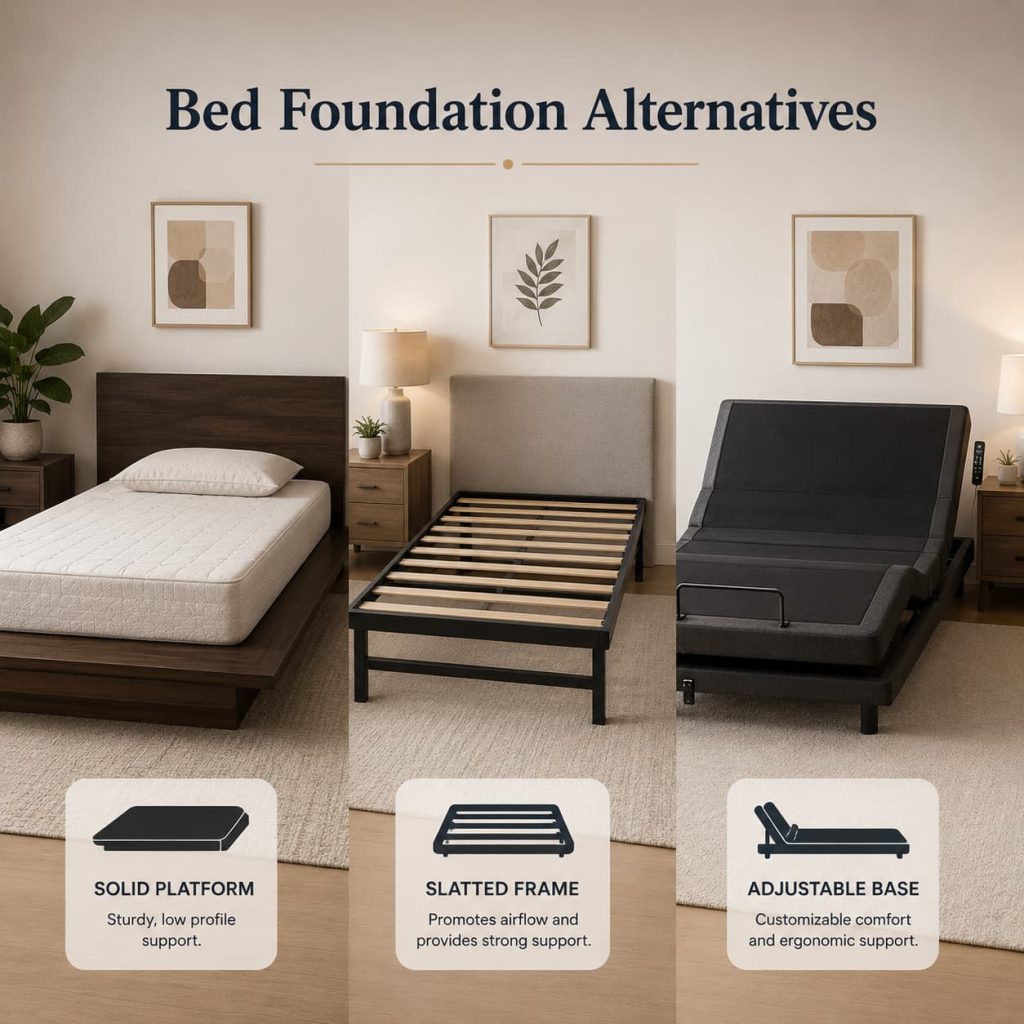
- Platform beds come with built-in support and usually don’t require a box spring.
- Slatted frames offer stable support and promote airflow, which can enhance mattress performance and comfort.
- Adjustable Bases are ideal for meeting specific sleep needs. They let you elevate or lower different areas of the bed for added comfort.
The Final Verdict—Do You Need a Box Spring?
In conclusion, you now clearly understand box springs—their purpose, advantages, and downsides. You also know about alternatives if you decide to skip the box spring.
Do you need a box spring? For most modern beds, the answer is no. Memory foam, latex, and hybrid mattresses perform best on flat, solid surfaces. Platform beds and wooden slatted frames provide excellent support, better airflow, and a more streamlined look. Plus, they save you the added height and cost of a box spring.
However, if you own an innerspring mattress or prefer a higher bed, a box spring can still be a beneficial option.
If you’re ready for a custom, modern bedroom solution, Sierra Living Concepts offers beautifully handcrafted solid wood bed frames. Available in various styles and sizes, these frames eliminate the need for a box spring. They also transform your space into a stylish and relaxing retreat.
