


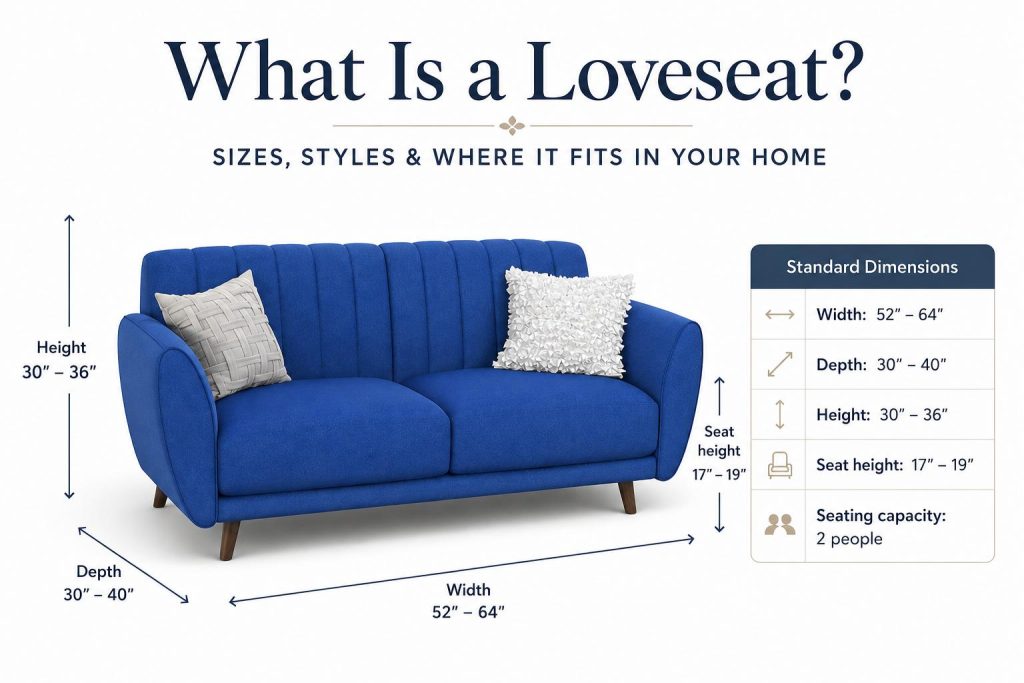
A loveseat is a two-seat sofa, typically 52 to 64 inches wide, designed to comfortably seat two people in a smaller footprint than a standard sofa. It’s the go-to piece for apartments, home offices, reading nooks, and any living room where a full-size sofa would overwhelm the space without sacrificing the comfort or craftsmanship of a larger piece.
If you’ve been searching “what is a loveseat,” comparing it to a standard sofa dimension, or simply trying to figure out where one might fit in your own home, here is everything worth knowing gathered in one place.

Loveseat Dimensions: How Long, Wide & Big Is It?
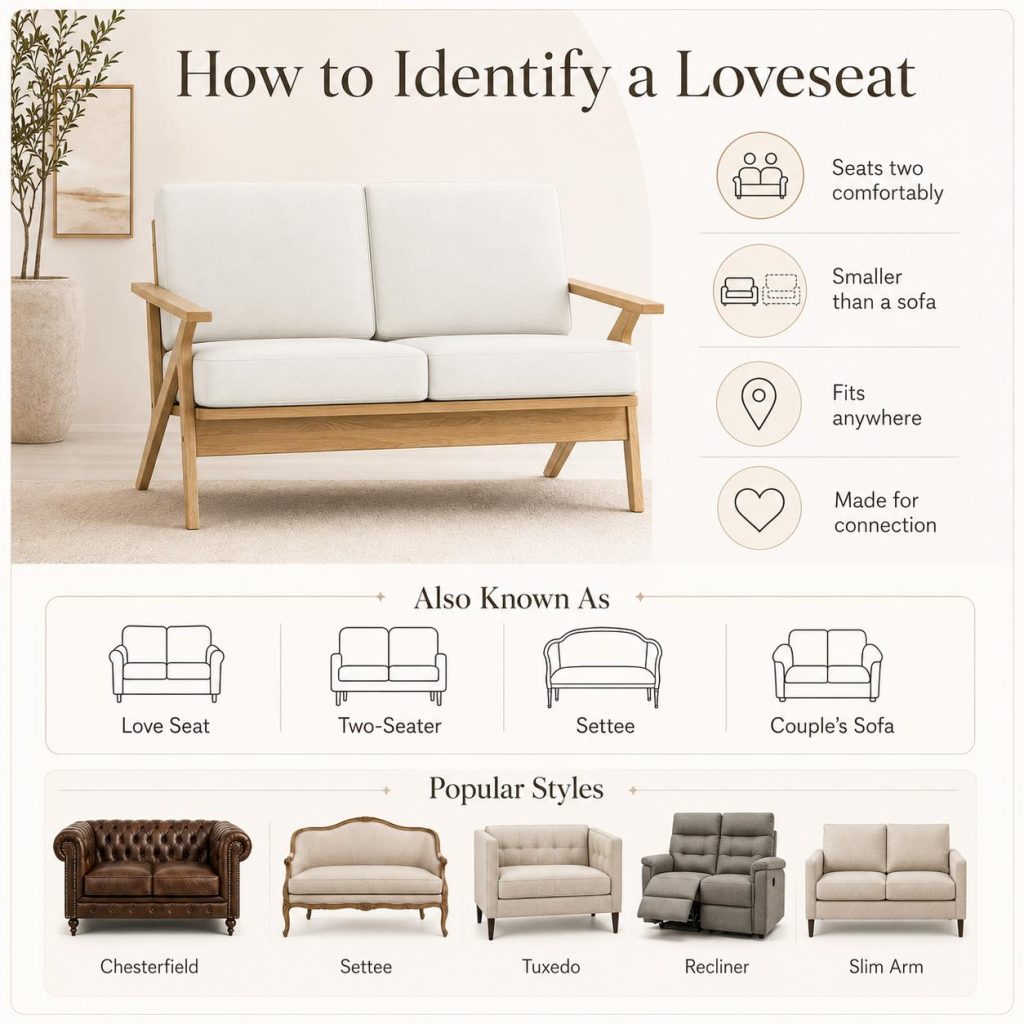
Before you fall in love with a fabric or a silhouette, it helps to know the numbers first. In general, most loveseats fall within a fairly predictable size range. However, exact measurements vary depending on the style. For example, a tuxedo, a tufted Chesterfield, a reclining loveseat, or a slim-armed settee will each have slightly different dimensions.
| Dimension | Typical Range |
|---|---|
| Width | 52″ – 64″ |
| Depth | 30″ – 40″ |
| Height | 30″ – 36″ |
| Seat height | 17″ – 19″ |
| Seating capacity | 2 people |
A general rule: if it’s under 60 inches wide, it seats two comfortably; anything over 72 inches starts to function more like a compact sofa.
Why Is It Called a “Loveseat”?
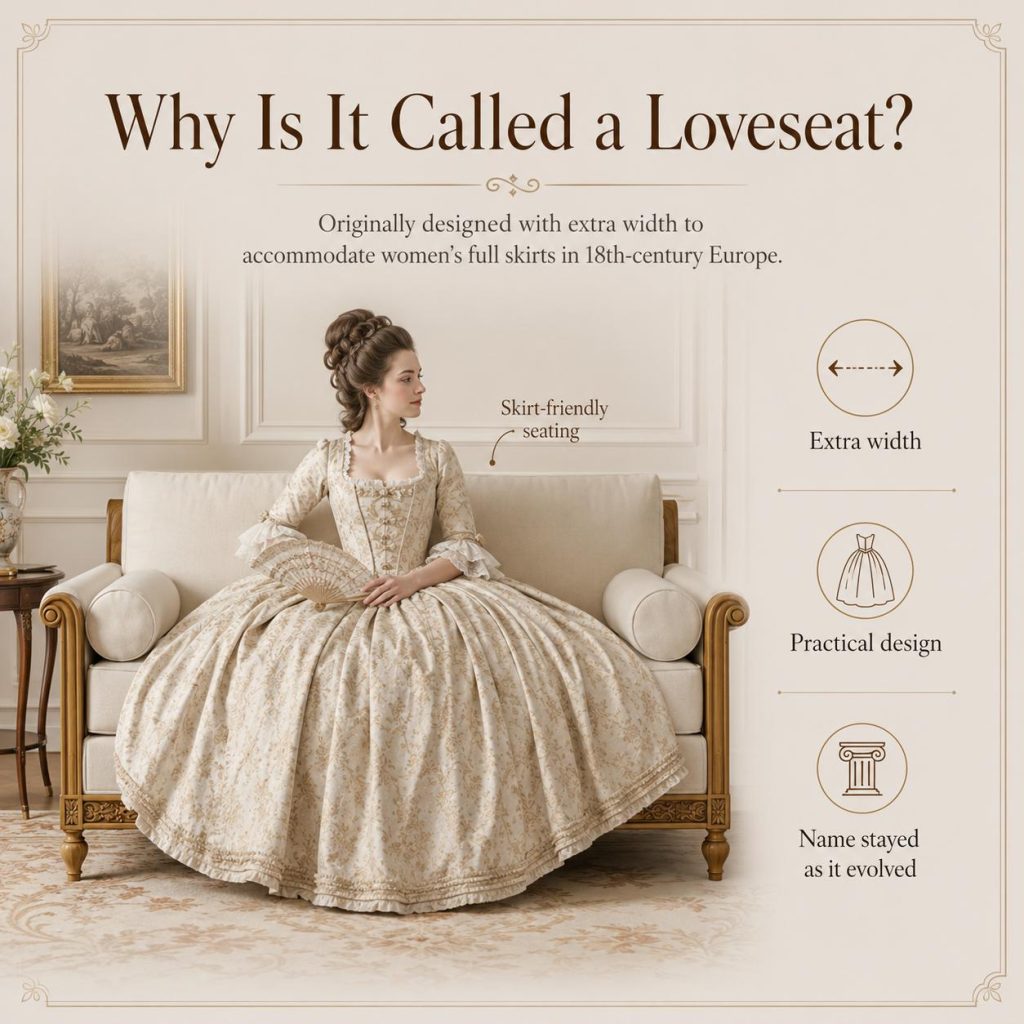
Here’s a bit of history I love sharing: the name has nothing to do with courting couples. In 18th-century Europe, furniture makers designed wide wingback chairs to accommodate women’s full skirts, making the extra width practical rather than romantic. As the design evolved into a proper two-seat sofa over the following century, the name stayed with it, and the romantic myth simply grew up around it. It’s a lovely story to tell guests, even if it isn’t quite the true one.
Loveseat vs. Sofa: What’s the Difference?
The distinction comes down to footprint and seating capacity, but the difference shows up most in how each piece behaves in a room.
| Key features | Loveseat | Sofa |
| Seats | 2 | 3+ |
| Width | 52″-64″ | 72″ – 96″ |
| Best for | Apartments, offices, bedrooms, and small living rooms | Family rooms, great rooms, and formal living rooms |
| Typical role | Secondary or accent seating | Primary seating |
Are loveseats better than sofas for small rooms?
In most cases, yes. A loveseat’s smaller footprint leaves room to breathe and move around. Plus, it pairs beautifully with a solid wood coffee table, accent chair, ottoman, and end tables, giving you extra seating or an accent when you’re entertaining. It’s the difference between a room that feels curated and one that simply feels full.
Where a Loveseat Truly Shines
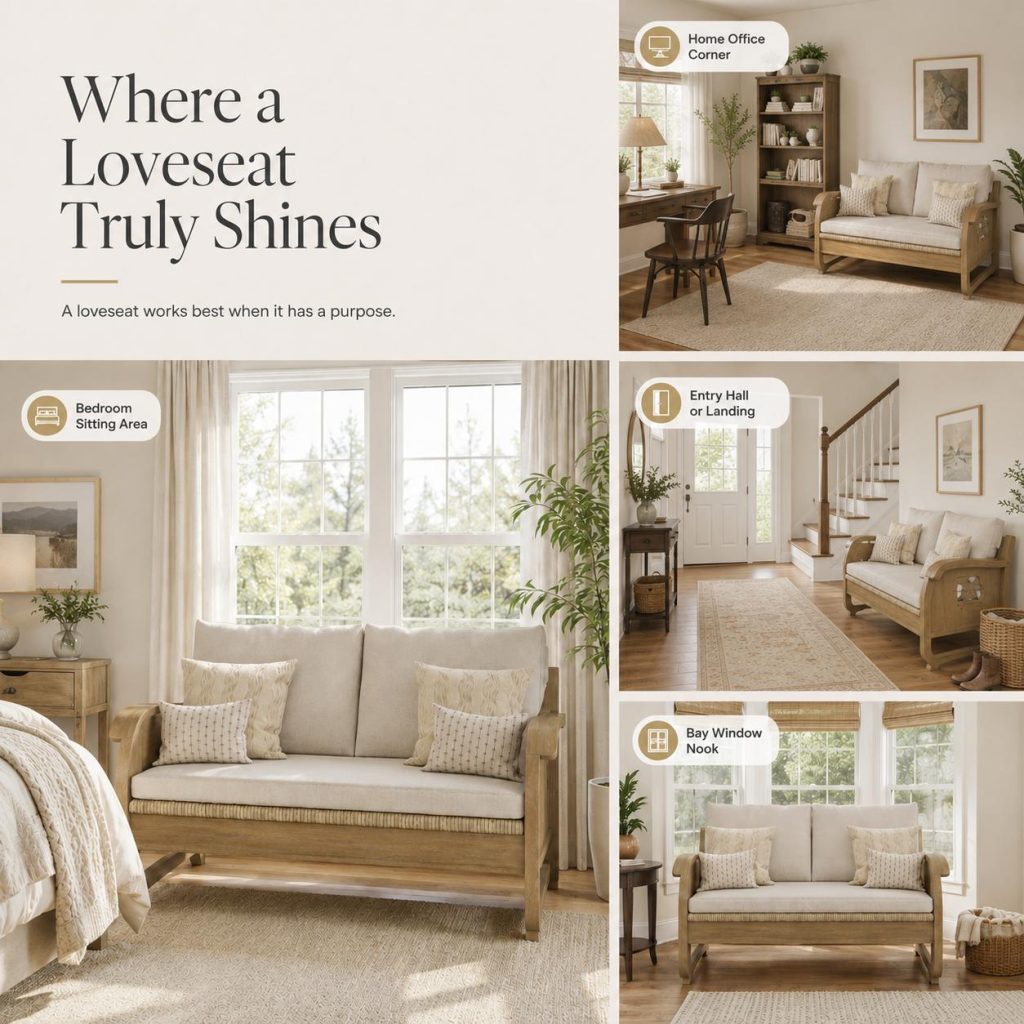
The loveseat shines when it has a specific job, rather than being the only seat in the room.
- A primary bedroom sitting area—tucked by a window with a small table, it turns a corner of the bedroom into a proper retreat.
- A home office — a place to take a phone call away from the desk, upholstered in something that can stand up to daily use.
- An entry hall or landing—a graceful spot to sit while pulling on boots, especially in a smaller silhouette like a settee.
- A bay window—few pieces fill an awkward window nook as elegantly as a loveseat scaled to fit it.
How to Arrange a Sofa and Loveseat in a Small Living Room
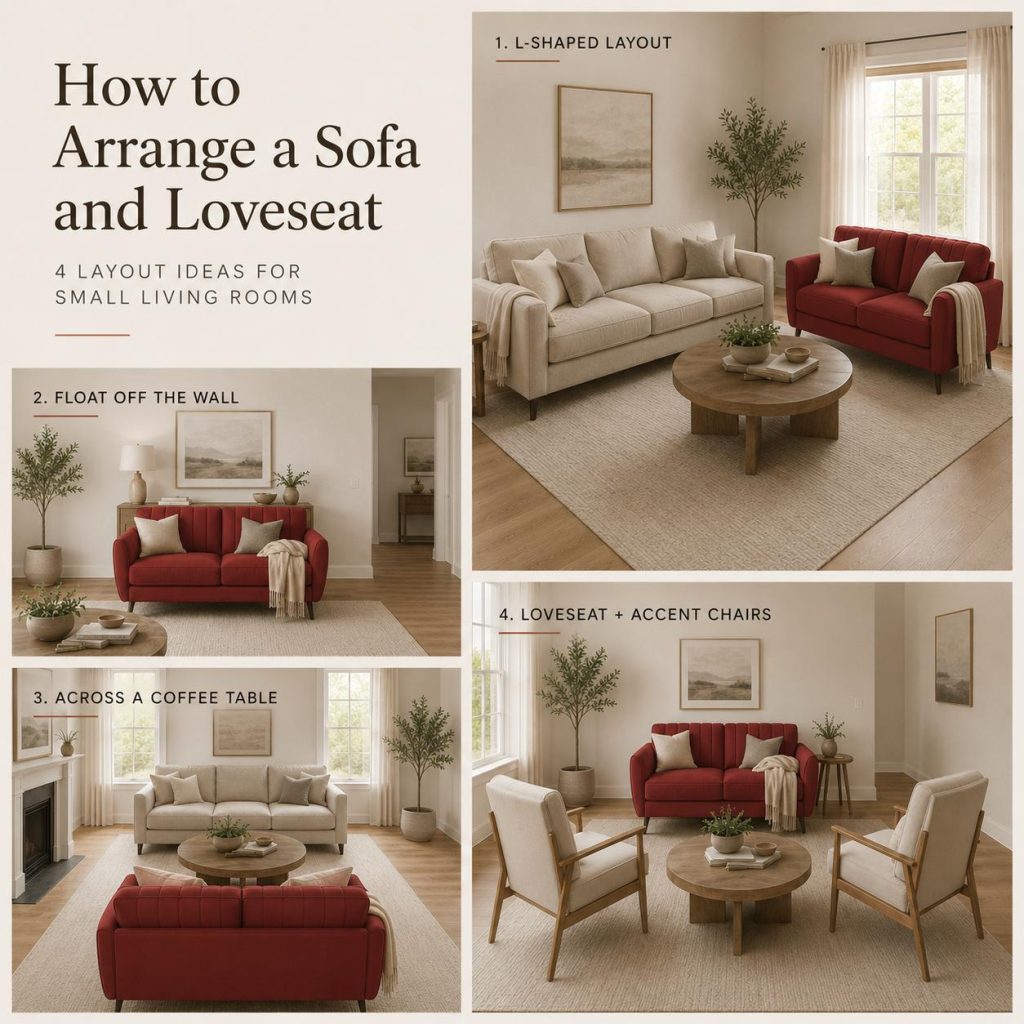
- Go perpendicular, not parallel. Placing the loveseat at a right angle to the sofa & couches creates an L-shaped conversation area that feels intentional rather than crowded.
- Float it off the wall. Even four to six inches of breathing room behind a loveseat makes a small room read as larger and more considered.
- Face it across a solid wood coffee table. Mirroring the sofa with a loveseat opposite keeps the layout balanced and easy for conversation.
- Layer in pillows and a throw with intention. Two to three pillows in varying textures—never a matched set—and a single throw draped over one arm keep a loveseat from looking like an afterthought.
- Skip the sofa entirely in tight rooms. A loveseat paired with two well-chosen accent chairs often seats the same number of guests with a far lighter visual footprint than a sofa-and-loveseat combination.
Choosing a High-End Loveseat: What Actually Matters
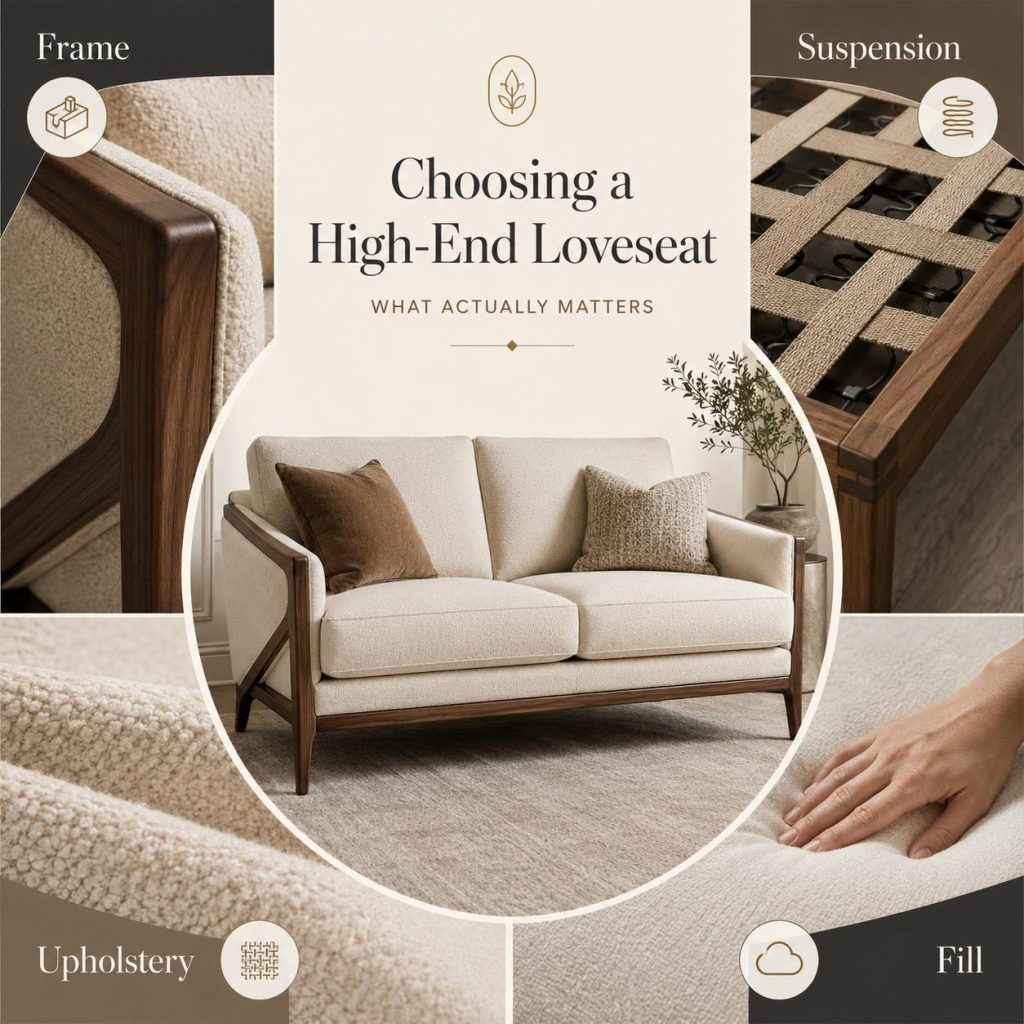
Not all loveseats are built the same, and at this size, the construction quality is easy to feel the difference in day-to-day.
- Frame: Kiln-dried hardwood with corner blocking outlasts particleboard or softwood frames by decades, not years.
- Suspension: Eight-way hand-tied springs offer superior support over sinuous wire, especially for a piece that gets used daily.
- Upholstery: Full-grain leather or performance fabric holds up to real life without showing wear the way lower-grade materials do.
- Fill: A blend of high-density foam and down offers the plush look of a down cushion without the constant fluffing.
At Sierra Living Concepts, every loveseat is built on this same standard, the kind of construction you’d expect from a piece meant to be the centerpiece of a room, not just a space-filler.
Caring for Your Loveseat
A well-built loveseat, properly cared for, is a piece you’ll pass down rather than replace. Rotate and flip reversible cushions every few weeks for even wear. Vacuum the upholstery once a month with a soft brush attachment. First, protect the fabric with a suitable fabric protector before spills happen. Then, regularly maintain the upholstery to extend its lifespan. Finally, if the frame remains in good condition, reupholstering is usually more worthwhile than buying a new loveseat.
Loveseat FAQ’s
Not quite. A couch (or sofa) typically seats three or more people, while a loveseat is built specifically for two.
Most loveseats average 58–60 inches wide, though compact models start around 52 inches and larger styles run up to 64 inches.
A loveseat usually fits small spaces better because its narrower width and shallower depth create more room to move while still seating two people comfortably.
Reupholstering a loveseat typically costs several hundred to over a thousand dollars, depending on fabric grade and labor, often worth it for a well-built frame versus replacing the entire piece.