


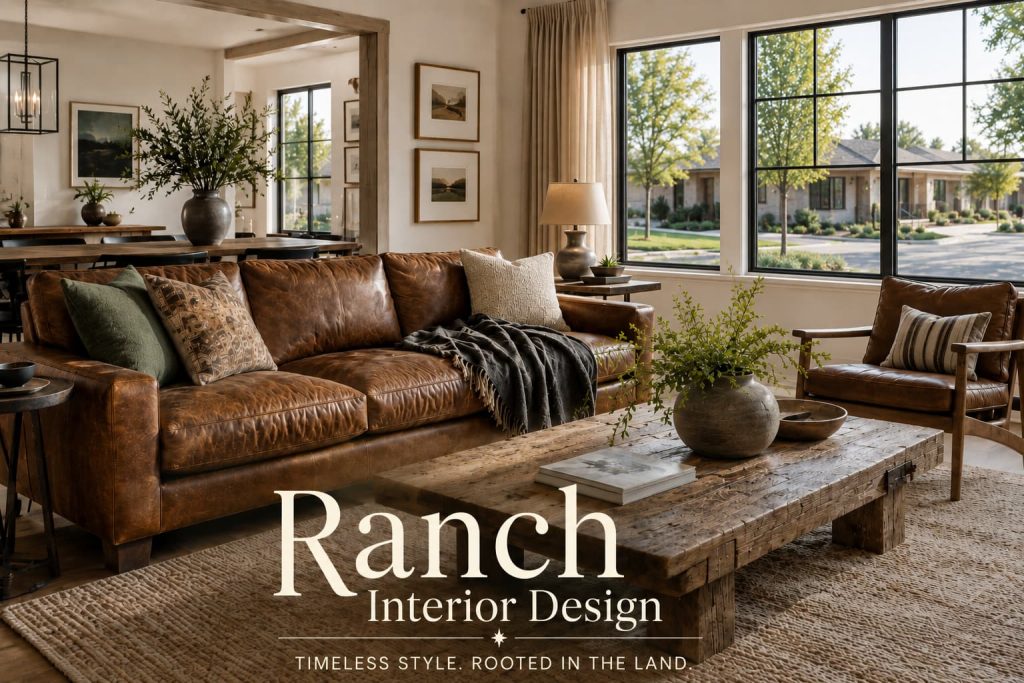
Ranch interior design blends rustic warmth with open, casual living. It’s built on natural wood, earthy tones, leather and linen textiles, low-profile furniture, and a strong connection between indoors and out. The style traces back to the California ranch houses Cliff May began designing in the 1930s, and it works equally well in an original ranch home or a modern space looking for a grounded, lived-in feel.
There’s something deeply appealing about a home that feels rooted. Not trendy, not overly curated—just honest, warm, and built to last. That’s the draw of ranch interior design, and it’s endured for nearly a century for a reason.
Key takeaways
- Origin: Ranch style comes from the postwar California ranch house, popularized by designer Cliff May starting in the 1930s.
- Palette: Warm neutrals as a base, earthy accents (terracotta, olive, and rust), and dark tones used sparingly.
- Materials: Solid wood, leather, linen, wool, stone—nothing synthetic or high-gloss.
- Furniture: Low-profile, substantial, and durable rather than delicate or trend-driven.
- The #1 mistake: Costuming the look with Western-themed decor instead of letting materials and craftsmanship do the work.
Where Ranch-Style Design Actually Comes From
Most ranch design guides skip the history, but it explains almost every rule in this article.
The California ranch house was largely the work of one person: Cliff May, a San Diego native widely credited as the father of the style. May was never trained as an architect—he started as a furniture maker, building Monterey-style pieces before he ever designed a house. That background shows up in the finished style: ranch houses were built by someone who thought about how wood, proportion, and daily use fit together before he thought about facades.

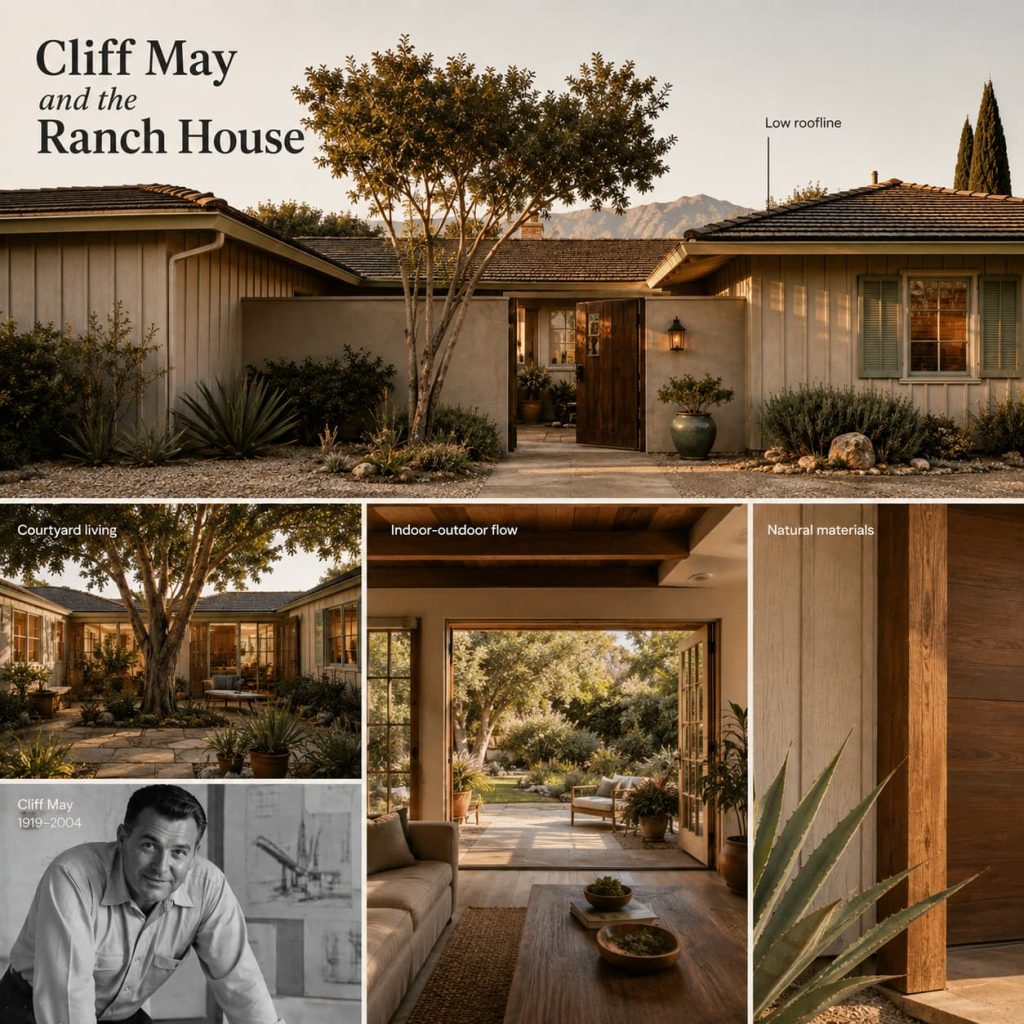
May blended the informal, courtyard-facing hacienda houses of California’s Spanish-colonial ranchos with mid-century modern ideas—low, horizontal rooflines, cross-ventilation, and a floor plan set at ground level so the house never felt separate from the land around it. He went on to design more than a thousand custom homes and roughly 18,000 tract homes across Southern California, and by the postwar boom, the style had spread nationally as the classic single-story “dream home.”
That origin is why ranch interiors default to natural materials and an indoor-outdoor connection: the style wasn’t invented as a decorating trend. It was a practical response to California’s climate and a specific, furniture-maker’s sense of how houses should live.
Ranch vs. Rustic vs. Modern Ranch: What’s the Difference?
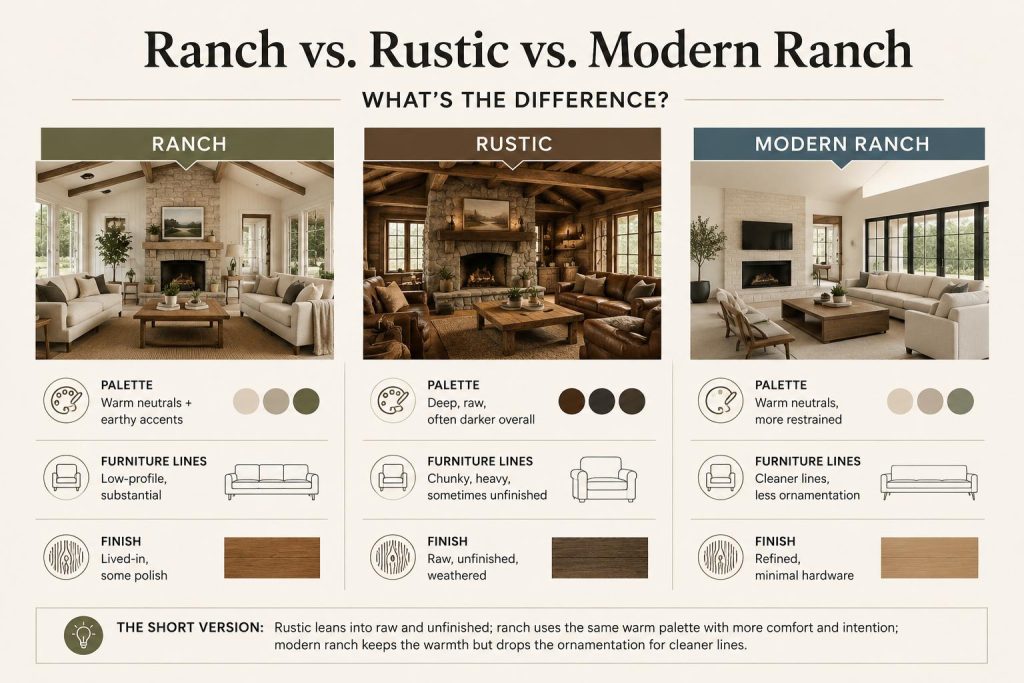
These three terms are often confused, and the distinction actually matters for how you shop and design.
| Ranch | Rustic | Modern Ranch | |
|---|---|---|---|
| Palette | Warm neutrals + earthy accents | Deep, raw, often darker overall | Warm neutrals, more restrained |
| Furniture lines | Low-profile, substantial | Chunky, heavy, sometimes unfinished | Cleaner lines, less ornamentation |
| Finish | Lived-in, some polish | Raw, unfinished, weathered | Refined, minimal hardware |
| Decor density | Curated, functional | Layered, heavier texture | Sparse, intentional |
| Best for | Most homes wanting warmth without clutter | Cabins, lodges, statement spaces | Contemporary homes, open-plan builds |

What Are the Core Principles of Ranch Interior Design?
Before picking paint colors or furniture, it helps to understand what makes the style hold together.
- Simplicity over excess. Ranch interiors avoid clutter. Every piece should serve a purpose, look good doing it, and feel like it belongs. The goal is a space that’s edited but not sterile.
- Natural materials as the foundation. Wood, stone, leather, linen, and wool—these are the building blocks of ranch design. Synthetic materials and anything that feels artificially shiny tend to undercut the aesthetic.
- Connection to the outdoors. Ranch homes were designed to blur the line between inside and outside. Large windows, sliding glass doors, and outdoor entertaining areas are all part of the equation.
- An earthy, grounded palette. Color in ranch interiors comes from nature: the warm browns of soil, the muted greens of sage, and the dusty blues of a wide-open sky. The palette is warm but never garish.
What Color Palettes Work Best for Ranch-Style Interiors?
The best color palettes for ranch interiors draw directly from the natural landscape—warm neutrals as a base, layered with earthy accent tones like terracotta, rust, olive green, and ochre.
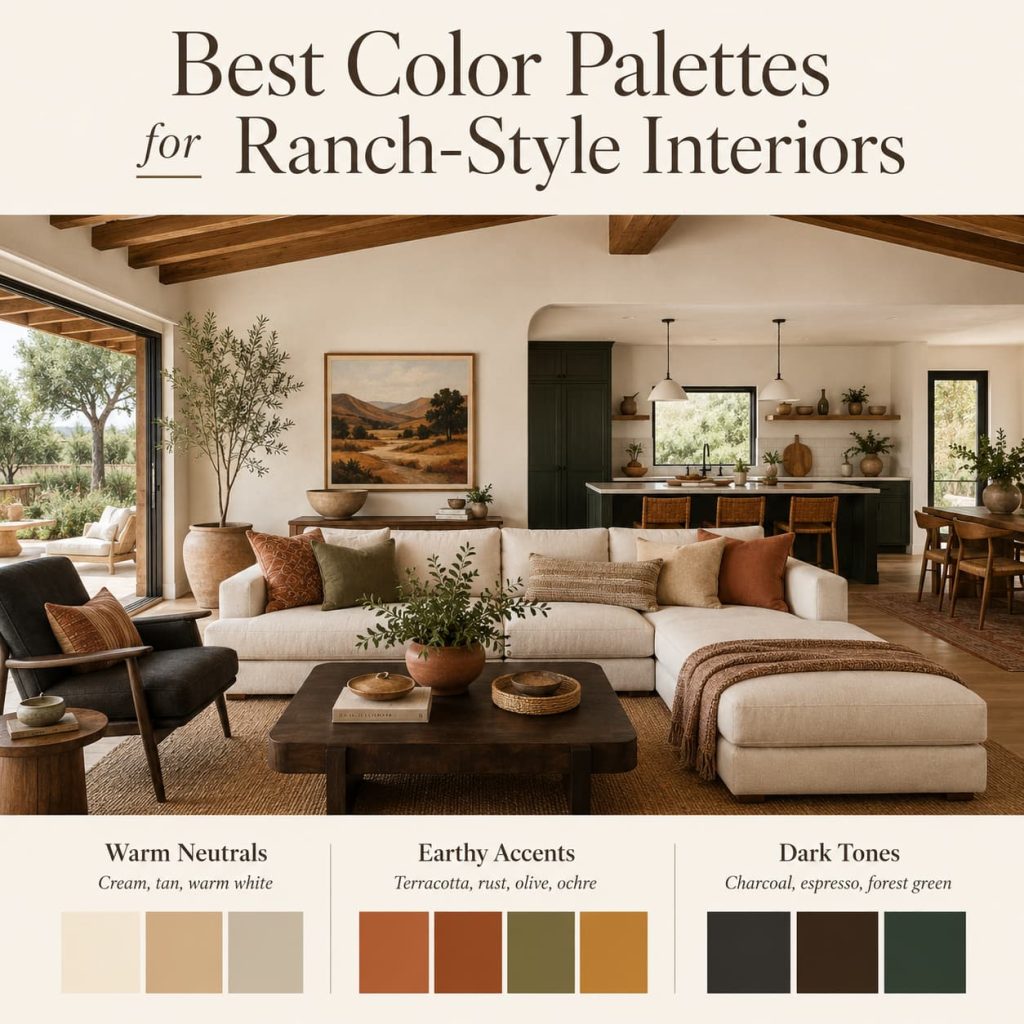
Color sets the tone for the entire space, and in ranch design, the guiding principle is simple: look outside and borrow from there.
Warm Neutrals as a Base
Warm whites, creams, and tans make excellent base colors. They reflect natural light well and provide a soft backdrop that lets wood tones and textural elements stand out. Avoid cool, blue-toned whites—they can feel clinical in a space that’s meant to feel warm.
Earthy Accent Colors
Layer in deeper tones for visual interest. Terracotta, burnt sienna, olive green, rust, and ochre all work beautifully in ranch interiors. These colors can appear in throw pillows, rugs, ceramics, or even a single accent wall.
When to Use Dark Tones
Deep charcoal, espresso brown, and forest green can ground a space when used strategically—think a dark-painted kitchen island, a deep-toned sofa, or moody cabinetry. Used sparingly, dark tones add depth without overwhelming the room. Dark tones suit spaces with ample natural light, while earthy mid-tones work better in rooms with fewer windows.
What Furniture Defines the Ranch Interior Design Style?
Ranch-style furniture features low-profile silhouettes, solid natural materials—especially wood and leather—and an emphasis on durability and craftsmanship over decorative flair.
Ranch furniture prioritizes comfort, durability, and craftsmanship. Think of pieces that look like they’ve been there for decades and somehow look better for it.
Low-Profile, Substantial Silhouettes
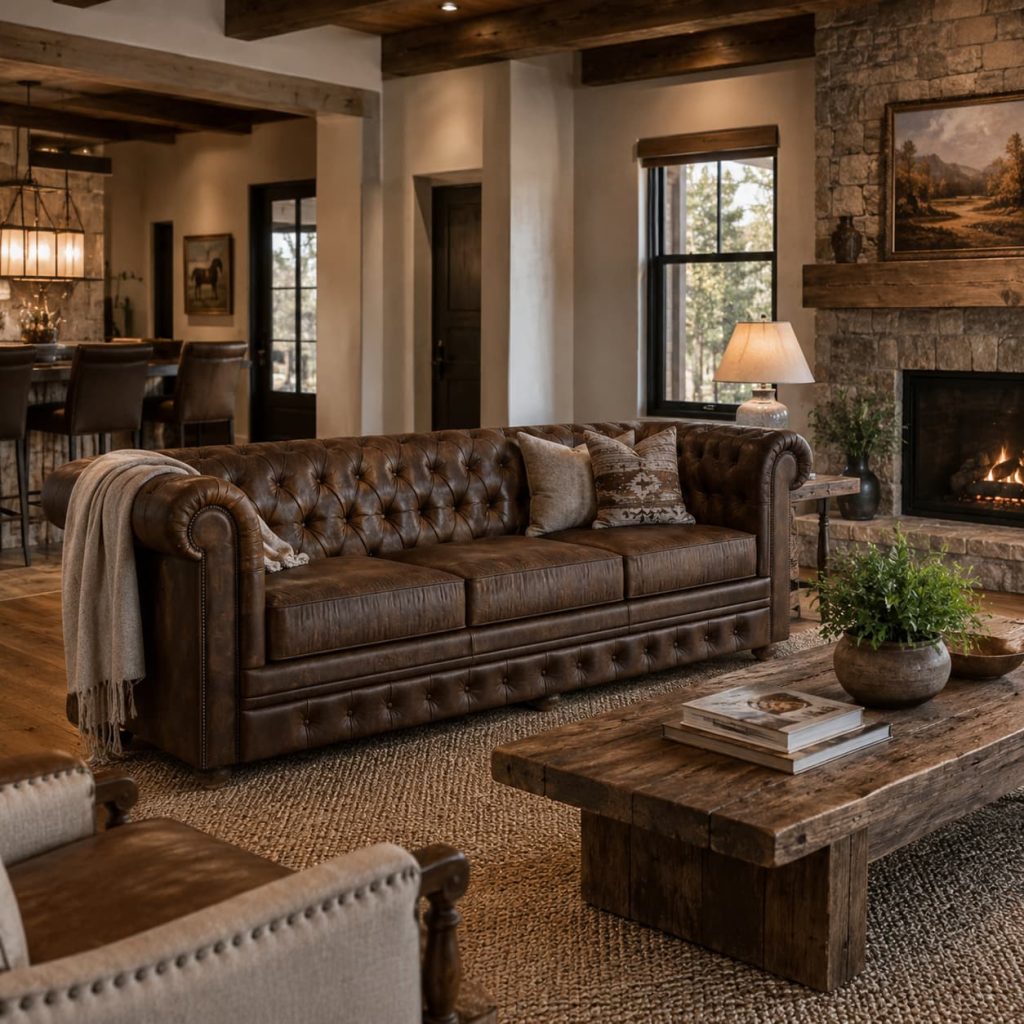
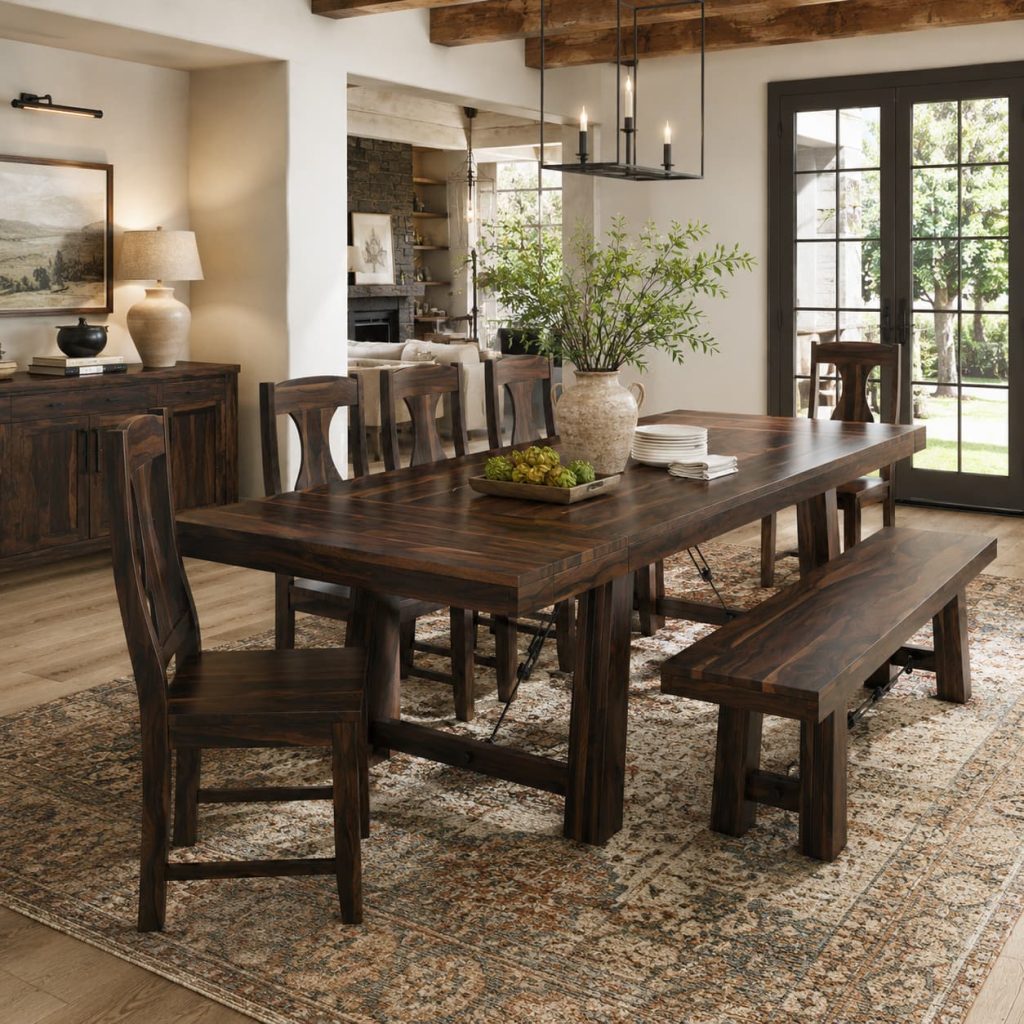
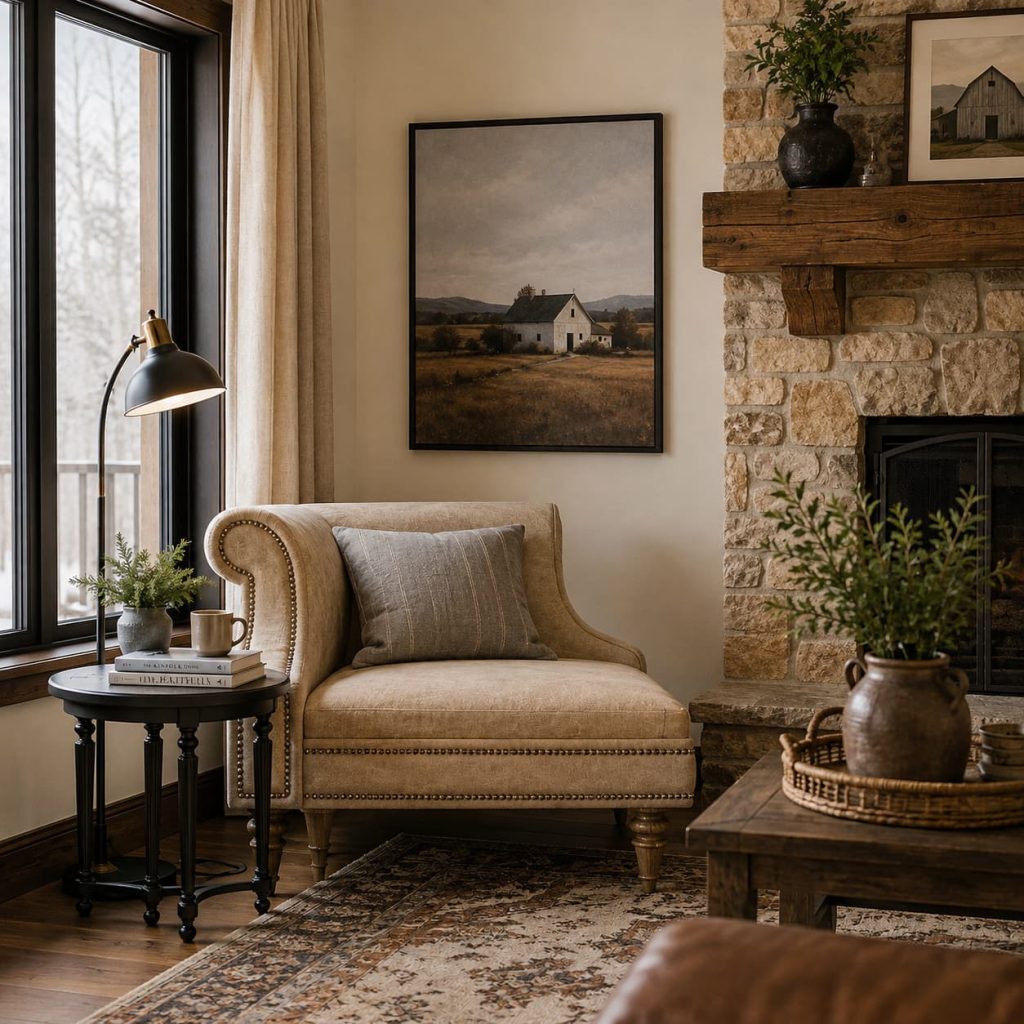
Ranch-style furniture tends to sit lower to the ground and carry some visual weight. Overstuffed leather sofas, solid wood dining tables, and chunky upholstered armchairs are all at home here. Avoid anything that looks too delicate or too modern—sharp-edged minimalist furniture can clash with the warmth the style requires.
Wood as the Primary Material
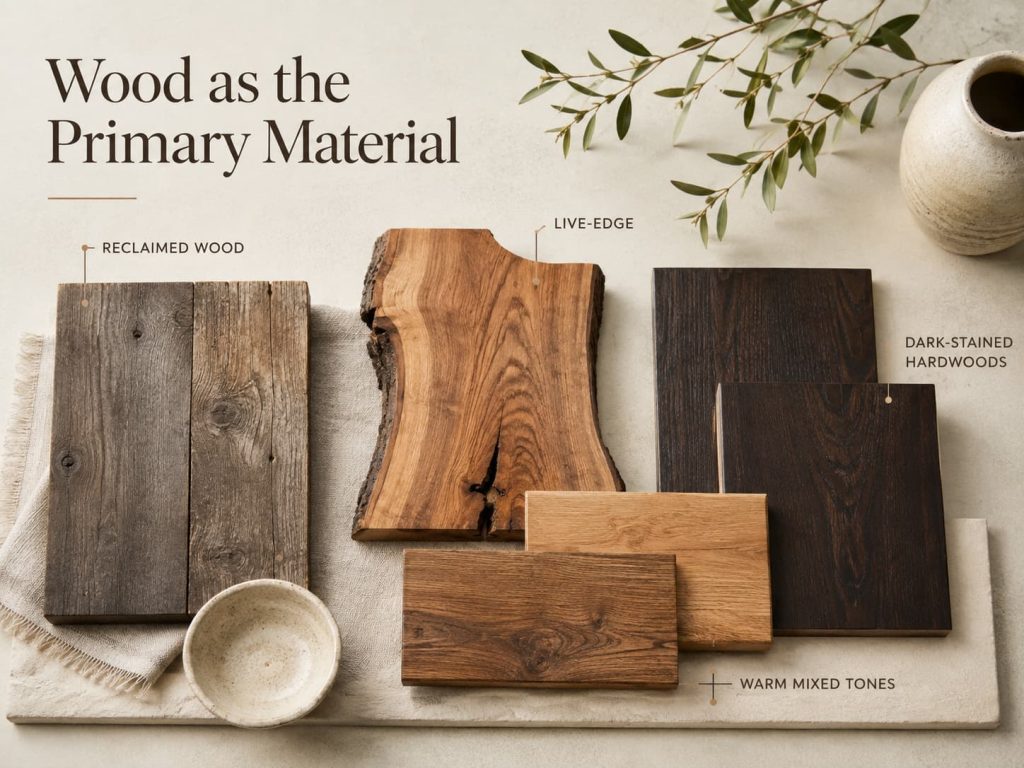
Solid wood is essential to ranch design. Reclaimed wood adds character and history; live-edge pieces bring in an organic, one-of-a-kind quality; and dark-stained hardwoods lend a more formal ranch feel. Mix wood tones thoughtfully—two or three different tones can coexist, as long as they share a warm undertone.

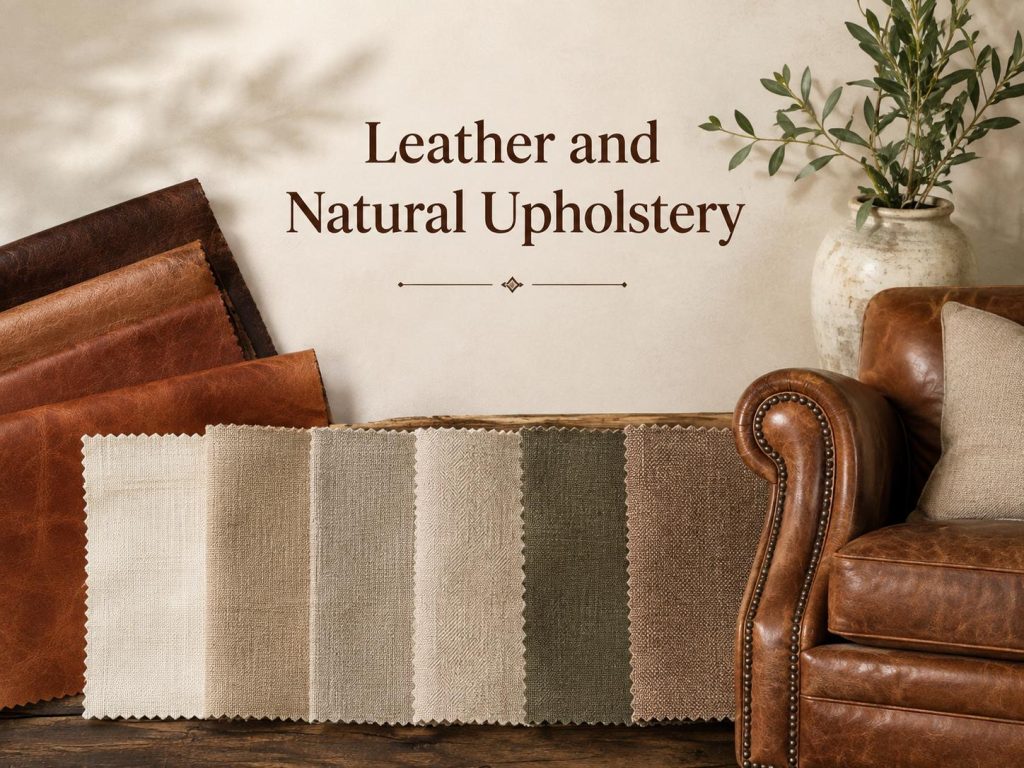
Leather and Natural Upholstery
Leather is the quintessential ranch upholstery. It wears beautifully over time and adds an unmistakable sense of authenticity. If leather isn’t your preference, opt for natural textiles like linen, canvas, or cotton in muted, earthy tones. Avoid synthetics where possible.
How Do You Layer Textures in a Ranch-Style Interior?
In ranch design, texture plays the same role as bold color does in other styles. A well-layered room uses varied natural surfaces—wool, linen, raw wood, and leather—to create depth within a restrained palette.
A well-layered ranch room might include a hand-knotted wool rug underfoot, a rough-hewn wood coffee table, linen curtains pooling slightly at the floor, a leather sofa with a chunky knit throw, and ceramic vessels on open shelving. Each element feels different, but all share a handmade, natural quality that ties the look together.
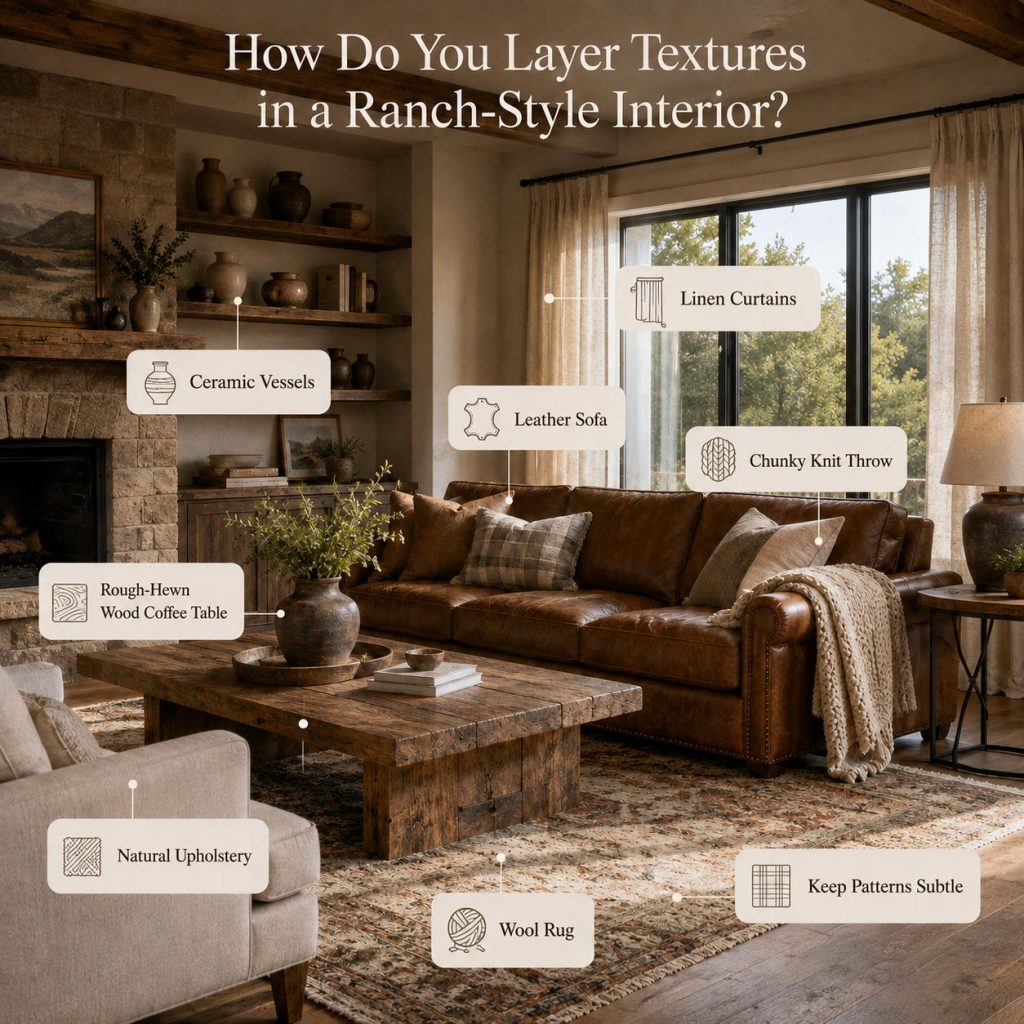
Avoid mixing too many patterns. Ranch design tends to favor solid tones or subtle, nature-inspired prints—think plaid, subtle stripes, or simple geometry. Save bold patterning for one focal point, like a statement rug.
What Lighting Works Best in Ranch Interiors?
The best lighting for ranch-style interiors uses warm-toned bulbs (2,700K–3,000K) and fixtures in wrought iron or aged brass. Lantern-style pendants, iron sconces, and simple chandeliers reinforce the aesthetic without overpowering it.
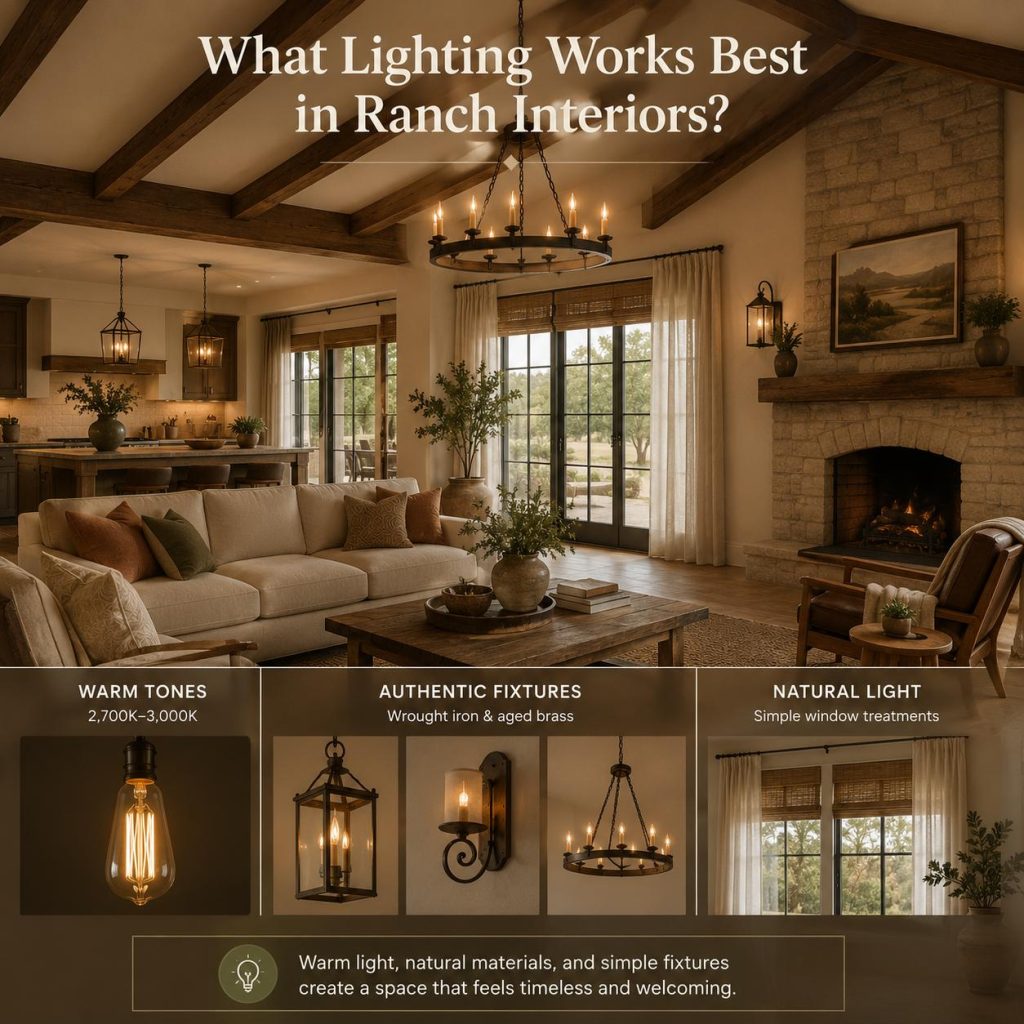
Lighting choices can make or break a ranch-style space. The goal is warmth and authenticity.
- Fixture materials: Wrought iron and aged brass are the most natural fits. Lantern-style pendants, wagon wheel chandeliers (used judiciously), and simple iron sconces all reinforce the aesthetic. Look for fixtures with visible craftsmanship.
- Bulb temperature: Edison bulbs and warm-toned LEDs (2,700K–3,000K) keep the light feeling golden and inviting. Avoid cool, daylight-tone bulbs—they strip the warmth right out of the palette.
- Natural light: Maximize natural light wherever possible. Keep window treatments simple: linen panels, wooden blinds, or woven shades rather than heavy drapes that block light.
How Do You Bring the Outdoors In with Ranch Design?
Ranch design reinforces the indoor-outdoor connection through houseplants, natural stone, live-edge wood, and large windows or glass doors. These elements work in any home, regardless of whether it was originally built in the ranch style.

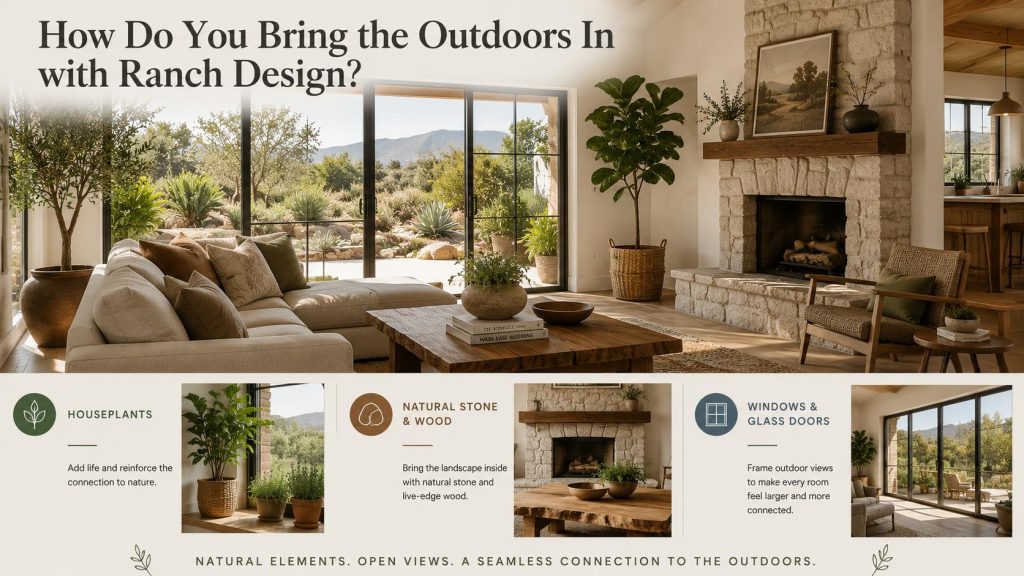
- Houseplants: Larger, architectural varieties like fiddle-leaf figs, olive trees, or agaves add life and reinforce the connection to nature. Potted herbs on a kitchen windowsill serve the same purpose more practically.
- Natural stone: Whether on a fireplace surround, kitchen backsplash, or bathroom floor, natural stone brings the landscape inside. Live-edge wood pieces and raw, unfinished textures echo the natural world in a direct, tactile way.
- Windows and glass doors: Large windows and glass doors are worth the investment if renovation is on the table. Framing an outdoor view makes any room feel larger and grounds the interior in its surroundings.
What Are the Best Ranch Interior Design Ideas for Modern Homes?
Ranch design doesn’t require a ranch house. The style known as “modern ranch” or “ranch contemporary” pairs the warmth of traditional ranch materials with cleaner lines and a more restrained decorative hand—making it well suited to contemporary apartments and newer builds.
Modern ranch interiors work best when the focus shifts to honest materials and quality craftsmanship rather than Western-themed décor. Think a sleek, dark-stained wood dining table with simple leather chairs, stone countertops with minimal cabinetry hardware, and a carefully curated selection of objects rather than an abundance of décor.
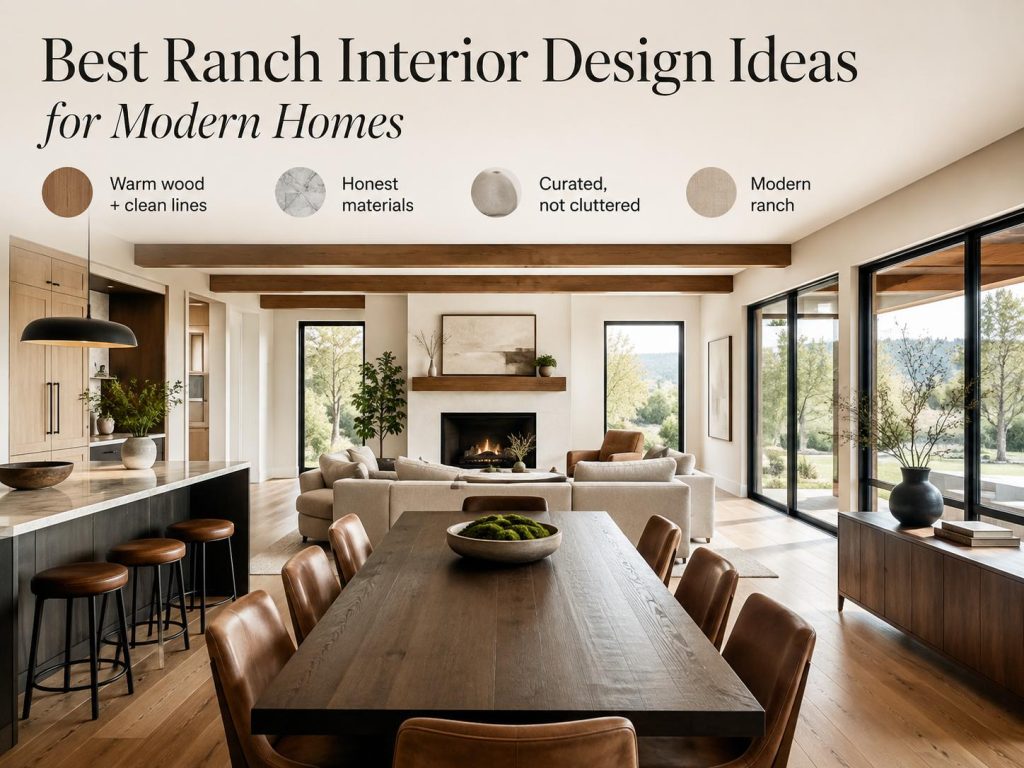
Modern ranch is better suited for design-forward spaces that want warmth without the rustic associations, while traditional ranch is the right choice for homes that can support more expressive, character-driven material choices like reclaimed timber or antique leather.
The key is to avoid going too rustic. Modern ranch interiors tend to drop the antler mounts and highly decorative Western motifs in favor of honest materials and quality craftsmanship. The result feels current without feeling cold.
Common Ranch Interior Design Mistakes to Avoid
The most common ranch interior design mistakes include overdoing the Western theme, ignoring furniture scale, using mismatched wood tones, and neglecting floor coverings.
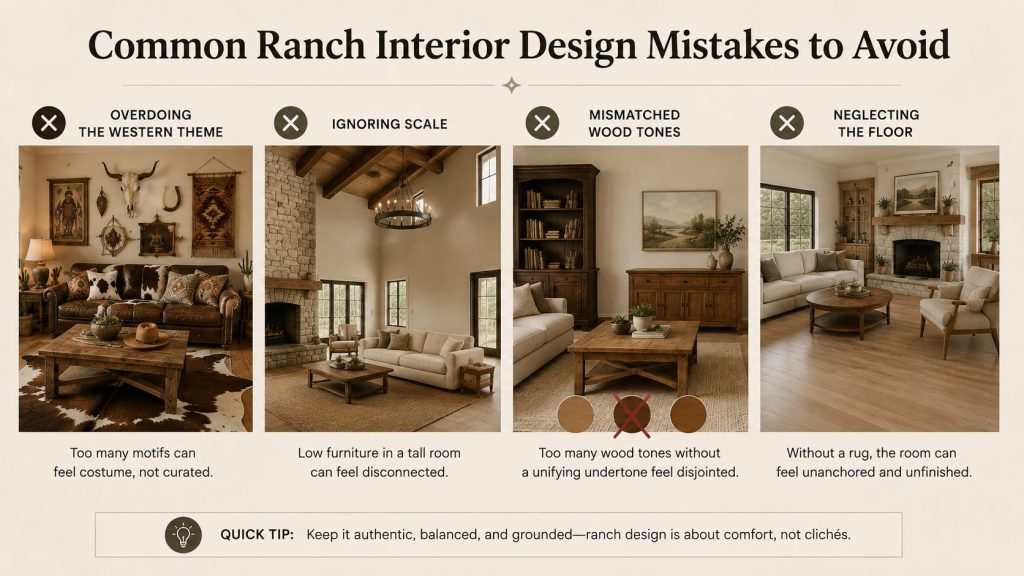
Even with the best intentions, a few missteps can pull a ranch interior in the wrong direction.
- Overdoing the Western theme. Horseshoes, cowhide on every surface, and a surplus of Native American-inspired prints can tip the look into costume rather than design. Choose one or two authentic, meaningful pieces instead of layering one theme on top of another.
- Ignoring scale. Low-profile furniture in a room with very high ceilings can feel disconnected. Consider how the furniture scale relates to the room’s proportions.
- Using too many wood tones without a unifying principle can make the space feel disjointed. Three different wood tones can coexist, but they need to share an undertone—all warm, or all cool—to feel intentional.
- Neglecting the floor. Ranch interiors are grounded, literally. A room with a beautiful rug feels anchored; without one, it can feel unfinished.
The Lasting Appeal of Ranch-Style Living
Ranch interior design has endured for a reason. At its core, it’s about creating spaces that feel human—warm enough to relax in, substantial enough to last, and rooted enough to feel like home. It doesn’t demand perfection or constant updating. A well-designed ranch interior actually improves with age, as the leather softens, the wood patinas, and the space settles into itself.
Whether you’re furnishing a classic single-story ranch home or bringing some of that earthy warmth into a modern apartment, the principles remain the same: choose natural materials, stay grounded in an earthy palette, and let every piece earn its place.
Start with one room. Pick a warm, neutral base color, invest in one quality solid wood furniture or leather piece, layer in texture with a good rug and some natural textiles, and see how the space shifts. Ranch design rewards a patient, intentional approach—and the result is a home that genuinely feels like somewhere worth being.
Frequently Asked Questions About Ranch Interior Design
Ranch interior design is a style rooted in the aesthetic of American working ranches. It emphasizes natural materials like wood, leather, and stone; an earthy, neutral color palette; open and functional floor plans; and a strong visual connection to the outdoors. The style is known for being warm, durable, and unpretentious.
Ranch and rustic design share several elements—natural materials, warm palettes, and a connection to the outdoors—but ranch design tends to be more structured and livable. Rustic interiors often lean into raw, unfinished aesthetics, while ranch design incorporates more comfort, intentional furniture choices, and a slightly more polished overall look.
Yes. Ranch design principles—natural materials, earthy tones, and indoor-outdoor connection—translate well into modern homes. The key is balancing warmth with cleaner lines and avoiding overly themed Western décor. The resulting style, often called “modern ranch,” feels contemporary without feeling cold.
Ranch interiors typically use warm neutrals as a base (cream, warm white, or tan) with earthy accent colors like terracotta, rust, olive green, burnt sienna, and ochre. These colors are drawn from natural landscapes and work together to create a grounded, cohesive palette.
Ranch furniture is typically low-profile, substantial, and made from natural materials. Leather sofas, solid and reclaimed wood tables, upholstered armchairs in linen or canvas, and hand-knotted wool rugs are all staples. The emphasis is on quality craftsmanship and durability over decorative flair.