


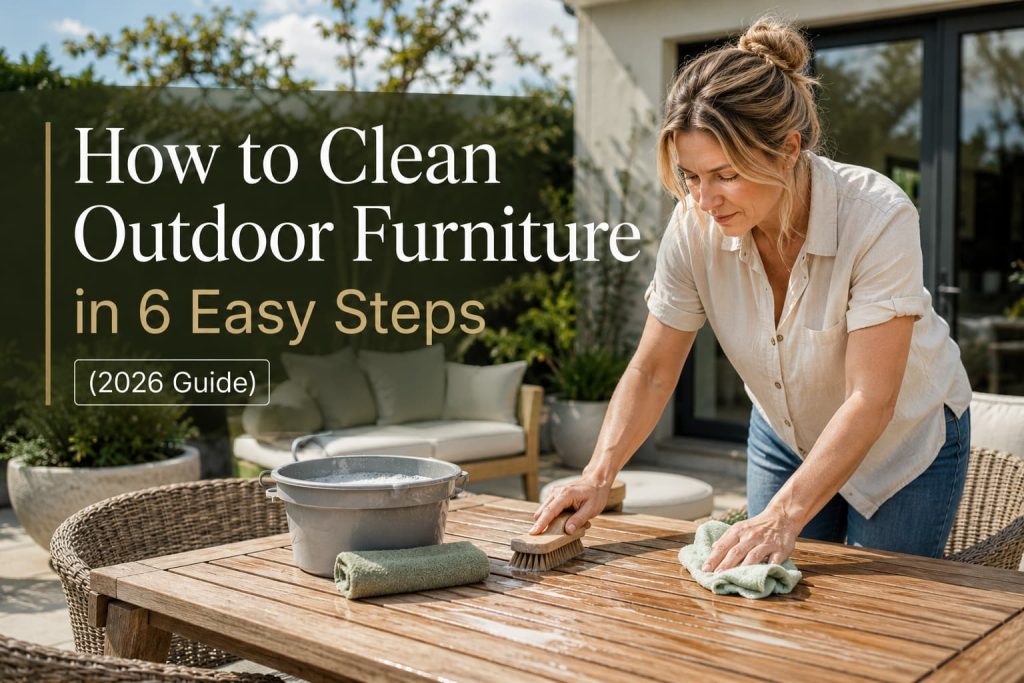
Outdoor spaces naturally become a favorite spot for relaxing, dining, and spending time with family. But even the most beautiful outdoor furniture can begin to look dull after exposure to dust, pollen, rain, bird droppings, and seasonal weather changes.
If you’ve been wondering how to clean outdoor furniture properly, the good news is that most pieces can be refreshed using simple household supplies and a little routine care. The key is knowing about the right process and avoiding cleaning methods that may damage finishes, fabrics, or natural materials.
This step-by-step guide will help you safely clean and maintain your outdoor furniture, so it stays beautiful, comfortable, and ready for every season.
Step 1: Identify Your Outdoor Furniture Material
Before reaching for a cleaning solution, take a moment to identify what your furniture is made from. Different materials require different care methods.

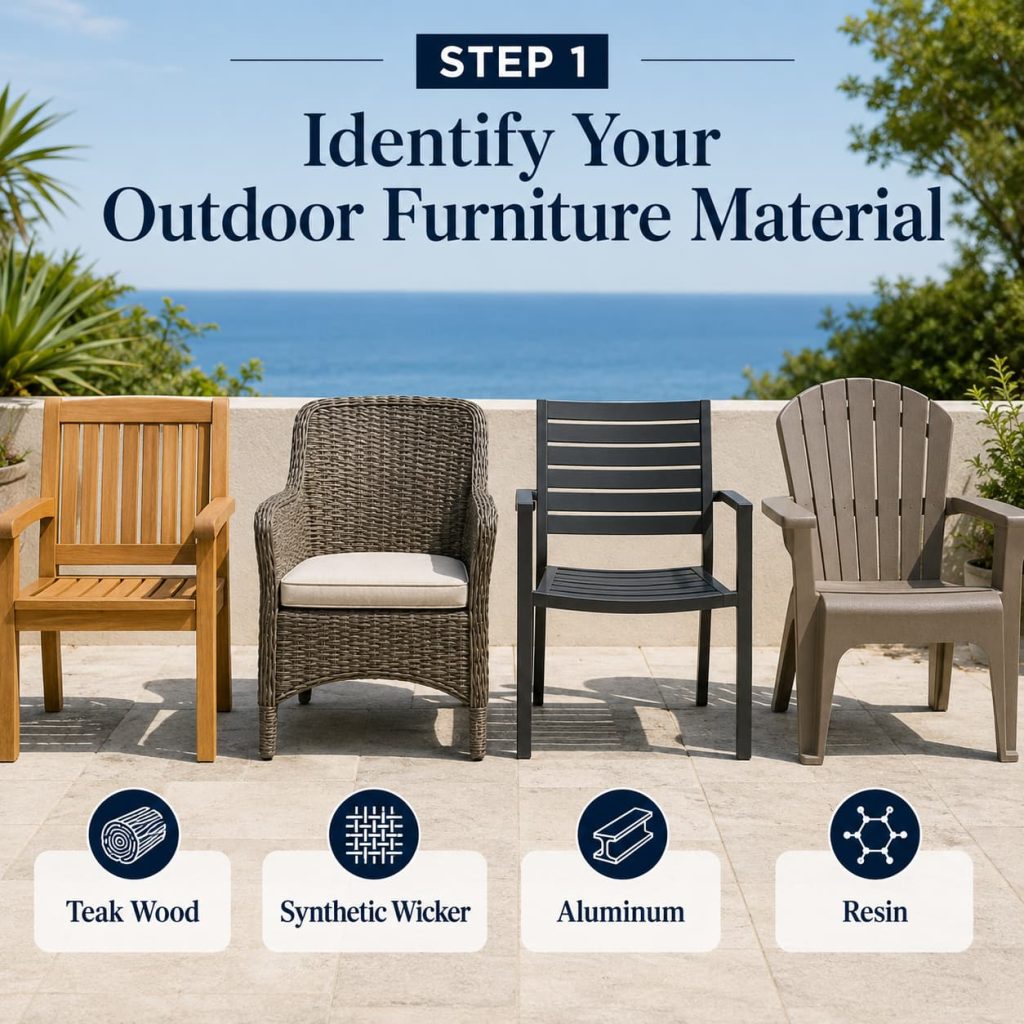
Wood Furniture
Common outdoor woods include the following:
- Teak
- Acacia
- Eucalyptus
Solid wood furniture often develops a natural weathered appearance over time. But harsh cleaners can strip protective oils and damage the surface.
Wicker Furniture
This category includes:
- Natural wicker
- Synthetic wicker
Natural wickers are more delicate and require extra care around moisture, while synthetic wickers are generally easier to maintain.
Metal Furniture
Common outdoor metals include:
- Aluminum
- Iron
- Steel
Each reacts differently to moisture and cleaning products, especially when rust prevention is involved.
Plastic furniture
Many outdoor pieces are made from:
- Resin
- Polypropylene
These materials are durable but can become stained or discolored if neglected.
Identifying the material first helps you choose the safest and most effective cleaning method.
Step 2: Remove Loose Dirt & Debris
One of the most overlooked outdoor furniture cleaning tips is removing dry debris before washing.
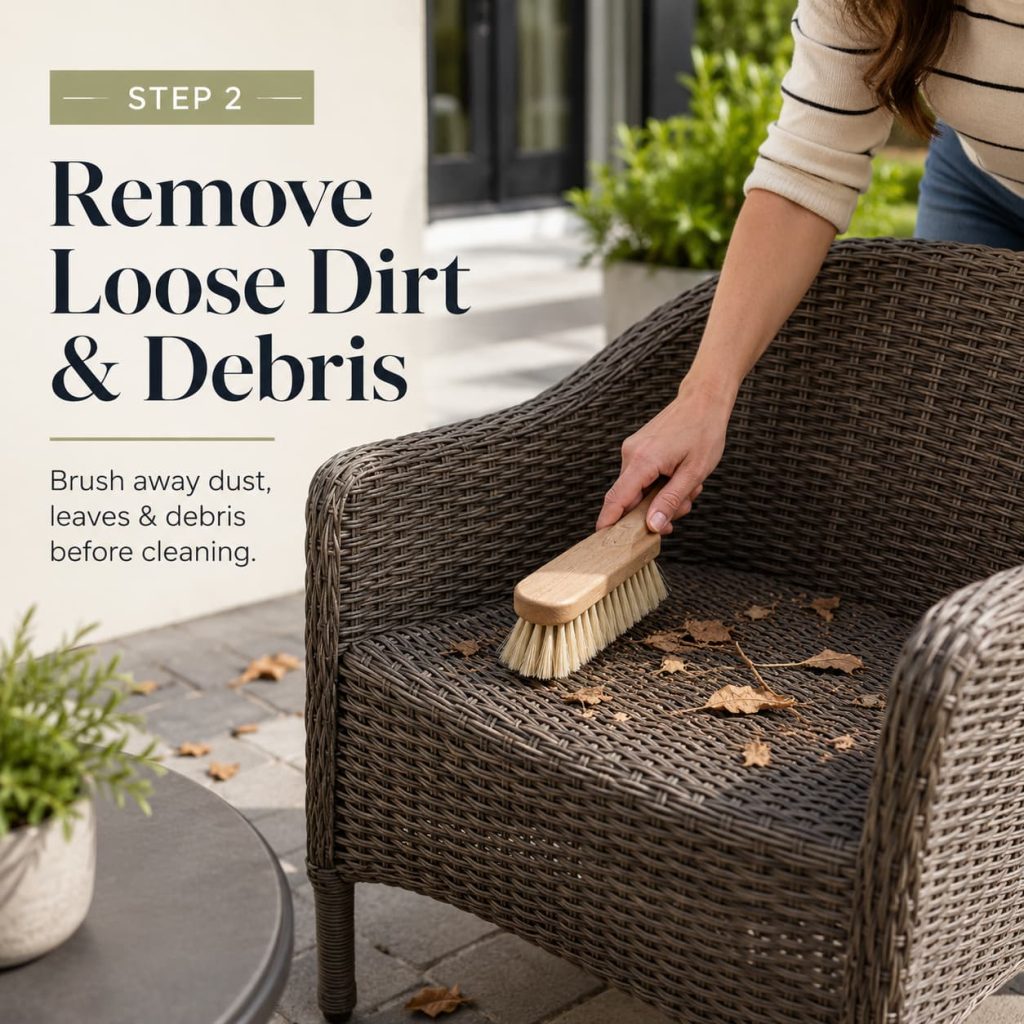
Start by:
- Brushing away dirt and dust
- Sweeping leaves from corners and crevices
- Vacuuming cushions and fabric surfaces
Skipping this step can cause dirt particles to scratch surfaces when scrubbing begins.
Think of it as preparing the furniture before the actual cleaning process.
Step 3: Clean with a Mild Soap Solution
For most materials, the best way to clean outdoor furniture is surprisingly simple.
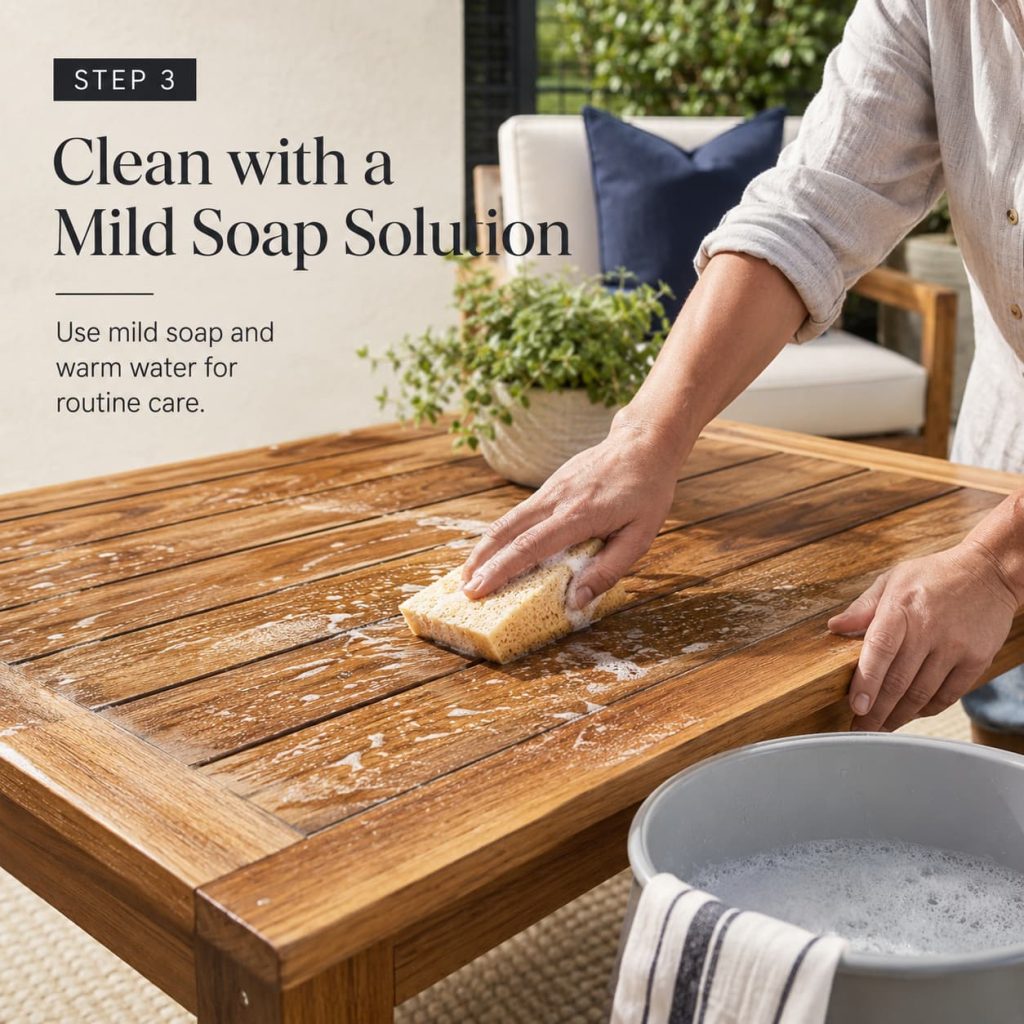
Create a cleaning solution using:
- Warm water
- A few drops of mild dish soap
- A soft cloth, sponge, or brush
Gently wipe down all surfaces, paying extra attention to armrests, tabletops, and areas that receive frequent use.
Avoid:
- Abrasive scrubbers
- Strong chemical cleaners
- Bleach-based products, unless specifically recommended
Mild soap effectively removes everyday grime without damaging protective finishes or natural materials.
Step 4: Treat Stains, Mold, and Mildew Carefully
Outdoor furniture is constantly exposed to moisture, making mold and mildew common concerns.
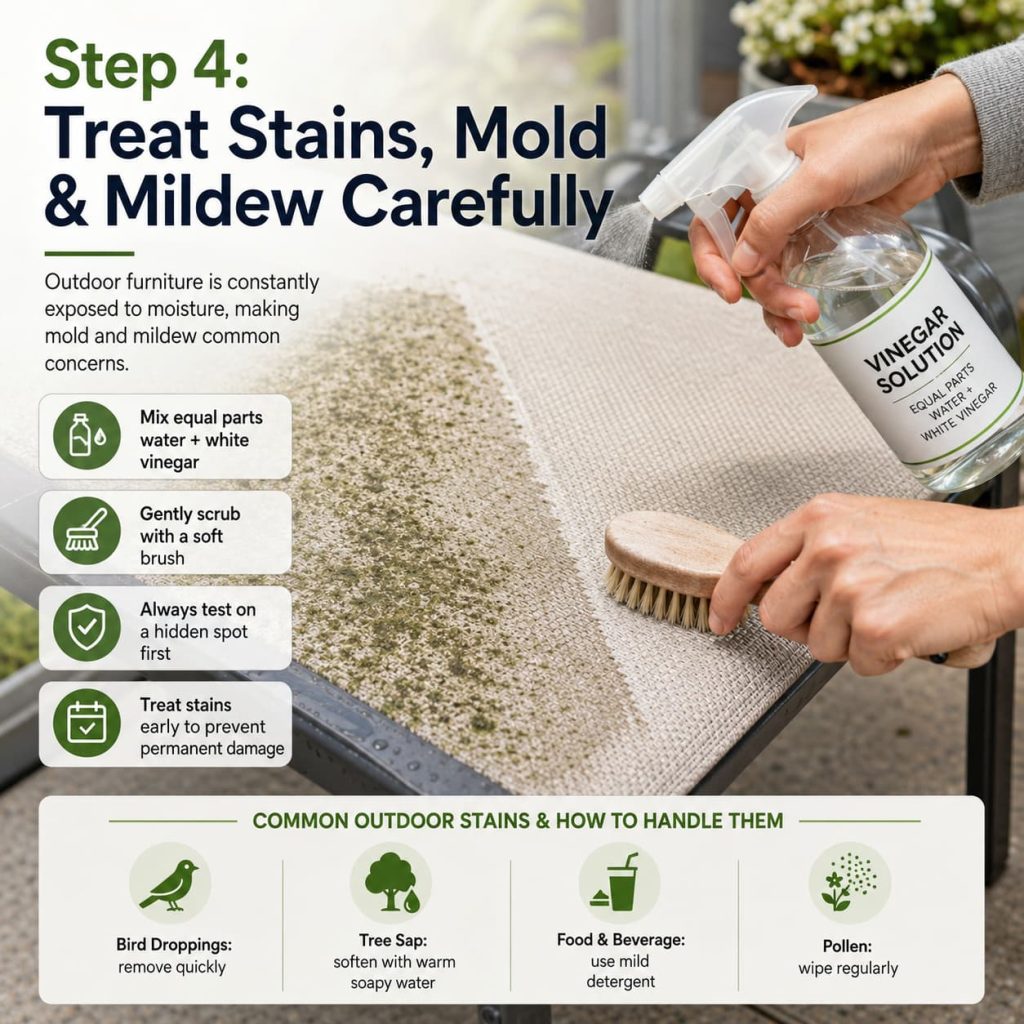
Mold and Mildew Removal
Mix equal parts water and white vinegar, and gently scrub the affected area with a soft brush.
Always test any cleaning solution on a hidden spot first before applying it across the entire surface.
Bird Droppings
Remove as quickly as possible to prevent staining. Soften dried residue with warm water before wiping clean.
Tree Sap
Allow the area to soften with warm, soapy water before gently removing buildup.
Food and Beverage Stains
Treat stains promptly using a mild detergent solution and a soft cloth.
Pollen Build-Up
Pollen can leave yellow residue on furniture. Regular wiping helps prevent long-term staining.
When learning how to clean patio furniture, addressing stains early is often easier than dealing with permanent damage later.
Step 5: Clean Outdoor Cushions & Fabrics
Furniture frames may be easy to clean, but cushions often require additional attention.
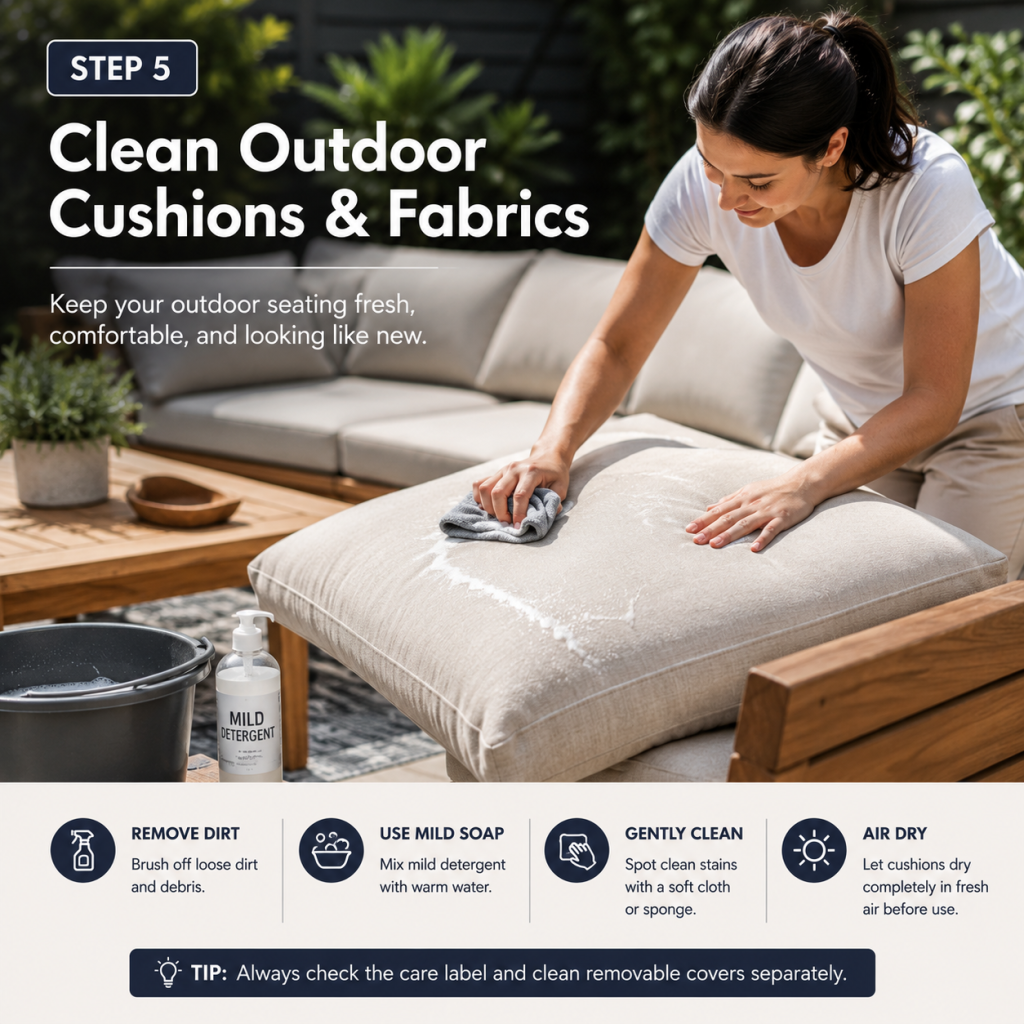
Follow these simple steps:
- Vacuum loose dirt and debris.
- Spot-clean visible stains.
- Use a mild detergent solution for deeper cleaning.
- Rinse lightly if needed.
- Allow the cushions to dry completely.
One of the most significant mistakes homeowners make is storing cushions while they are still damp.
Moisture trapped inside fabric can quickly lead to mildew growth and unpleasant odors.
Proper drying is just as important as the cleaning itself.
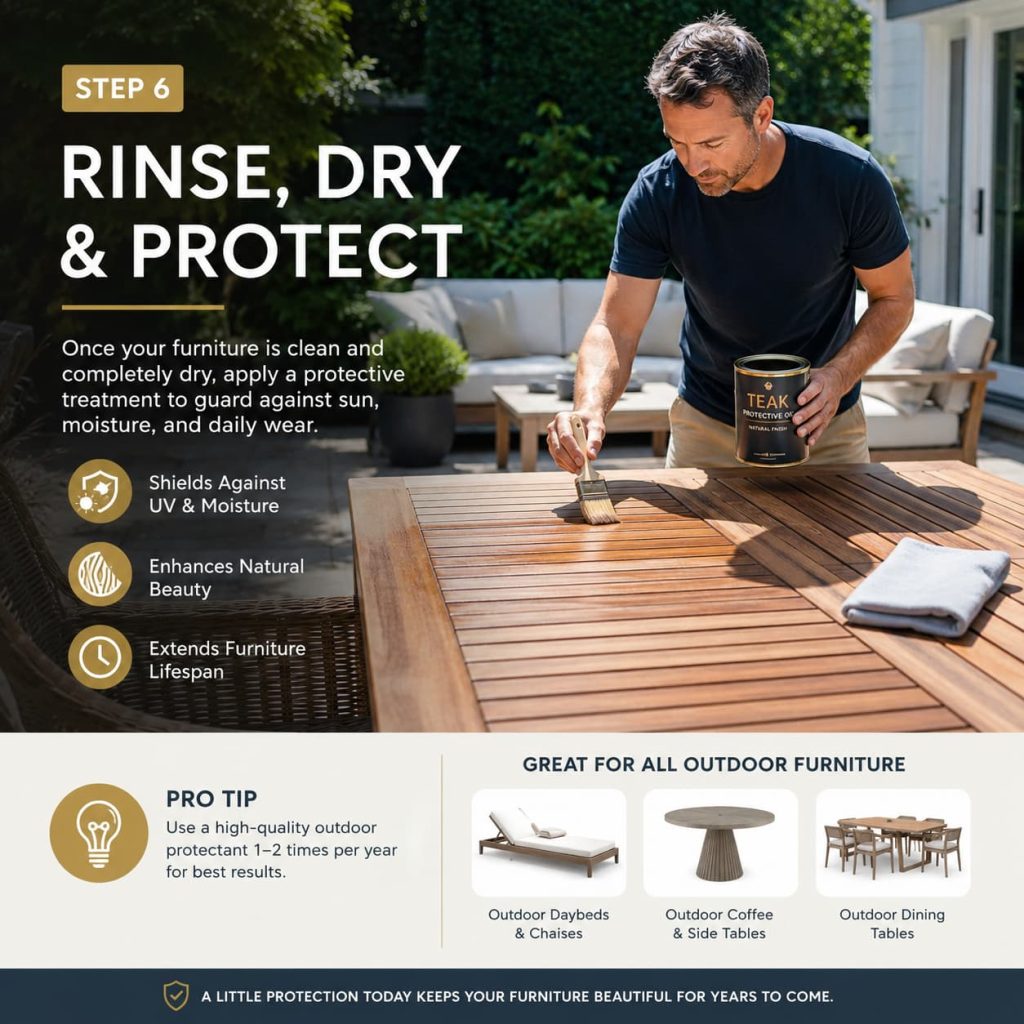
Step 6: Rinse, Dry, And Protect
The final step helps preserve your furniture long after cleaning day is over.
Rinsing tips
Use clean water to remove any remaining soap residue.
Proper Drying
Allow furniture to dry completely before using, covering, or storing.
Protective Treatments
Depending on the material, consider applying the following:
- Wood furniture – Protective oils designed for outdoor wood
- Metal furniture – Rust-prevention products
- Outdoor fabrics – Fabric protectors for moisture and stain resistance
- Wicker furniture – UV-protective treatments to reduce fading
These simple steps are an important part of long-term outdoor furniture maintenance.
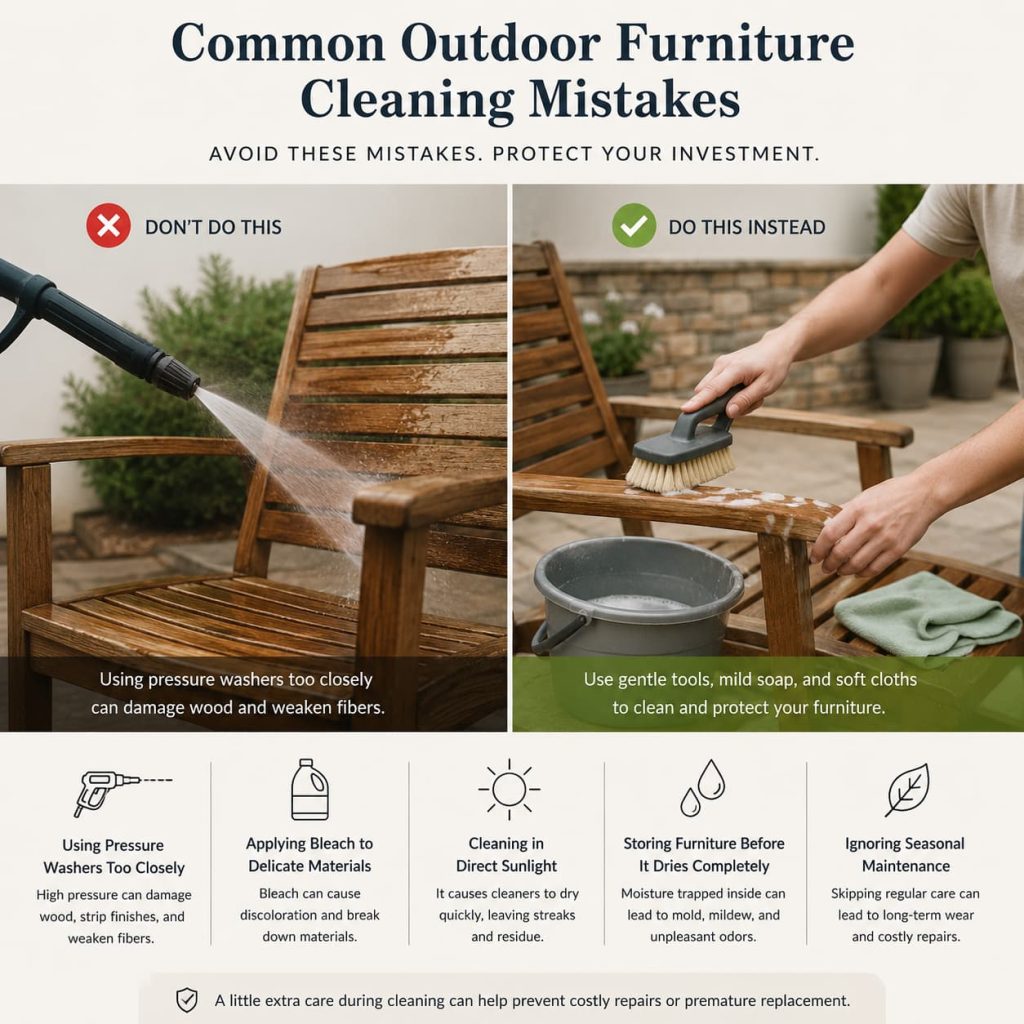
Common Outdoor Furniture Cleaning Mistakes
Many furniture issues don’t come from weather—they come from cleaning mistakes.
How Often Should You Clean Outdoor Furniture?

If you’re refreshing your entire outdoor area alongside routine maintenance, explore our 33 Backyard Ideas to Create Your Dream Outdoor Space for inspiration.
Bonus: Simple Outdoor Furniture Maintenance Tips
Want your outdoor furniture to stay beautiful year after year?

Follow these practical outdoor furniture care tips:
- Use weather-resistant furniture covers
- Store cushions during storms
- Clean spills immediately
- Rotate furniture placement occasionally
- Inspect screws, bolts, and hardware regularly
- Address minor issues before they become major repairs
Small habits often make the most significant difference in extending the life of furniture.
Conclusion
Learning how to clean outdoor furniture doesn’t require expensive products or complicated techniques. By identifying your outdoor furniture material, removing debris, cleaning with mild solutions, treating stains carefully, and applying proper protection, you can keep your outdoor setup looking its best throughout the year.
Whether you’re maintaining a cozy balcony retreat or caring for a complete outdoor living space, regular cleaning helps preserve both beauty and comfort. With consistent care, quality outdoor furniture can continue serving your home season after season.
FAQs
For most furniture materials, a combination of warm water, mild dish soap, and a soft cloth or brush provides a safe and effective cleaning solution.
Yes. A diluted vinegar solution can help remove mold, mildew, and light stains from many outdoor furniture surfaces. Always spot-test first.
Use a mixture of equal parts of water and white vinegar, then gently scrub the affected area with a soft brush before rinsing and drying thoroughly.
A quick weekly wipe-down, monthly light cleaning, and seasonal deep cleaning are generally recommended.