


How to care for leather furniture starts with knowing what type of leather you have, cleaning it gently, conditioning it only when appropriate, and protecting it from excess moisture, heat, sunlight, and everyday wear. A simple routine of regular dusting, prompt spill cleanup, occasional conditioning, and sensible placement can help leather furniture stay supple and develop a beautiful patina over time.
Leather is durable, but “low maintenance” does not mean “no maintenance.” The good news is that caring for leather furniture does not have to involve a complicated routine. The key is consistency—and using the right care for the particular leather finish.
Before You Care for Leather Furniture, Know What Type of Leather You Have
Before reaching for a cleaner or conditioner, check the furniture care instructions and identify the leather finish whenever possible. Different leather surfaces can react differently to moisture, cleaning products, and conditioning treatments.

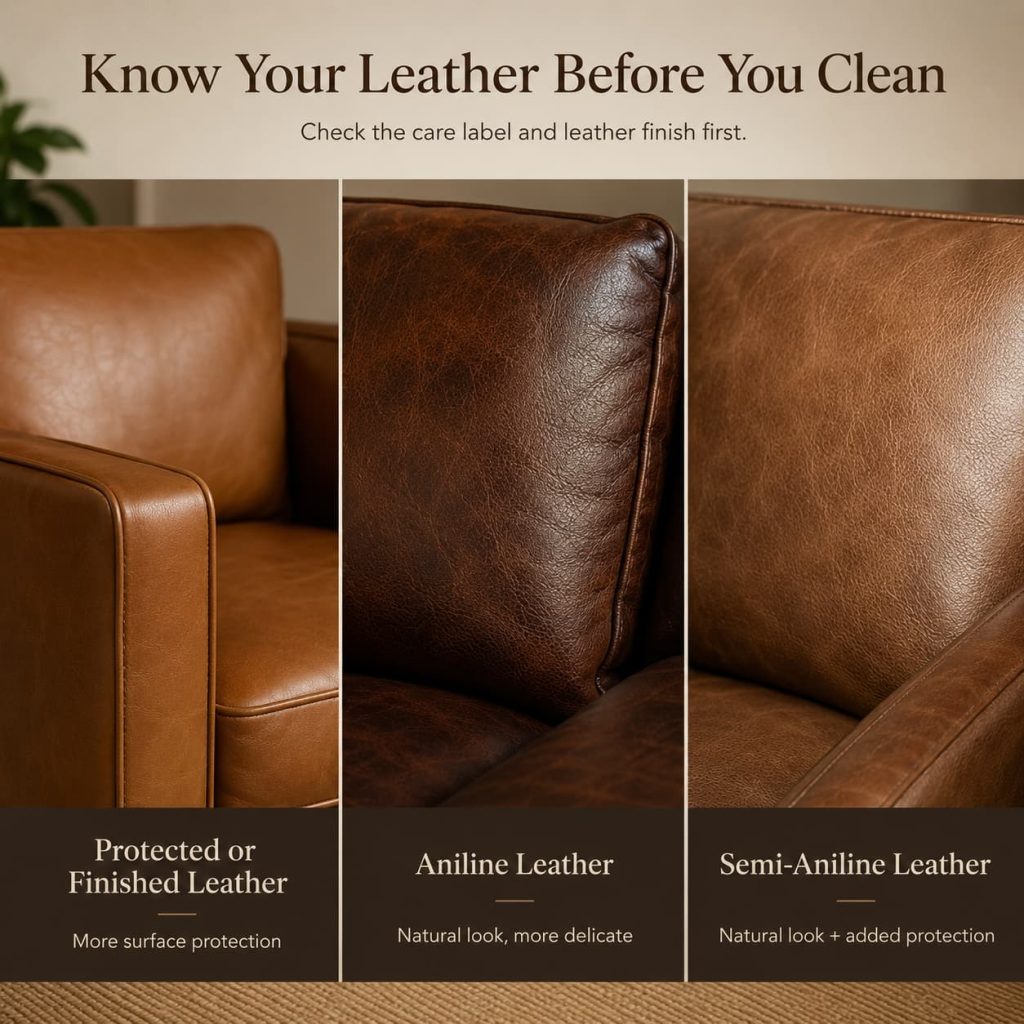
Protected or Finished Leather
Protected leather has a surface coating that provides added resistance to everyday marks and spills. It is generally more forgiving for routine cleaning, but it still needs gentle, leather-appropriate care.
Aniline Leather
Aniline leather has a more natural appearance and allows more of the leather’s character and grain to show. Because it has less surface protection, it can develop marks, color variation, and patina more readily.
Semi-Aniline Leather
Semi-aniline leather sits between the two. It retains much of the natural look of leather while having some additional surface protection.
You do not need to become a leather expert to look after your furniture. Just remember: one cleaner or conditioner does not automatically suit every leather surface.
What Does Leather Furniture Need to Stay Looking Its Best?
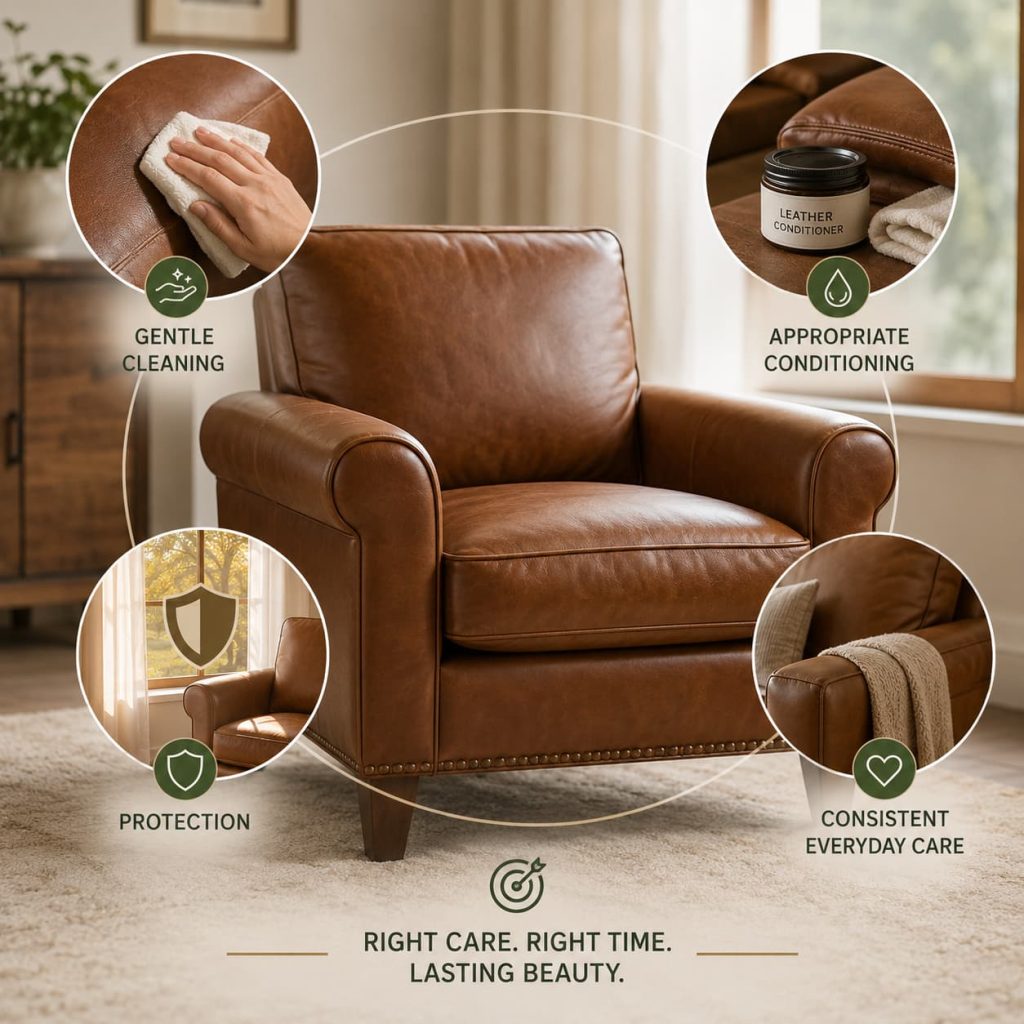
Think of leather furniture maintenance around four simple habits:
- Gentle cleaning to remove everyday dust and dirt.
- Appropriate conditioning when recommended for the leather finish.
- Protection from excessive sunlight, heat, moisture, and heavy wear.
- Consistent everyday care so small problems do not become bigger ones.
The goal is not to constantly treat your furniture. It is to give the leather the right care at the right time.
How to Care for Leather Furniture in 5 Simple Steps
1. Dust and Vacuum Regularly
Regular dusting is one of the easiest ways to care for leather furniture. Use a soft microfiber cloth to remove surface dust, paying attention to seams, crevices, and areas beneath removable cushions.

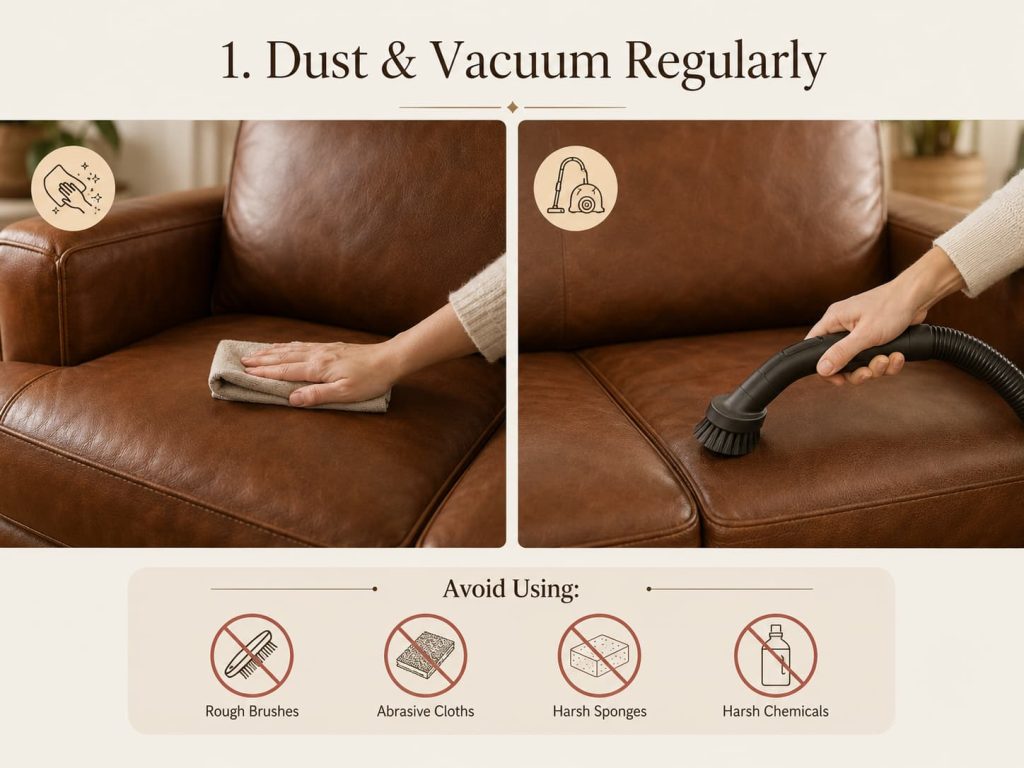
For harder-to-reach areas, a vacuum with a soft brush attachment can help lift away loose dirt without scratching the surface.
Avoid rough brushes, abrasive cloths, or anything that could damage the leather grain.
2. Clean Spills and Surface Dirt Gently
When a spill happens, act promptly. Use a clean, absorbent cloth to blot rather than rub the affected area.
Rubbing can spread the liquid and potentially work it deeper into the leather. For routine cleaning, use a product specifically designed and approved for your particular leather finish, following its directions carefully.
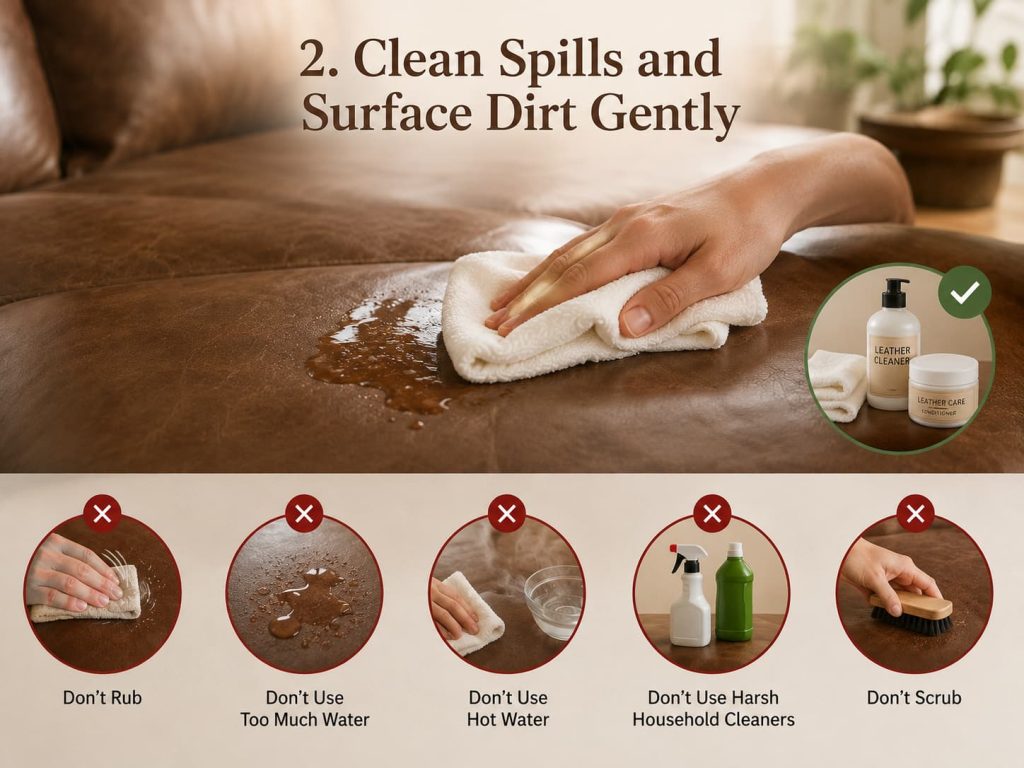
This is also where knowing what I can clean leather furniture with becomes important: more cleaning power is not necessarily better. Harsh household cleaners can affect the color, finish, or protective coating.
3. Condition Only When Appropriate
Cleaning and conditioning serve different purposes. A leather cleaner helps remove surface dirt, while a suitable conditioner can help maintain the feel and appearance of certain leather finishes.
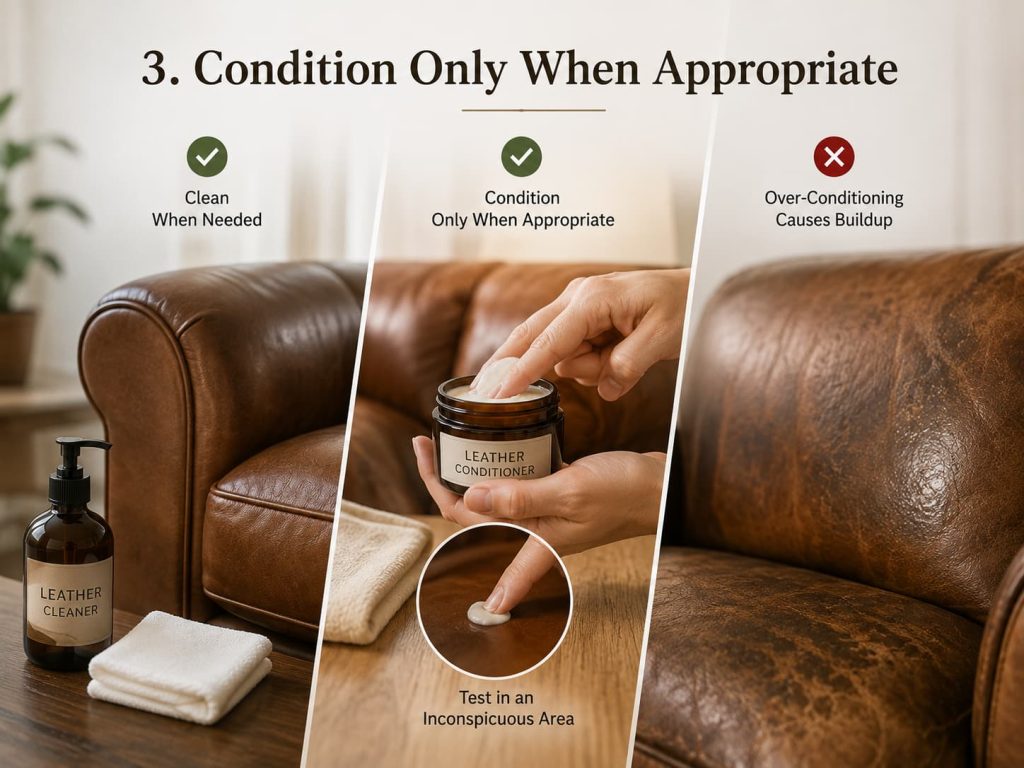
But conditioning is not automatically necessary for every piece or every type of leather. Check out the manufacturer’s recommendations before applying one.
If a conditioner is appropriate, test it in an inconspicuous area first and use only the amount recommended. Over-conditioning can create unnecessary buildup or alter the appearance of the surface.
4. Protect Leather from Sunlight, Heat, and Everyday Wear
Where you place leather furniture can have just as much impact as how you clean it.
Try to keep leather away from prolonged direct sunlight, which can contribute to fading and uneven color. Strong heat from fireplaces, radiators, heating vents, or other sources may also dry certain leather surfaces over time.

Pay attention to high-contact areas, too. Armrests, headrests, seat cushions, and frequently used chairs naturally receive more exposure to skin oils, clothing, food, and everyday friction.
Simple placement and everyday awareness can go a long way toward protecting leather.
5. Inspect and Maintain It Regularly
Make leather furniture maintenance part of your normal home-care routine. Every few months, take a closer look at the surface and check for dryness, scratches, stains, fading, cracks, loose seams, or other changes.
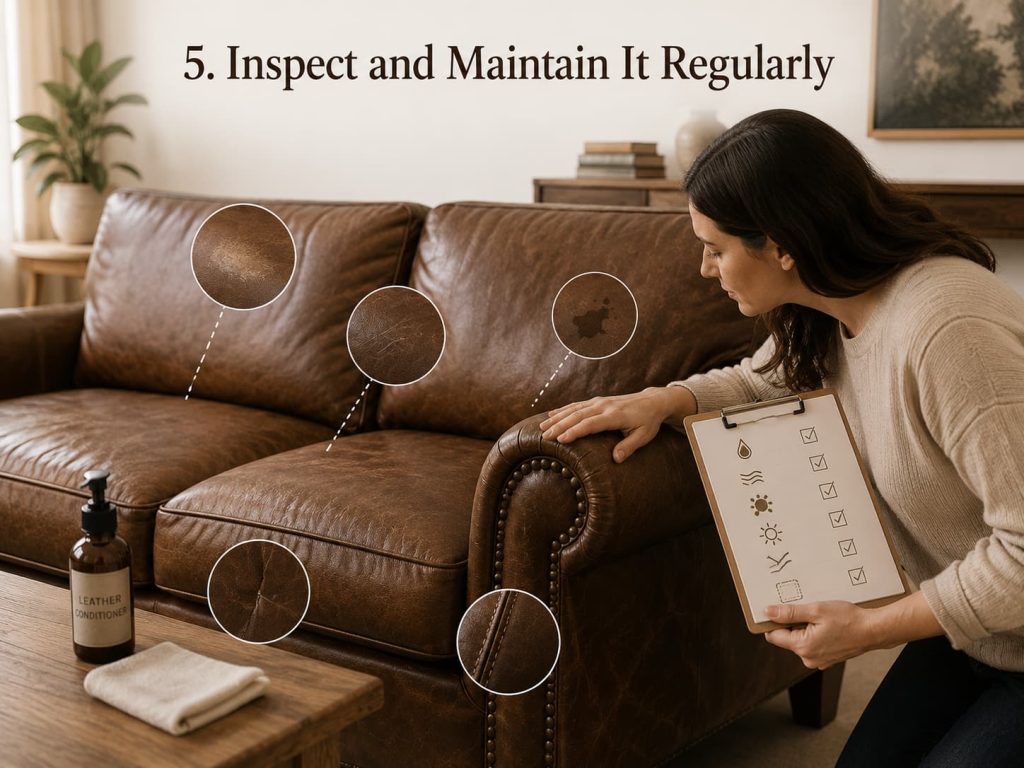
Address minor issues according to the manufacturer’s care instructions rather than waiting until they become difficult to manage.
For example, a small spill can usually be dealt with much more easily when noticed immediately than after it has been left sitting on the surface.
How to Clean Leather Furniture at Home
If you’re wondering how to clean leather furniture at home, keep the process simple:
- Check the manufacturer’s care instructions.
- Remove loose dust and debris.
- Test your leather cleaner in an inconspicuous area.
- Apply and use the cleaner according to its directions.
- Clean gently with a soft cloth.
- Avoid soaking or oversaturating the leather.
- Allow the surface to dry naturally.
- Condition only if recommended for your leather finish.
The biggest mistake is treating leather like fabric upholstery. Excessive water, aggressive scrubbing, or repeated applications of cleaning products can do more harm than good.
How to Care for a Leather Sofa
A sofa usually receives more daily use than a decorative leather piece, so leather sofa care deserves particular attention.
Regularly check the seat cushions, armrests, back cushions, and seams. These areas experience repeated contact with skin, clothing, food, drinks, and pets.
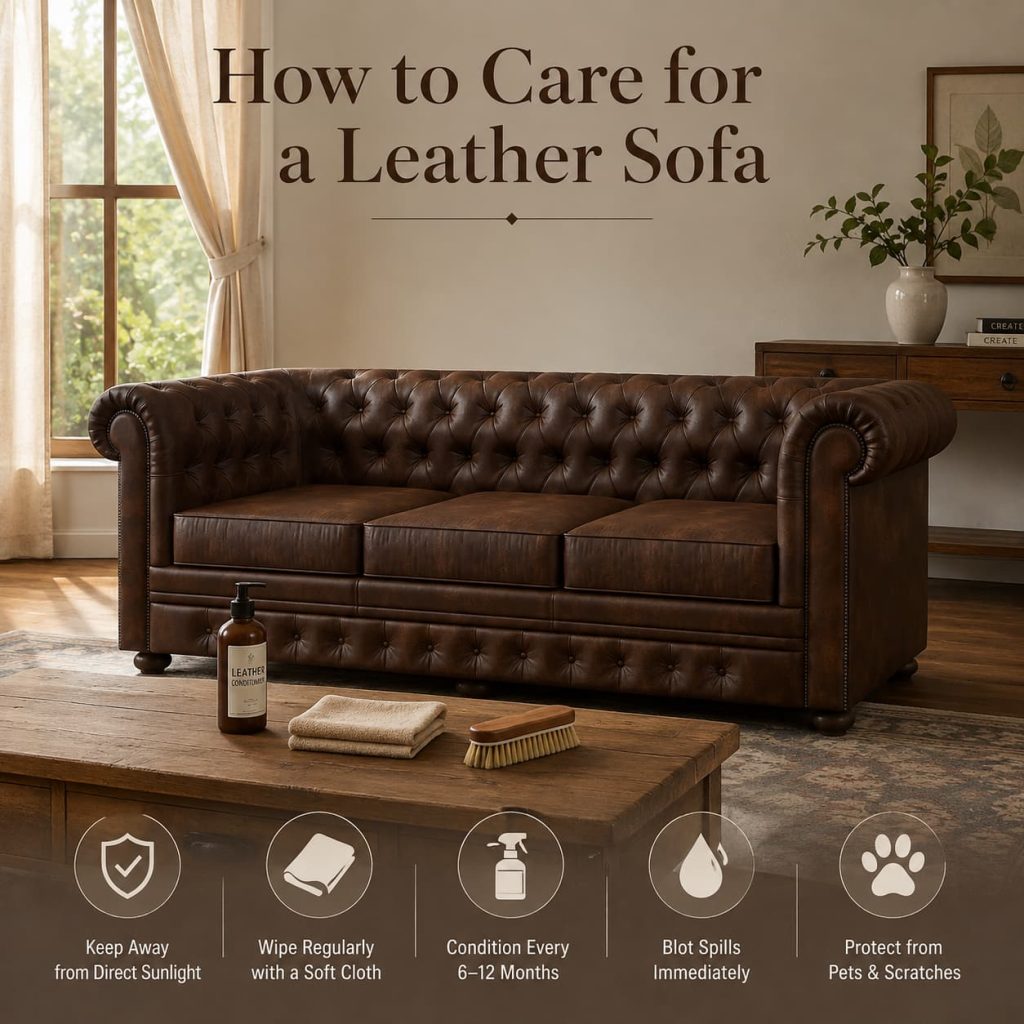
If your sofa sits beside a sunny window, watch for fading as well. Where possible, reduce prolonged direct exposure with thoughtful furniture placement or window coverings.
A few minutes of regular attention can help your leather sofa remain comfortable and attractive for years.
Leather Chair Care: Simple Habits That Make a Difference
Leather chair care follows many of the same principles. Dust regularly, address spills quickly, and pay particular attention to the seat, arms, and backrest.
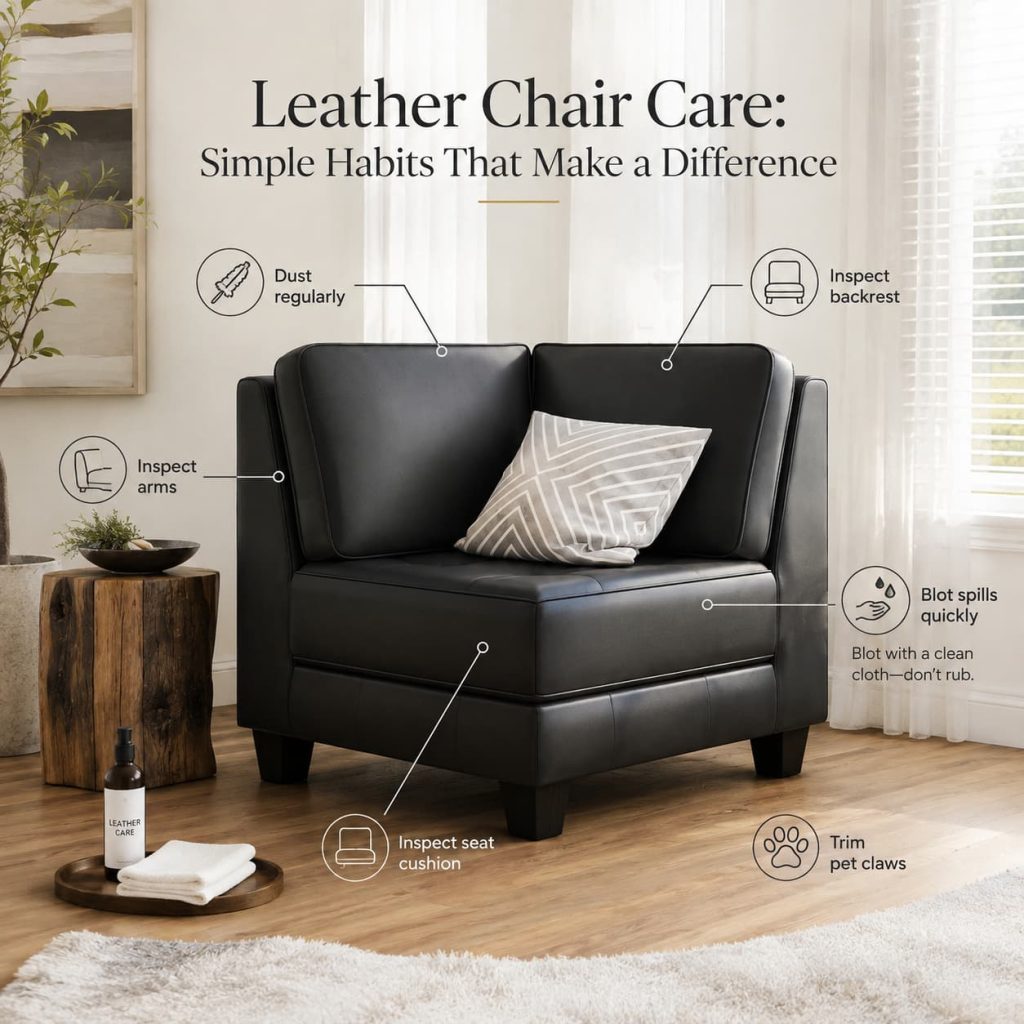
Office chairs, accent chairs, and recliners can experience very different levels of use. A chair used every day may need more frequent cleaning and inspection than one that is mainly decorative.
If pets use the chair, keeping their claws trimmed can also help reduce accidental scratches.
How to Deal with Common Leather Furniture Problems
| Problem | What to Do | What to Avoid |
| Fresh spill | Blot immediately with a clean cloth | Rubbing the area |
| Dust | Use a soft microfiber cloth | Abrasive materials |
| Dry-looking surface | Check the leather finish and care guidance | Applying random conditioner |
| Minor scratch | Follow leather-specific care instructions | Scrubbing the scratch |
| Fading | Reduce prolonged direct sunlight | Continued sun exposure |
| Sticky residue | Use an appropriate leather cleaner | Household solvents |
| Cracking | Stop harsh cleaning and assess the leather | Aggressive DIY repair |
Not every scratch, crack, or stain can be solved with a cleaner or conditioner. If the damage is significant, professional assessment is usually a better choice than experimenting with multiple products.
How Often Should You Clean and Condition Leather Furniture?
There is no universal schedule because leather finishes and household use vary. A practical starting point is:
| Care Task | General Routine |
| Dusting | Weekly or as needed |
| Spill cleanup | Immediately |
| Light cleaning | As needed based on use |
| Furniture inspection | Every few months |
| Conditioning | Only according to leather type and manufacturer guidance |
| Professional care | When damage goes beyond routine maintenance |
Notice that conditioning does not automatically appear as a monthly or quarterly task. Some leather finishes may benefit from it, while others may have different requirements.
Everyday Habits That Protect Leather Furniture

The little things you do every day can make leather furniture care much easier:
- Avoid sitting on armrests.
- Keep food and drinks from being left on leather seating.
- Keep pets’ claws maintained.
- Keep furniture away from excessive heat.
- Limit prolonged direct sunlight.
- Rotate cushions where appropriate.
- Clean spills promptly.
- Avoid dragging furniture when moving it.
- Follow the manufacturer’s care instructions.
These habits help reduce unnecessary wear while allowing the leather to develop its natural character.
What NOT to Use on Leather Furniture
Be careful with bleach, strong household disinfectants, abrasive cleaners, rough scrubbers, unapproved solvents, excessive water, random oils, and DIY mixtures that have not been confirmed as suitable for your leather.
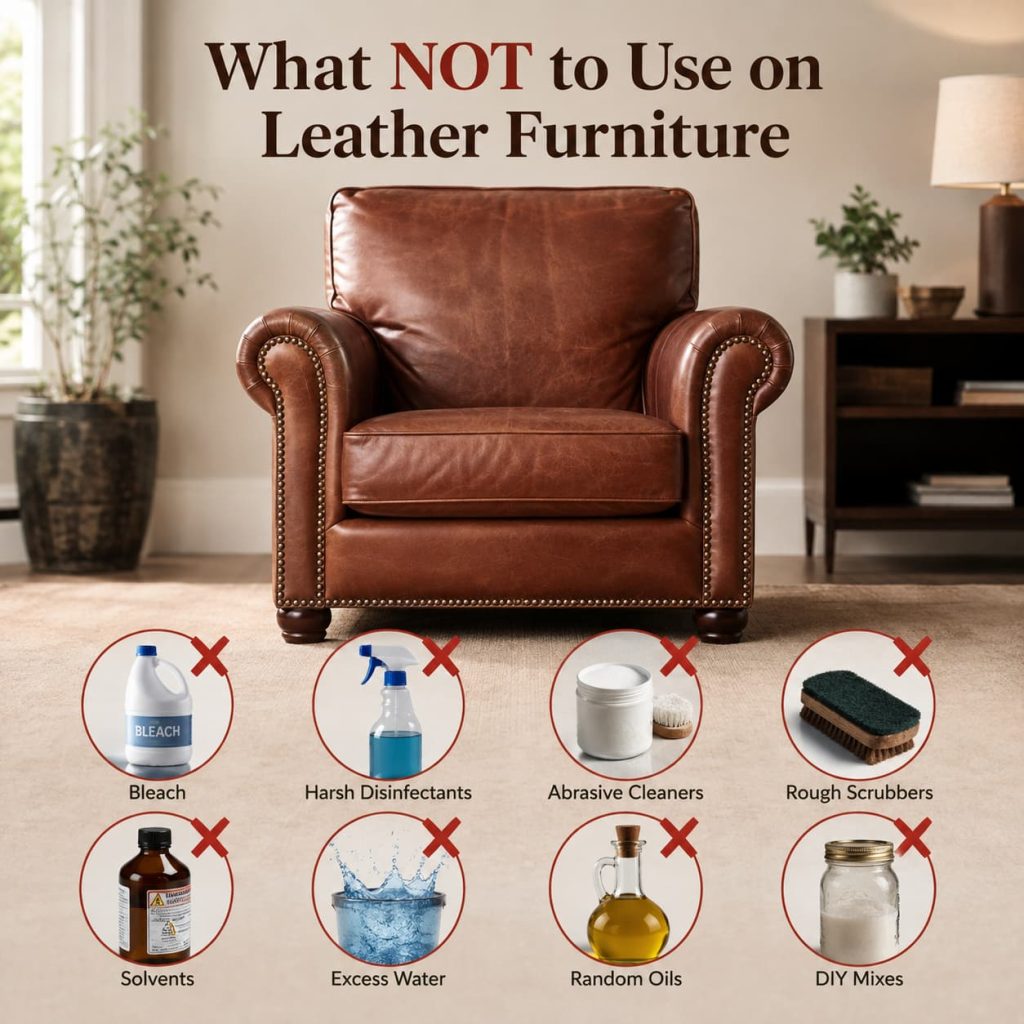
A product that works on one leather finish may not be appropriate for another. When trying something new, check the manufacturer’s recommendations and test the product in a hidden area first.
When it comes to leather, gentleness and appropriateness are usually better than strong and excessive.
How to Care for Leather Upholstery Without Overdoing It
Leather upholstery care is about finding the right balance.
Too little attention can allow dust, dirt, and body oils to build up. But excessive cleaning and conditioning can also create buildup or affect the appearance of the finish.
Rather than constantly treating your furniture, focus on gentle, consistent, and finish-appropriate care. Clean when the surface needs it, address spills quickly, and condition only when appropriate.
Common Leather Furniture Care Mistakes
Even well-intentioned care can sometimes cause problems. Avoid these common mistakes:
- Using a cleaner without checking the leather type.
- Scrubbing stains aggressively.
- Applying too much cleaner or conditioner.
- Conditioning simply because the leather looks slightly different with age.
- Ignoring prolonged sunlight.
- Placing leather too close to strong heat.
- Allowing spills to sit for extended periods.
- Using household cleaning products without checking compatibility.
- Attempting aggressive DIY repairs on valuable leather furniture.
Remember, natural variation, small marks, and color changes can be part of leather character. Not every change means the furniture needs to be restored to its original appearance.
When Should You Call a Professional?
Routine leather furniture care is often manageable at home, but restoration is a different matter.
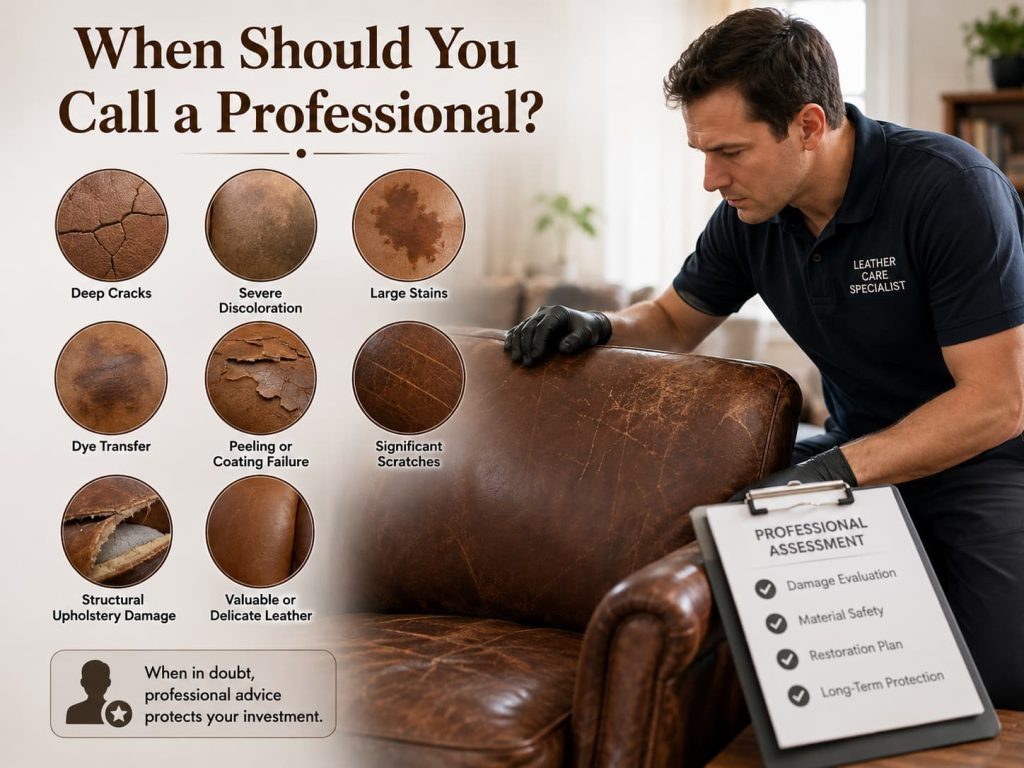
Professional help may be worthwhile for deep cracks, severe discoloration, large stains, major dye transfer, peeling or coating failure, significant scratches, structural upholstery damage, or valuable and delicate leather.
If you are unsure whether a problem is safe to treat yourself, getting professional advice is better than risking further damage with an aggressive DIY solution.
Quick Leather Furniture Care Checklist
- Know your leather type and finish.
- Follow the manufacturer’s care instructions.
- Dust regularly.
- Blot spills immediately.
- Use products specifically suited to your leather.
- Test an unfamiliar product first.
- Avoid harsh household cleaners.
- Condition only when appropriate.
- Keep leather away from excessive heat.
- Reduce prolonged direct sunlight.
- Inspect high-use areas regularly.
- Get professional help for serious damage.
FAQs
Yes. Natural leather can change in appearance with use, developing variations in color, softness, and character. This gradual change is often part of what makes leather furniture feel more personal over the years.
Some color variation can occur naturally with age, use, sunlight exposure, and the characteristics of the leather finish. Uneven or sudden fading, however, may indicate excessive exposure to sunlight or another issue worth investigating.
Pets can cause scratches, punctures, and surface wear, particularly with sharp claws. Keeping claws trimmed and discouraging pets from scratching or climbing on the furniture can help minimize damage.
Usually, leather furniture does not need to be covered simply because it is not being used. Instead, keep it in a suitable environment away from excessive sunlight, heat, and moisture, and follow the manufacturer’s storage or care recommendations if the piece remains unused for an extended period.
Consider professional help when you see deep cracks, extensive discoloration, peeling finishes, major scratches, large stains, structural upholstery damage, or other problems that routine cleaning cannot safely address.
Caring for Leather Furniture Over the Years
Leather furniture is meant to be lived with. Its beauty often comes from the way it responds to everyday life, gradually developing softness, character, and a distinctive patina.
The best way to care for leather furniture is not to chase a perfectly untouched appearance. Instead, give it thoughtful attention: clean gently, protect it from avoidable damage, condition only when appropriate, and respond to problems before they become serious.
With the right routine, your leather sofa or chair can remain a comfortable and beautiful part of your home for years—aging naturally while becoming even more distinctly yours.